Showing posts with label Christmastide 2016. Show all posts

7 Jan 2017

8th January 2017 - Feast of the Baptism of the Lord

On this weeks programme John and Shane reflect on the homilies and addresses of Pope Francis over the Christmas season. We have our regular reflections on this weeks Sunday gospel as well as our liturgical odds and ends.

You can listen to the podcast of this weeks programme HERE.

Messages of Hope over  the Christmas

John and Shane have a short discussion and reflection about the messages of Pope Francis over the Christmas period and how Christmas is a reminder to us that we should have hope; it doesnt end when the tree is taken down and the lights turned off but rather something to carry us through our daily lives no matter how dark the world around us can seem

Pope: ‘Let us allow ourselves to be challenged by the Child in the manger’

You can listen to this section of the programme excerpted on podcast HERE.

Gospel - Matthew 3:13-17

Then Jesus came from Galilee to John at the Jordan, to be baptized by him. John would have prevented him, saying, “I need to be baptized by you, and do you come to me?” But Jesus answered him, “Let it be so now; for it is proper for us in this way to fulfill all righteousness.” Then he consented. And when Jesus had been baptized, just as he came up from the water, suddenly the heavens were opened to him and he saw the Spirit of God descending like a dove and alighting on him. And a voice from heaven said, “This is my Son, the Beloved, with whom I am well pleased.
Reflections on this weeks gospel:

Word on Fire
English Dominicans

Liturgical odds & ends

Liturgy of the Hours - 1st week in ordinary time

Saints of the Week

January 9th - Bl Josef Pawlowski
January 10th - St Dermot of Inis Clothrann
January 11th - St Breandan of Ireland
January 12th - St Aelrad of Rievaulx
January 13th - St Hilary of Potiers
January 14th - St Engelmaro

Noveritis - the Proclamation of the Date of Easter 2017 (Irish Liturgical calendar)

As traditional on SS102fm we post the the Noveritis or Proclamation of the Date of Easter on Epiphany each year with the dates as per the Irish liturgical calendar. 

The practice of the proclamation dates from a time when calendars were not too readily available. It was necessary to make known the date of Easter in advance, since many celebrations of the liturgical year depend on its date. The number of weeks that follow Epiphany, the date of Ash Wednesday and the number of Sundays that follow Pentecost are all computed in relation to Easter.

[If you would like some more detail of the history of the Proclamation head over to New Liturgical Movement.]

Although calendars now give the date of Easter and the other feasts in the liturgical year for many years in advance, the Epiphany Proclamation still has value. It is a reminder of the centrality of the resurrection of the Lord in the liturgical year and the importance of the great mysteries of faith which are celebrated each year. This beautiful proclamation puts everything into perspective. Every liturgical celebration of the Church finds its authentic meaning in the Paschal Mystery, even Christmas. The Paschal Mystery was precisely why the Eternal Son of the Father, the Eternal Word, deigned to leap down from heaven and become incarnate in the womb of the Blessed Virgin Mary. He was born in time so that He could give His flesh for the life of the world.

The season of Christmas ends with the celebration of the Baptism of the Lord. As the season draws to an end, the solemnity of Epiphany offers an opportunity to proclaim the centrality of Christ's paschal mystery: dying he destroyed our death and rising he restored our life.

The Easter Triduum of the Passion, Death and Resurrection of Christ is the culmination of the entire liturgical year and the solemn proclamation should be made after the homily or after the Prayer after Communion on the Solemnity of the Epiphany of the Lord on January 6th.

Below is the Proclamation with the dates for 2017 as per the Irish Liturgical Calendar.


Know, dear brothers & sisters,
that, as we have rejoiced at the Nativity of our Lord Jesus Christ,
so by leave o
f God's mercy
we announce to you also the joy of his Resurrection,
who is our Saviour.

On the first day of March will fall Ash Wednesday, and the beginning of the fast of the most sacred Lenten season.

On the sixteenth day of April you will celebrate with joy Easter Day, the Paschal feast of our Lord Jesus Christ.


On the twenty-eighth day of May will be the Ascension of our Lord Jesus Christ.

On the fourth day of June, the feast of Pentecost.

On the eighteenth day of June, the feast of the Most Holy Body and Blood of Christ.

On the third day of December, the First Sunday of the Advent of our Lord Jesus Christ,
to whom is honor and glory for ever and ever.

Amen.

5 Jan 2017

6th Jan 2017 - Solemnity of the Epiphany of the Lord


Arise, shine out, Jerusalem; for your light has come, and the glory of the LORD has risen upon you. 
For darkness shall cover the earth, and thick darkness the peoples; but the LORD will arise upon you, and his glory will appear over you. 
Nations shall come to your light, and kings to the brightness of your dawn.
Lift up your eyes and look around; they all gather together, they come to you;
your sons shall come from far away, and your daughters shall be carried on their nurses' arms. 
Then you shall see and be radiant; your heart shall thrill and rejoice, because the abundance of the sea shall be brought to you, the wealth of the nations shall come to you. 
A multitude of camels shall cover you, the young camels of Midian and Ephah; all those from Sheba shall come. They shall bring gold and frankincense, and shall proclaim the praise of the LORD.
Isaiah 60:1-6

January 6th in Ireland we celebrate Epiphany which is the feast day that celebrates the revelation of God the Son as a human being in Jesus Christ. On this feast, Western Christians commemorate principally the visitation of the Biblical Magi to the Baby Jesus, i.e., his manifestation to the Gentiles; Eastern Christians commemorate the baptism of Jesus in the Jordan River, seen as his manifestation to the world as the Son of God. It is also called Theophany, especially by Eastern Christians.


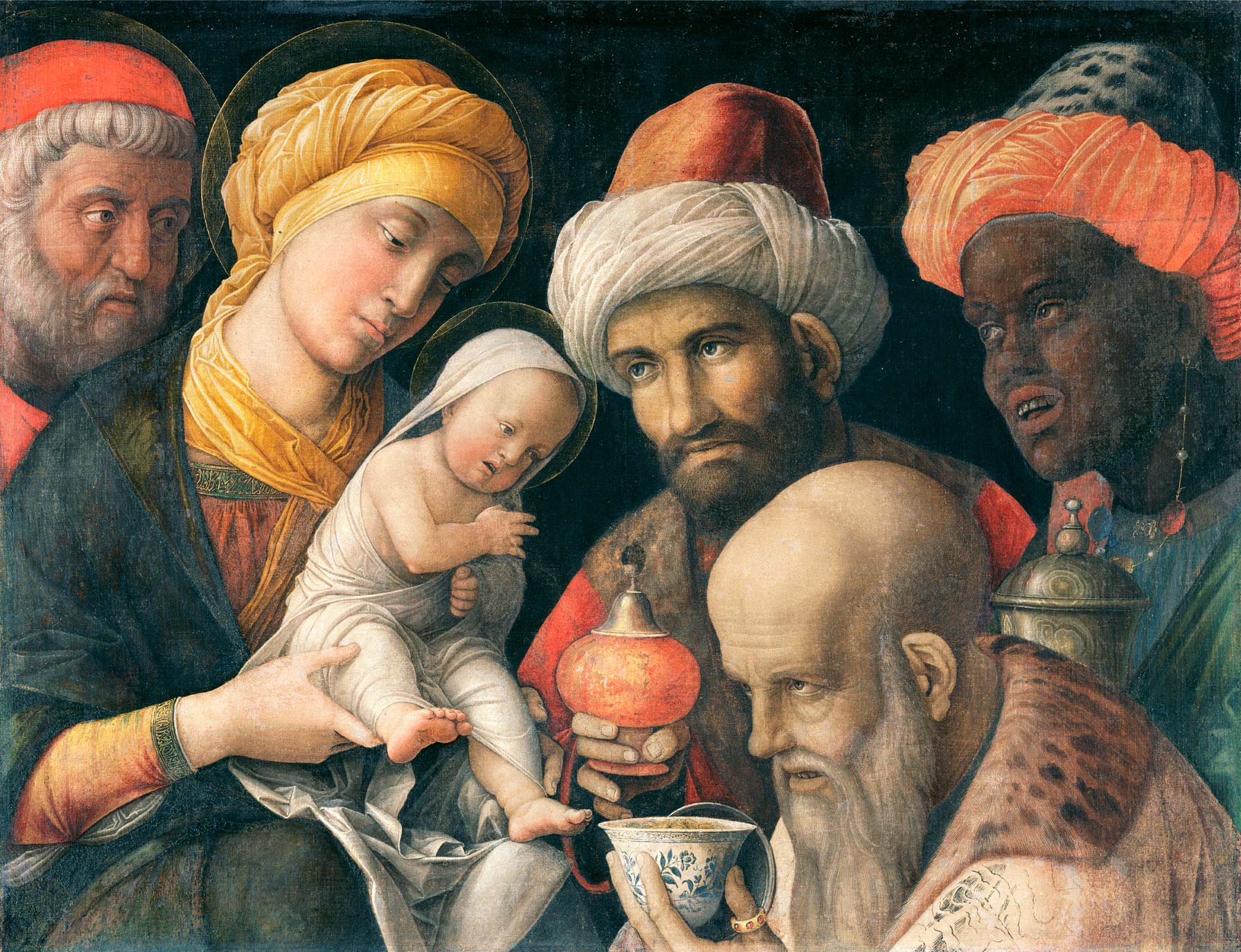
St Matthew tells us (2:1-12) that Wise Men came from out of the east seeking the new born child as the Messiah of the whole world not just for the people of Israel. Their homage to him upon locating him in Bethlehem is representative of the whole world who adore the Holy Child and recognise his Divine Kingship, he who is the Light of the World.
"They set out; and there, ahead of them, went the star that they had seen at its rising, until it stopped over the place where the child was.When they saw that the star had stopped, they were overwhelmed with joy. On entering the house, they saw the child with Mary his mother; and they knelt down and paid him homage. Then, opening their treasure chests, they offered him gifts of gold, frankincense, and myrrh."
The feast of the Epiphany in the Latin tradition focuses on the manifestation or showing of the Child Jesus to the Magi or Wise men who have come to seek the new King of the Jews. The three wisdom seekers represent the gentiles; those outside the covenanted community of Israel to whom the Messiah will also come. Where the shepherds represented the Chosen People, the three magi represent all those who truly search and seek for God in our world even if from out side our community and experiences. The questions this familiar part of the Christmas narrative can pose to us include:
  • What "star" do I follow in my life? Do I follow the Morning Star which is Christ or do I have other things I follow?
  • Am I open to seeing the Divine in others even if they are different from me?
  • Like the Wise men, am I willing to trust in God and go where She leads me, even if it means travelling far (literally or metaphorically), believing that God will be "my staff and my shield"?
But like the shepherds, the three magi did not stay in Bethlehem, they had to go back out into the world, back to their homes and families and daily lives; just like we have to. But they took the message of what they had seen and heard with them.Epiphany demands that like these kings we should return to our own countries a different way, carrying to all those we meet the light of Christ. "For behold, darkness shall cover the earth," says the Epistle of the Epiphany Mass, "and a mist the people: but the Lord shall arise upon Thee, and His glory shall be seen upon Thee. And the Gentiles shall walk in Thy light..." These words may be applied to us, upon whom the light of Christ has indeed risen, and who have the responsibility to radiate that light in the darkness of our own world. It is clear how much the feast of Epiphany must mean to all who are engaged in the apostolate and are striving to extend the kingdom of Christ. 

We join with the psalmist (Psalm 44) and the Magi and all the Heavenly Court in praising the Prince of Peace:
My heart overflows with noble words.
To the king I must speak the song I have made,
my tongue as nimble as the pen of a scribe.
You are the fairest of the people on earth
and graciousness is poured upon your lips,
because God has blest you for evermore.
Your throne, O God, shall endure for ever.
A scepter of justice is the scepter of your kingdom,
Your love is for justice, your hatred for eil.
Therefore God, your God, has anointed you
with the oil of gladness above other kings;
your robes are fragrant with aloes and myrrh.
From the ivory palace you are greeted with music.
The daughters of kings are among your loved ones.
On your right stands the queen in gold of Ophir.
UPDATES:

Vatican Radio - Pope Epiphany: Magi personify all who believe and long for God

Vatican Radio - Pope Angelus: Choose to be guided by the star of Jesus
Vatican Radio - The Pope's homily on the feast of the Epiphany
Catholic World Report - Want to know the history behind today's feast of the Epiphany?
OSV - How to better appreciate the feast of the Epiphany This Epiphany let us seek to be changed anew
Aleteia - Moving with the Magi, from darkness to light - On the Feast of the Epiphany we celebrate the sign of salvation, and recognize that we are on a journey of faith
Where are the relics of the three wise men? - The shrine at Cologne is gorgeous, indeed; are the Magi within? 
5 Inspirational quotes on the Epiphany from the saints - Reflections on the mystery of the Christ Child made manifest to us

4 Jan 2017

Mystery of the Incarnation - St. Maximus the Confessor

"The Word of God, born once in the flesh (such is his kindness and his goodness), is always willing to be born spiritually in those who desire him. In them he is born as an infant as he fashions himself in them by means of their virtues. He reveals himself to the extent that he knows someone is capable of receiving him. He diminishes the revelation of his glory not out of selfishness but because he recognizes the capacity and resources of those who desire to see him. Yet, in the transcendence of mystery, he always remains invisible to all.

For this reason the apostle Paul, reflecting on the power of the mystery, said: Jesus Christ, yesterday and today: he remains the same forever [Hebrews 13:8]. For he understood the mystery as ever new, never growing old through our understanding of it.

Christ is God, for he had given all things their being out of nothing. Yet he is born as man by taking to himself our nature, flesh endowed with intelligent spirit. A star glitters by day in the East and leads the wise men to the place where the incarnate Word lies, to show that the Word, contained in the Law and the Prophets, surpasses in a mystical way knowledge derived from the senses, and to lead the Gentiles to the full light of knowledge.

For surely the word of the Law and the Prophets when it is understood with faith is like a star which leads those who are called by the power of grace in accordance with his decree to recognize the Word incarnate.

Here is the reason why God became a perfect man, changing nothing of human nature, except to take away sin (which was never natural anyway). His flesh was set before that voracious, gaping dragon as bait to provoke him: flesh that would be deadly for the dragon, for it would utterly destroy him by the power of the Godhead hidden within it. For human nature, however, his flesh was to be a remedy since the power of the Godhead in it would restore human nature to its original grace.

Just as the devil had poisoned the tree of knowledge and spoiled our nature by its taste, so too, in presuming to devour the Lord’s flesh he himself is corrupted and is completely destroyed by the power of the Godhead hidden in it.

The great mystery of the divine incarnation remains a mystery forever. How can the Word made flesh be essentially the same person that is wholly with the Father? How can he who is by nature God become by nature wholly man without lacking either nature, neither the divine by which he is God nor the human by which he became man?

Faith alone grasps these mysteries. Faith alone is truly the substance and foundation of all that exceeds knowledge and understanding.

1 Jan 2017

50th World Day of Peace


Message of Pope France for the celebration of the 50th World Day of Peace 
1 JANUARY 2017

Nonviolence: a Style of Politics for Peace

1. At the beginning of this New Year, I offer heartfelt wishes of peace to the world’s peoples and nations, to heads of state and government, and to religious, civic and community leaders. I wish peace to every man, woman and child, and I pray that the image and likeness of God in each person will enable us to acknowledge one another as sacred gifts endowed with immense dignity. Especially in situations of conflict, let us respect this, our “deepest dignity”,[1] and make active nonviolence our way of life.

This is the fiftieth Message for the World Day of Peace. In the first, Blessed Pope Paul VI addressed all peoples, not simply Catholics, with utter clarity. “Peace is the only true direction of human progress – and not the tensions caused by ambitious nationalisms, nor conquests by violence, nor repressions which serve as mainstay for a false civil order”. He warned of “the danger of believing that international controversies cannot be resolved by the ways of reason, that is, by negotiations founded on law, justice, and equity, but only by means of deterrent and murderous forces.” Instead, citing the encyclical Pacem in Terris of his predecessor Saint John XXIII, he extolled “the sense and love of peace founded upon truth, justice, freedom and love”. [2] In the intervening fifty years, these words have lost none of their significance or urgency.

On this occasion, I would like to reflect on nonviolence as a style of politics for peace. I ask God to help all of us to cultivate nonviolence in our most personal thoughts and values. May charity and nonviolence govern how we treat each other as individuals, within society and in international life. When victims of violence are able to resist the temptation to retaliate, they become the most credible promotors of nonviolent peacemaking. In the most local and ordinary situations and in the international order, may nonviolence become the hallmark of our decisions, our relationships and our actions, and indeed of political life in all its forms.

31 Dec 2016

1 January 2017 - Solemnity of Mary, Mother of God


On this the first day of the New Year, the SS102fm team wishes you and yours every best wish and blessing for a New Year as we continue to celebrate Christmastide.

On today's programme we have a reflection on New Year from Sr Dympna Clancy. We have our regular reflection on this weeks gospel as well as some liturgical odds & ends including the selection of the blog patron saint for 2017.

You can listen to today's programme podcast available HERE.

A New Years reflection


January is personified by the two faced Roman god Janus which is a good metaphor which allows us to look back - to give thanks, and reflect on what might have been the burdens for 2016 - and also to look forward into 2017 and what we may wish and pray for.

Sr Dympna leads us through a reflection on the New Year, time and peace. 

You can listen to the thought provoking reflection from Sr Dympna here.


Gospel - LK 2:16-21


The shepherds went in haste to Bethlehem and found Mary and Joseph,and the infant lying in the manger.When they saw this,they made known the message that had been told them about this child.All who heard it were amazed by what had been told them by the shepherds.  
And Mary kept all these things,reflecting on them in her heart. Then the shepherds returned,glorifying and praising God for all they had heard and seen, just as it had been told to them. 
When eight days were completed for his circumcision,he was named Jesus, the name given him by the angel before he was conceived in the womb.
Reflections on this weeks gospel:

Word on Fire

Sunday Reflections
Centre for Liturgy
English Dominicans

Pope Francis: Homily for First Vespers for Solemnity of Mary the Mother of God 

OSV - A contemplative heart - We celebrate the Blessed Mother because it is through her that Christ was born for our salvation

Updates   

Pope Francis: homily for Solemnity of Mary, Mother of God
No apple pie, but lots on mom from Pope Francis on Mary’s feast 
The Oldest hymn to Mary Mother of God - Greek hymn to the Theotokos dates back to third century

Liturgical odds & ends

Liturgy of the Hours - Psalter week 2

Saints of the Week

January 1st - Solemnity of Mary, Mother of God
January 2nd - St Basil and St Gregory Nazianzen 
January 3rd - St Munchin (Patron of the diocese of Limerick) also the Holy Name of Jesus
January 4th - St Elizabeth Ann Seton
January 5th - St Charles of St Andrew 
January 6th - Solemnity of the Epiphany of the Lord 
January 7th - St Raymond of Penyafort
January 8th - Feast of the Baptism of the Lord (and the end of Christmastide)

Blog Patron Saints

Each year we follow a monastic tradition of picking a patron saint for the year and also a patron saint for the blog. You can pick one for yourself by heading over to the Saint Name Generator.


Blog Patron Saint - St Elizabeth of Portugal

SS102fm team patron saints for 2017


New Years Eve 2016

Sunset over the Shannon Estuary from South Cappa, Loughill, Co Limerick

The LORD bless you and keep you! 
 
The LORD let his face shine upon you, and be gracious to you! 
The LORD look upon you kindly and give you peace!
The evening draws in on the last day of 2016 and we celebrate first vespers for the Solemnity of the Mother of God on January 1st. The civil year draws to a close as we reflect on the year just past with all "joys and hopes, the grief and anguish of the people of our time, especially of those who are poor or afflicted" reminding ourselves that these "are the joys and hopes, the grief and anguish of the followers of Christ as well". We look forward to 2017 and what may come.


The particular mind of the ocean
Filling the coastline’s longing
With such brief harvest
Of elegant, vanishing waves
Is like the mind of time
Opening us shapes of days.
As this year draws to its end,
We give thanks for the gifts it brought
And how they became inlaid within
Where neither time nor tide can touch them.
The days when the veil lifted
And the soul could see delight;
When a quiver caressed the heart
In the sheer exuberance of being here.
Surprises that came awake
In forgotten corners of old fields
Where expectation seemed to have quenched.
The slow, brooding times
When all was awkward
And the wave in the mind
Pierced every sore with salt.
The darkened days that stopped
The confidence of the dawn.
Days when beloved faces shone brighter
With light from beyond themselves;
And from the granite of some secret sorrow
A stream of buried tears loosened.
We bless this year for all we learned,
For all we loved and lost
And for the quiet way it brought us
Nearer to our invisible destination.
John O’Donohue 
(To Bless The Space Between Us/Benedictus)
***************

Tradition has the singing of the Te Deum to mark the closing of the civil year. The Te Deum is a hymn of praise that dates from early Christian times. In Latin, the hymn’s words: “Te Deum laudamus” can be translated "Thee, O God, we praise". The Te Deum (also known as Ambrosian Hymn or A Song of the Church) is an early Christian hymn of praise. The title is taken from its opening Latin words, Te Deum laudamus, rendered literally as "Thee, O God, we praise".


A more traditional version in latin


We praise thee, O God :
we acknowledge thee to be the Lord.
All the earth doth worship thee :
the Father everlasting.
To thee all Angels cry aloud :
the Heavens, and all the Powers therein.
To thee Cherubim and Seraphim :
continually do cry,
Holy, Holy, Holy :
Lord God of Sabaoth;
Heaven and earth are full of the Majesty :
of thy glory.
The glorious company of the Apostles : praise thee.
The goodly fellowship of the Prophets : praise thee.
The noble army of Martyrs : praise thee.
The holy Church throughout all the world :
doth acknowledge thee;
The Father : of an infinite Majesty;
Thine honourable, true : and only Son;
Also the Holy Ghost : the Comforter.
Thou art the King of Glory : O Christ.
Thou art the everlasting Son : of the Father.
When thou tookest upon thee to deliver man :
thou didst not abhor the Virgin's womb.
When thou hadst overcome the sharpness of death :
thou didst open the Kingdom of Heaven to all believers.
Thou sittest at the right hand of God : in the glory of the Father.
We believe that thou shalt come : to be our Judge.
We therefore pray thee, help thy servants :
whom thou hast redeemed with thy precious blood.
Make them to be numbered with thy Saints : in glory everlasting.

30 Dec 2016

December 30th 2016 - Feast of the Holy Family of Jesus, Mary & Joseph


Today is the feast of the Holy Family of Jesus, Mary & Joseph, a day set aside in the Octave of Christmas to celebrate the holy family of Nazareth.
"Scripture tells us practically nothing about the first years and the boyhood of the Child Jesus. All we know are the facts of the sojourn in Egypt, the return to Nazareth, and the incidents that occurred when the twelve-year-old boy accompanied his parents to Jerusalem. In her liturgy the Church hurries over this period of Christ's life with equal brevity.

The general breakdown of the family, however, at the end of the past century and at the beginning of our own, prompted the popes, especially the far-sighted Leo XIII, to promote the observance of this feast with the hope that it might instil into Christian families something of the faithful love and the devoted attachment that characterize the family of Nazareth. The primary purpose of the Church in instituting and promoting this feast is to present the Holy Family as the model and exemplar of all Christian families" 
- CatholicCulture.org
"Think about it. The creator of the universe spent most of his human life as a craftsman, working with dad in the family business and ultimately taking it over. Mary, the holiest of all creatures, spent most of her time changing diapers, cooking, and cleaning. The secret to holiness is not to do extraordinary things, but to do ordinary things with extraordinary love and gratitude...."
"Nazareth is a kind of school where we may begin to discover what Christ’s life was like and even to understand his Gospel . . . How I would like to return to my childhood and attend the simple yet profound school that is Nazareth! How wonderful to be close to Mary, learning again the lesson of the true meaning of life, learning again God’s truth. . . May Nazareth serve as a model of what the family should be. May it show us the family’s holy and enduring character and exemplify its basic function in society: a community of love and sharing, beautiful for the problems it poses and the rewards it brings, in sum, the perfect setting for rearing children – and for this there is no substitute."  
From an address given by Blessed Paul VI in Nazareth, January 5 1964


Reflections:

28 Dec 2016

Christmastide 2016

After the harshness and glare of the neon pre-Christmas, it is nice to bask in the gentler glow of Christmastide, when things move to a gentler pace - like that of a new mother getting used to a new baby.


Glenstal Abbey - Midnight Mass Homily


Abbot Brendan Coffey OSB
Glenstal Abbey
Midnight Mass Homily
Christmas 2016

Seven hundred and ninety-three years ago, on the feast of Christmas 1223, Francis, the poor man of Assisi with the help of Giovanni Velita, Lord of Greccio and count of Celano, created the first crib outside the little town of Greccio, in Italy. Today, every church and many homes have a nativity scene. What is so fascinating about this nativity scene? Mary, Joseph and the infant are surrounded by the ox, the donkey, the sheep and the shepherds.

The figures in the crib were chosen carefully. The ox and the donkey come from the prophet Isaiah, “The ox knows its master, the donkey its master’s crib, but Israel does not know, my people do not understand.” The sheep and shepherds come from Ezekiel, “they were scattered because there was no shepherd.” Popular legend augmented the scene over the centuries; it is said that at midnight on Christmas Eve the animals have the gift of speech bestowed, because they gave the infant Jesus His first shelter. Cattle are said to bow to the East on this night, and bees it is said hum the 100th Psalm in their hives, “Praise the Lord all the earth, serve the Lord with gladness, come into his presence singing for joy.” You can check that out on your way home!

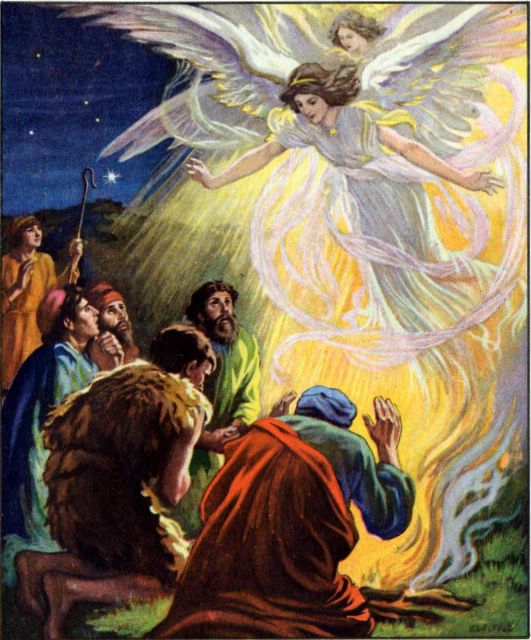
There is something very special about the atmosphere of this holy night. No matter how busy we have been over the last few days preparing for Christmas, Midnight Mass always manages to calm our attitude and open our hearts in a unique moment of wonder and simplicity. There is no other moment in the year like this one. On this holy night the beautiful liturgy we celebrate announces the Saviour’s birth in these words from the Gospel. “An angel of the Lord appeared to the shepherds and the glory of the Lord shone around them.”

The shepherds were the first to see this Christmas mystery, because they were among the last, the outcast, the inconvenient. This is highly significant. These shepherds are part of the revelation of God in this mystery of the Nativity. They are not just there as a pretty background because a few sheep look good in the crib. Nothing is in the crib by accident. No, it was to them God first revealed his Christmas mystery, just as it was to Mary Magdalene that he first revealed his Resurrection. Why? Because God always sees to the heart. He sees things the way they really are and he sees us for who we really are. We cannot hide from God.

The nativity scene in St Luke and the legends which have grown up around it are deadly serious in their message to us this night. We live in a world where people drive trucks into Christmas markets, where an ambassador is gunned down in cold blood in front of his wife, where refugees and migrants are pulled out of the Mediterranean, sometimes living, sometimes not. How should we respond? By building walls and saying, not my problem? Well, the mystery we celebrate this night says very differently. In the words of Pope Francis, “In a world which all too often is merciless to the sinner and lenient to the sin, we are called to cultivate a strong sense of justice. In a world of indifference which not infrequently turns cruel, we are called instead to be people filled with empathy, compassion and mercy.”

Long before Pope Francis, Pope Leo the great wrote on this night “O Christian be aware of your nobility, it is God’s own nature that you share.” Where has our nobility gone? What you have in the Christmas story is a terrible desire on God’s part to be with us. Jesus is Love incarnate. He is not simply another philosopher or guru; he is not just another holy man with another set of teachings. He is the meaning of life and history who has pitched his tent in our midst and his flesh is the hinge of salvation. He is God and nothing can ever be the same after that.

The shepherds were the first to see this mystery because they were awake, keeping watch in the night, as we are keeping watch this night. As fellow pilgrims here this night let us pause before the Child of Bethlehem in silence and ponder the meaning of this mystery, for whatever language we speak as we contemplate the Christ child lying in the manger, God speaks only one language and that language is the language of love. Anyone who understands this language can understand this mystery we celebrate

25 Dec 2016

25th December 2016 - Christmas Day


From all the Sacred Space 102fm team, wishing you and yours every best wish and blessing of this Holy & Festive Season and into the New Year 2017.
May the Peace of the Babe of Bethlehem be the gift you receive this Christmastide.

From
John, Lorraine, Ann, Shane, Martina & Michael

***************

You can listen to the podcast of the full two hour special Christmas Day programme HERE.

Our Christmas Day programme goes out on WL102fm from 9am to 11 am and is repeated from 11pm to 1am Christmas night.


**************

On this special two hour programme we celebrate this special day with reflections, favourite Christmas carols and hymns, readings, poetry and our regular reflection on the Gospel of the day. We are joined on the programme with a reflection by Bishop Brendan Leahy and other special guests.


****************

Advent Summons

Come forth from the holy place,
Sweet Child,
Come from the quiet dark
Where virginal heartbeats
Tick your moments.


Come away from the red music
Of Mary's veins.
Come out from the Tower of David
Sweet Child,
From the House of Gold.

Leave your lily-cloister,
Leave your holy mansion,
Quit your covenant ark.
O Child, be born!

Be born, sweet Child,
In our unholy hearts.

Come to our trembling,
Helpless Child.
Come to our littleness,
Little Child,
Be born unto us
Who have kept the faltering vigil.
Be given, be born,
Be ours again.

Came forth from your holy haven,
Come away from your perfect shrine,
Come to our wind-racked souls
From the flawless tent,
Sweet Child.

Be born, little Child,
In our unholy hearts.


************
"In those days a decree went out from Emperor Augustus that all the world should be registered. This was the first registration and was taken while Quirinius was governor of Syria. All went to their own towns to be registered. Joseph also went from the town of Nazareth in Galilee to Judea, to the city of David called Bethlehem, because he was descended from the house and family of David. He went to be registered with Mary, to whom he was engaged and who was expecting a child. While they were there, the time came for her to deliver her child. And she gave birth to her firstborn son and wrapped him in bands of cloth, and laid him in a manger, because there was no place for them in the inn.

In that region there were shepherds living in the fields, keeping watch over their flock by night. Then an angel of the Lord stood before them, and the glory of the Lord shone around them, and they were terrified.

But the angel said to them, ‘Do not be afraid; for see—I am bringing you good news of great joy for all the people: to you is born this day in the city of David a Saviour, who is the Messiah, the Lord.
This will be a sign for you: you will find a child wrapped in bands of cloth and lying in a manger.’ And suddenly there was with the angel a multitude of the heavenly host, praising God and saying,
‘Glory to God in the highest heaven,
and on earth peace among those whom he favours!’

When the angels had left them and gone into heaven, the shepherds said to one another, ‘Let us go now to Bethlehem and see this thing that has taken place, which the Lord has made known to us.’So they went with haste and found Mary and Joseph, and the child lying in the manger.When they saw this, they made known what had been told them about this child;and all who heard it were amazed at what the shepherds told them.But Mary treasured all these words and pondered them in her heart.The shepherds returned, glorifying and praising God for all they had heard and seen, as it had been told them."  - (Luke 2: 1-20)


Reflections on the gospel of the day:

Word on Fire

English Dominicans
Centre for Liturgy
Sunday Reflections