Showing posts with label Carmelites. Show all posts

12 Aug 2018

12th August 2018 - Visit of the relics of Saints Louis & Zélie Martin and Saint Thérèse of Lisieux to Limerick

On this weeks programme (via some very dodgy Skype connections!) John and Shane are joined by Sr Beatrice Cotter from the Dominican Sisters of St Cecilia in Nashville (and also of St Saviours Parish Limerick!) to tell us about the up coming visit of the relics of Saints Louis & Zélie Martin and Saint Thérèse of Lisieux to Limerick and the example of the Martin's to us in our daily lives. We have our regular run through the saints of the week, local notices and of course a short reflection on the Sunday gospel.

You can listen to the podcast of the full programme HERE.


Visit of the relics of Saints Louis & Zélie Martin and Saint Thérèse of Lisieux to Limerick


Sr Beatrice Cotter joins us on this weeks programme with a reflection on the example of the Martin family as saints for us. While one member of the family may be more well known than all the others, the example of St Louis and Zeile Martin cannot but have influenced St Therese of Lisieux and her sisters - three of whom also entered Carmel and one became a Visitation sister.

The Dominican Church, Glentworth St, Limerick will be hosting the relics of Saint Therese of Lisieux, and of her parents, Saints Louis and Zelie Martin, on Saturday 18 August, beginning with the 1pm Mass. Blessing of roses, veneration of relics, and reflections by the Dominicans will follow, with sung Vespers concluding the event at 5pm.


You can listen to Sr Beatrice reflection on the example of the Martin's HERE.


Gospel - John 6:41-51

Then the Jews began to complain about him because he said, ‘I am the bread that came down from heaven.’ They were saying, ‘Is not this Jesus, the son of Joseph, whose father and mother we know? How can he now say, “I have come down from heaven”?’ Jesus answered them, ‘Do not complain among yourselves. No one can come to me unless drawn by the Father who sent me; and I will raise that person up on the last day. It is written in the prophets, “And they shall all be taught by God.” Everyone who has heard and learned from the Father comes to me. Not that anyone has seen the Father except the one who is from God; he has seen the Father. Very truly, I tell you, whoever believes has eternal life. I am the bread of life. Your ancestors ate the manna in the wilderness, and they died. This is the bread that comes down from heaven, so that one may eat of it and not die. I am the living bread that came down from heaven. Whoever eats of this bread will live for ever; and the bread that I will give for the life of the world is my flesh.’
Reflections on this weeks gospel:

Word on Fire
English Dominicans
Centre for Liturgy
Sunday Reflections

Liturgical odds and ends

Liturgy of the Hours - Psalter week 3

Saints of the Week

13th August - Bl Con O'Rourke
14th August - St Maximilian Kolbe
15th August - Solemnity of the Assumption of the Blessed Virgin Mary
16th August - St Stephen of Hungary
17th August - Our Lady of Knock (as per the revised Irish liturgical calendar)
18th August - St Ronan of Iona

7 Aug 2018

The Relics of Saints Louis & Zélie Martin and Saint Thérèse of Lisieux are visiting Ireland - August 4 to Sept 9 2018


In conjunction with the organisers of the World Meeting of Families, the Irish Order of Carmelites, Order of Discalced Carmelites, Carmelite nuns and Lay/Secular Carmelites have arranged that Relics of Saints Louis, Zélie and Thérèse will come from Lisieux and be in Ireland for the World Meeting of Families. The relics will arrive on August 4 and remain in Ireland until September 9

The Relics of Saints Louis & Zélie Martin and Saint Thérèse of Lisieux visiting Whitefriar Street Church, Dublin
The Relics will be at the Opening Ceremony in the R.D.S., Dublin, on Tuesday, August 21, and they will also be in the sanctuary in the Phoenix Park for the Papal Mass on Sunday, August 26. The Carmelites have also been invited to give a forty-five minute presentation on the spirituality of the Martin family in the Phoenix Park before the Papal Mass. This will consist of interviews with people on aspects of the Martin spirituality, texts from the writings of the saints and intercessions and have engaged the services of Kairos Communications to ensure that this will be done to a professional standard. Music will be provided by the Comhaltas Ceoltóiri Eireann orchestra.

The Relics will also travel to several places across Ireland before and after the World Meeting and this gives a much wider group of people who cannot the Congress in the R.D.S. or the Festival of Families in Croke Park or the Papal Mass at the close of the World Meeting to participate in the Meeting in a different though tangible way. Given the short time the Relics will be in the country it is not possible to visit every diocese and every part of the island, but the hope is that given the time available, that as many people as possible will be able to spend time with the Relics and to consider the life of this saintly family. The journey of the Relics through Ireland is a form of pilgrimage leading up to the World Meeting itself and leading away from it afterwards.

Each place that will receive the Reliquaries will organise their own liturgical celebrations and times for veneration and these will be made known over the coming weeks. Information regarding the preparations in each place can be had direct from each place.

You can find more information from the Carmelites website here.

*******************


The Dominican Church, Glentworth St, Limerick will be hosting the relics of Saint Therese of Lisieux, and of her parents, Saints Louis and Zelie Martin, on Saturday 18 August, beginning with the 1pm Mass. Blessing of roses, veneration of relics, and reflections by the Dominicans will follow, with sung Vespers concluding the event at 5pm.


15 Jul 2018

July 16th - Our Lady of Mount Carmel

Our Lady of Mount Carmel with St John of the Cross and St Teresa of Avila
- Terry Nelson (iconographer)

July 16th is the feast of Our Lady of Mount Carmel.Our Lady of Mount Carmel is the title given to the Blessed Virgin Mary, in her role as patroness of the Carmelite Order. The first Carmelites were Christian hermits living on Mount Carmel in the Holy Land during the late 12th and early to mid 13th centuries. They built a chapel in the midst of their hermitages which they dedicated to the Blessed Virgin, whom they conceived of in chivalric terms as the "Lady of the place"

Since the 15th century, popular devotion to Our Lady of Mount Carmel has centered on the Scapular of Our Lady of Mount Carmel also known as the Brown Scapular, a sacramental associated with promises of Mary's special aid for the salvation of the devoted wearer. Traditionally, Mary is said to have given the Scapular to an early Carmelite named Saint Simon Stock. The liturgical feast of Our Lady of Mount Carmel is celebrated on 16 July.

"Devotion to Our Lady of Mount Carmel is bound to the history and spiritual values of the Order of the Brothers of the Blessed Virgin Mary of Mount Carmel and is expressed through the scapular. Thus, whoever receives the scapular becomes a member of the order and pledges him/herself to live according to its spirituality in accordance with the characteristics of his/her state in life."

"The scapular is a Marian habit or garment. It is both a sign and pledge. A sign of belonging to Mary; a pledge of her motherly protection, not only in this life but after death. As a sign, it is a conventional sign signifying three elements strictly joined: first, belonging to a religious family particularly devoted to Mary, especially dear to Mary, the Carmelite Order; second, consecration to Mary, devotion to and trust in her Immaculate Heart; third an incitement to become like Mary by imitating her virtues, above all her humility, chastity, and spirit of prayer."


Dr Lillis has a reflection on Our Lady of Mount Carmel and Blessed John Paul II.

Letter of the Prior General (OCarm) on the Solemnity of Our Lady of Mount Carmel 2018

8 Jul 2018

Visit to Ireland of the Relics of Saints Louis & Zélie Martin and Saint Thérèse of Lisieux August 4 to September 9, 2018

Louise & Zelie Martin

In conjunction with the organisers of the World Meeting of Families, the Irish Carmelites have arranged that Relics of Saints Louis, Zélie and Thérèse will come from Lisieux and be in Ireland for the World Meeting of Families. The organisers consider the presence of the Relics in the country to be an integral part of the Meeting. The Relics will be at the Opening Ceremony in the R.D.S., Dublin, on Tuesday, August 21, and they will also be in the sanctuary in the Phoenix Park for the Papal Mass on Sunday, August 26.

The Relics will also travel to several places across Ireland before and after the World Meeting and this gives a much wider group of people who cannot the Congress in the R.D.S. or the Festival of Families in Croke Park or the Papal Mass at the close of the World Meeting to participate in the Meeting in a different though tangible way. Given the short time the Relics will be in the country it is not possible to visit every diocese and every part of the island, but the hope is that given the time available, that as many people as possible will be able to spend time with the Relics and to consider the life of this saintly family. The journey of the Relics through Ireland is a form of pilgrimage leading up to the World Meeting itself and leading away from it afterwards.

Each place that will receive the Reliquaries will organise their own liturgical celebrations and times for veneration and these will be made known over the coming weeks. Information regarding the preparations in each place can be had direct from each place.

You can find more information from the Carmelites website here.

*******************


The Dominican Church, Glentworth St, Limerick will be hosting the relics of Saint Therese of Lisieux, and of her parents, Saints Louis and Zelie Martin, on Saturday 18 August, beginning with the 1pm Mass. Blessing of roses, veneration of relics, and reflections by the Dominicans will follow, with sung Vespers concluding the event at 5pm.


11 Jan 2017

“You look very mystified. Don’t you love God?”


From Aleteia:
If you liked the film “Into Great Silence” you might like this short piece filmed at the Carmel of Wolverhampton in the UK. Just under a half hour long, it is a beautifully shot peek into the lives of these very private nuns as they go about their day, praying the office, working, eating, laughing quite loudly during their recreation, and so forth. There are a few sisters answering questions of the filmmakers, Miranda Tasker and Marcus Nield. 
If you don’t have time to watch it all, I recommend you forwarding to 16:10, when we see a younger sister writing questions to an elderly sister who has lost her hearing but is delightfully in her wits. She answers the questions with clarity and humor, and throws a few questions back at her guests, as well. After extolling the love of God for all creation, she says to them, “You look very mystified. Don’t you love God?” 
The younger sister explains that the filmmakers have “A different understanding of God,” and, after again pronouncing on God’s love, the elder sister asks them, “Do you read the Gospel?” When apparently both say they do not she takes it well but says in an aside to the younger, “What the’re missing, aren’t they, sister?” 
And then she talks more about love. 
A wonderful, refreshing half hour.

3 Jan 2017

Why Do Young Women Choose To Become Nuns?

“Breaking Silence”: New Zealand Carmelite nuns talk about their lives - Giving witness that God can call anyone at any time, even atheists.

Enjoy this informative and lovely video about these Kiwi Carmelites.

1 Oct 2016

1st October - Feast of St Therese of Lisieux

 
Today we celebrate the feast of St. Therese of the Child Jesus. St. Therese has been proclaimed a Doctor of the Church because of her 'little way' which means taking God at his word and letting his love for us wash away our sins and imperfections. We cannot all be martyrs or missionaries, but we are all called to respond to daily opportunities of grace. Let us do little things with great love today.


15 Oct 2015

October 15th - Feast of St Teresa of Avila

Source
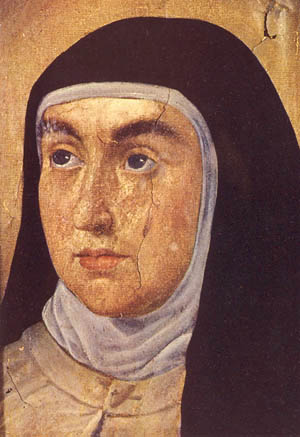
October 15th is the feast of St Teresa of Avila, the first woman to be declared a Doctor of the Church in 1970. She has many writings. Born in 1515 in Avila, Spain, she lived during the Counter Reformation in Europe and she died in 1582.

Saint Teresa of Ávila, also called Saint Teresa of Jesus, baptized as Teresa Sánchez de Cepeda y Ahumada, (March 28, 1515 – October 4, 1582) was a prominent Spanish mystic, Roman Catholic
saint, Carmelite nun, and writer of the Counter Reformation, and theologian of contemplative life through mental prayer. She was a reformer of the Carmelite Order and is considered to be, along with John of the Cross, a founder of the Discalced Carmelites.


iBenedictines have a very short but pointed reflection on her feast day today:

The five hundredth anniversary year of St Teresa of Avila’s birth has seen some remarkable celebrations but today, on her feastday, I think we honour her best by reflecting on one single aspect of her life: her prayer. It was the leitmotif of her whole existence. We tend to think of her enormous energy in founding convent after convent, her endless letters, her often awkward dealings with ecclesiastical authority, but at the centre of it all, day after day, was that humble, persevering seeking after God. Today, when we must be busy about so many things, let’s make sure we take some time just to be with God. His Divine Majesty awaits us. Let us not disappoint him

Read more about this saint here and here.


Christ Has No Body
Christ has no body but yours,
No hands, no feet on earth but yours,
Yours are the eyes with which he looks
Compassion on this world,
Yours are the feet with which he walks to do good,
Yours are the hands, with which he blesses all the world.
Yours are the hands, yours are the feet,
Yours are the eyes, you are his body.
Christ has no body now but yours,
No hands, no feet on earth but yours,
Yours are the eyes with which he looks
compassion on this world.
Christ has no body now on earth but yours.

St Teresa of Avila


"Nada Te Turbe" is one of two virtual choirs produced for the celebration of St. Teresa of Jesus's 500th birthday. The choir is made up of Carmelite Nuns from around the world and is accompanied by the Teresian Orchestra of St. James Cathedral in Seattle, Washington, USA. Music composed by Claire Sokol, OCD.

The prayer — which is more of a sort of contemplative pulse — is this:

Let nothing disturb you,
Let nothing frighten you,
All things are passing away:
God never changes.
Patience obtains all things
Whoever has God lacks nothing;
God alone suffices.


"Salve Regina" is the second of two virtual choirs produced for the celebration of St. Teresa of Jesus's 500th birthday. This virtual choir is made up of Carmelite Nuns and Friars from around the world and highlights the internationality and diversity of the Carmelite Order. Music composed by Claire Sokol, OCD.

13 Sept 2015

13th September 2015 - The Community of Our Lady of Walsingham: Interview with Sr Theresa Weight

This weeks programme is from our "Come & See" studios in Ardagh and is part of our coverage of the Year for Consecrated Life. On this week programme John interviews Sr. Theresa Weight from Community of Our Lady of Walsingham.

You can listen to the podcast of this weeks full programme HERE.

The Community of Our Lady of Walsingham

The veneration to Our Lady under her title as Our Lady of Walsingham isn't that well know in Ireland but is an old and distinguished honour to Our Lady in England since the Middle Ages.

We have covered the devotion at the Shrine in Walsingham previously on the programme HERE and we have explored the feast of Our Lady which is celebrated on 24th September under this title HERE.

On this weeks programme however, we have an interview with one of the newer religious communities in the wider Catholic Church - the Community of Our Lady of Walsingham.


The Community of Our Lady of Walsingham
Incarnational - Marian - Missionary - Vocational - Contemplative 
  
The COLW describe themselves as a new contemplative, but not enclosed, community of religious sisters and brothers (some of whom may become priests) who are passionate about encouraging a culture of vocation within the Church and society by helping people recognise and respond to God's love in their lives. As a Marian community dedicated to Our Lady of Walsingham, they pray for the conversion of England and the western world and are engaged in the New Evangelisation.
 

The community is rooted in the Carmelite tradition focused on the Word and the Eucharist, with a preferential option for the young and for the spiritually poor. You can find their website HERE including a full history and the decree establishing them. You can also check out their Facebook page to see what they are getting up to!
Sr Theresa with her family on 23rd September 2012 after making first vows.
Our interview is with Sr Theresa and you listen to the interview with her excerpted from the main programme podcast HERE. You can read about Sr Theresa's personal journey and those of other members of the community HERE.


Gospel - Mark 8:27-35


Reflections on this weeks gospel:

Sunday Reflections
Centre for Liturgy
English Dominicans
Word on Fire
 
Liturgical odds & ends

Liturgy of the Hours - Psalter week 4; 24th week in ordinary time

Saints of the Week
14th September - Exultation of the Holy Cross
15th September - Our Lady of Sorrows
16th September - St Cornelius
17th September - St Robert Bellarmine
18th September - Various
19th September - St Januarius 

29 Apr 2015

Schools of Prayer - Pray As You Go Padcast

Monks, nuns and priests in Catholic religious communities often have deeply prayerful lives that bring them closer to the Lord. So what can we learn from those with a devotion to great saints like St Thérèse of Lisieux, St Dominic, St Benedict, St Francis of Assisi, St Clare, St Bernard and St Ignatius? What do each of these 'teachers' offer us as a tool for prayer?

Pray as You Go has a series of podcasts about Schools of Prayer available HERE.

Introductory podcast is below:


14 Sept 2014

A Virtual Choir of Carmelites


"Nada Te Turbe" is one of two virtual choirs produced for the celebration of St. Teresa of Jesus's 500th birthday. The choir is made up of Carmelite Nuns from around the world and is accompanied by the Teresian Orchestra of St. James Cathedral in Seattle, Washington, USA. Music composed by Claire Sokol, OCD.

The prayer — which is more of a sort of contemplative pulse — is this:

Let nothing disturb you,
Let nothing frighten you,
All things are passing away:
God never changes.
Patience obtains all things
Whoever has God lacks nothing;
God alone suffices.


"Salve Regina" is the second of two virtual choirs produced for the celebration of St. Teresa of Jesus's 500th birthday. This virtual choir is made up of Carmelite Nuns and Friars from around the world and highlights the internationality and diversity of the Carmelite Order. Music composed by Claire Sokol, OCD.


14 Oct 2013

October 15th - St Teresa of Avila

Source
October 15th is the feast of St Teresa of Avila, the first woman to be declared a Doctor of the Church in 1970. She has many writings. Born in 1515 in Avila, Spain, she lived during the Counter Reformation in Europe and she died in 1582.

Saint Teresa of Ávila, also called Saint Teresa of Jesus, baptized as Teresa Sánchez de Cepeda y Ahumada, (March 28, 1515 – October 4, 1582) was a prominent Spanish mystic, Roman Catholic
saint, Carmelite nun, and writer of the Counter Reformation, and theologian of contemplative life through mental prayer. She was a reformer of the Carmelite Order and is considered to be, along with John of the Cross, a founder of the Discalced Carmelites.


Read more about this saint here and here.

Let nothing disturb thee;
Let nothing dismay thee:
All thing pass;
God never changes.
Patience attains
All that it strives for.
He who has God
Finds he lacks nothing:
God alone suffices.


Christ Has No Body
Christ has no body but yours,
No hands, no feet on earth but yours,
Yours are the eyes with which he looks
Compassion on this world,
Yours are the feet with which he walks to do good,
Yours are the hands, with which he blesses all the world.
Yours are the hands, yours are the feet,
Yours are the eyes, you are his body.
Christ has no body now but yours,
No hands, no feet on earth but yours,
Yours are the eyes with which he looks
compassion on this world.
Christ has no body now on earth but yours.


St Teresa of Avila


During one of his general audience Pope Benedict spoke about St. Teresa of Avila, who lived from 1515 to 1582.


Teresa de Ahumada was born in the Spanish city of Avila, said Benedict XVI. Although as an adolescent she read works of profane literature which led her towards a life in the world, she later turned to spiritual works which "taught her meditation and prayer. At the age of twenty she entered the Carmelite convent of the Incarnation, also in Avila".

St. Teresa saw her struggle against her own physical ailments as "a struggle against her weakness and resistance before the call of God. ... In Lent 1554, at the age of thirty-nine, Teresa reached the pinnacle of her fight against her own debilities".

  "In parallel with the maturation of her interior life, the saint also began to give concrete form to her idea of reforming the Carmelite order. In 1562, with the support of Bishop Alvaro de Mendoza of Avila, she founded the first reformed Carmelite convent. ... Over the following years she continued to found new Carmelite convents, reaching a total of seventeen. Her meeting with St. John of the Cross proved fundamental and with him, in 1568, she founded the first convent of Discalced Carmelites, at Duruelo near Avila". Teresa died in 1582. She was beatified by Paul V in 1614 and canonised in 1622 by Gregory XV. In 1970 Servant of God Paul VI declared her a Doctor of the Church.

  The Holy Father noted how "Teresa of Avila had no academic education, however she always gave great weight to the teaching of theologians, men of letters and spiritual masters". Her major works include an autobiography in which she presents her soul to St. John of Avila, and the "Way of Perfection" intended as a spiritual guide for her own nuns. However, "St. Teresa's most famous mystical work is the 'Interior Castle'", said the Pope, in which "she codifies the possible development of Christian life towards perfection. ... To her activity as founder of the Reformed Carmelites, Teresa dedicated another work, the 'Book of Foundations'".

  Referring then to the spirituality of Teresa, the Holy Father made particular mention of her interest in "the evangelical virtues as the foundation of all Christian and human life". He also noted how she laid great emphasis on "profound harmony with the great biblical figures" and on "listening to the Word of God. ... The saint also highlights the importance of prayer", he said, "she teaches readers of her works to pray, and she herself prays with them".

  "Another question very dear to this saint was the centrality of Christ's humanity. ... This lay at the basis of the importance she attributed to meditation on the Passion, and to the Eucharist as the presence of Christ in the Church, for the life of all believers and as the heart of the liturgy. St. Teresa's love for the Church was unconditional", said the Pope, identifying another essential part of her doctrine in "perfection as the aspiration and final goal of all Christian life".

  The Holy Father concluded by saying that "St. Teresa of Avila is an authentic teacher of Christian life for the faithful in all times. In our society, often lacking in spiritual values, St. Teresa teaches us to be tireless witnesses of God, of His presence and His work. ... May the example of this profoundly contemplative and industrious saint, encourage us to dedicate adequate time to daily prayer, to openness to God in order to discover His friendship and so to discover true life. ... Time spent in prayer is not lost; it is a time in which we open the way to life, learning to love God and His Church ardently, and to show real charity towards our neighbours".

1 Oct 2013

October 1st - St Therese of Lisieux (Repost of Benedict, Therese and "Ze Little Vay"!)


"I prefer the monotony of obscure sacrifice to all ecstasies. To pick up a pin for love can convert a soul." These are the words of Therese of the Child Jesus, a Carmelite nun called the "Little Flower," who lived a cloistered life of obscurity in the convent of Lisieux, France. As we have seen recently, Pope Francis has a devotion to this "little saint" but previously Pope Benedict also reflected on this Carmelite saint.

You can read more about Therese HERE.

*******************

Repost:

With h/t to the Anchoress for the post title!


From Zenit:

Here is a translation of the Italian-language catechesis Benedict XVI gave today during the general audience held in St. Peter's Square. Continuing with the cycle of catecheses on Doctors of the Church, the Pope centered his meditation on the figure of St. Thérèse of Lisieux (1873-1897).

* * *

Dear Brothers and Sisters,

Today I would like to speak to you about St. Thérèse of Lisieux, [also known as] Thérèse of the Child Jesus and the Holy Face, who lived only 24 years in this world, at the end of the 19th century, leading a very simple and hidden life, but who after her death and the publication of her writings, became one of the best known and loved saints.

"Little Thérèse" has not failed to help the simplest souls, little ones, the poor, those who suffer and who pray to her, but she has also illumined the whole Church with her profound spiritual doctrine, to the point that, in 1997 the Venerable John Paul II wished to give her the title of doctor of the Church, adding it to the title of patroness of the missions, which Pius XI gave her in 1939. My beloved predecessor described her as an "expert in the scientia amoris" ("Novo Millennio Ineunte," 27).


Thérèse expresses this science, which sees the whole truth of the faith shine in love, primarily in the account of her life, published a year after her death with the title "Story of a Soul." The book immediately had great success. It was translated into many languages and spread throughout the world. I would like to invite you to rediscover this little-great treasure, this luminous commentary on the Gospel fully lived! "Story of a Soul," in fact, is a marvelous history of Love, recounted with such authenticity, simplicity and freshness, before which the reader cannot but be fascinated! But, what was this Love that filled Thérèse's whole life, from her childhood to her death? Dear friends, this Love has a Face, it has a Name, it is Jesus! The saint spoke continually of Jesus. Let us review, therefore, the great stages of her life, to enter into the heart of her doctrine.

8 Aug 2013

August 9th - St Teresa Benedicta of the Cross (Edith Stein)


"We bow down before the testimony of the life and death of Edith Stein, an outstanding daughter of Israel and at the same time a daughter of the Carmelite Order, Sister Teresa Benedicta of the Cross, a personality who united within her rich life a dramatic synthesis of our century. It was the synthesis of a history full of deep wounds that are still hurting ... and also the synthesis of the full truth about man. All this came together in a single heart that remained restless and unfulfilled until it finally found rest in God."
John Paul II
 

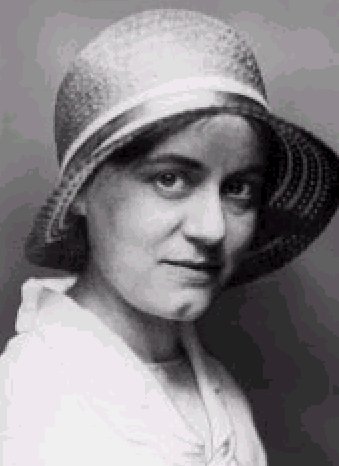
August 9th is the feast day of St Teresa Benedicta of the Cross more well known by her name Edith Stein. Edith was a German born Jewess who after much searching, converted and became a catholic and eventually entered the Disclaced Carmelite Order.As the the anti-Semitism of the Nazis grew, in 1938 Edith was smuggled across the border into the Carmelite Convent of Echt in Holland. However, as the war escalated and Holland was occupied, the danger for Jews spread to that country. In August 1942, as retaliation against the protests of Dutch bishops to the treatment of Jews, many Jewish Christians were arrested, including Edith and her sister Rosa (who had also converted and was living at the Carmel in Echt). They were transported to the concentration camp at Auschwitz where Edith was gassed and cremated on 9th August 1942.

She was declared a co-patroness of Europe along with Ss Catherine of Siena, Bridget of Swedan and is the patron saint of those who have lost their parents, Jewish converts and martyrs.

The Carmelites of Kilmacud have a short but informative and interesting webpage on Edith HERE.

You can read more about Edith HERE, HERE, HERE and HERE.

An interesting article about Edith Stein, the Apostate Saint

Mass readings for the day are available HERE.

16 Jul 2013

Our Lady of Mount Carmel - July 16th

Our Lady of Mount Carmel with St John of the Cross and St Teresa of Avila
- Terry Nelson (iconographer)

July 16th is the feast of Our Lady of Mount Carmel.Our Lady of Mount Carmel is the title given to the Blessed Virgin Mary, in her role as patroness of the Carmelite Order. The first Carmelites were Christian hermits living on Mount Carmel in the Holy Land during the late 12th and early to mid 13th centuries. They built a chapel in the midst of their hermitages which they dedicated to the Blessed Virgin, whom they conceived of in chivalric terms as the "Lady of the place"

Since the 15th century, popular devotion to Our Lady of Mount Carmel has centered on the Scapular of Our Lady of Mount Carmel also known as the Brown Scapular, a sacramental associated with promises of Mary's special aid for the salvation of the devoted wearer. Traditionally, Mary is said to have given the Scapular to an early Carmelite named Saint Simon Stock. The liturgical feast of Our Lady of Mount Carmel is celebrated on 16 July.


Our Lady of Mt Carmel with the Carmelite Saints and the Martyrs of Uganda
- Patroness of the Carmelite mission in Uganda
"Devotion to Our Lady of Mount Carmel is bound to the history and spiritual values of the Order of the Brothers of the Blessed Virgin Mary of Mount Carmel and is expressed through the scapular. Thus, whoever receives the scapular becomes a member of the order and pledges him/herself to live according to its spirituality in accordance with the characteristics of his/her state in life."

"The scapular is a Marian habit or garment. It is both a sign and pledge. A sign of belonging to Mary; a pledge of her motherly protection, not only in this life but after death. As a sign, it is a conventional sign signifying three elements strictly joined: first, belonging to a religious family particularly devoted to Mary, especially dear to Mary, the Carmelite Order; second, consecration to Mary, devotion to and trust in her Immaculate Heart; third an incitement to become like Mary by imitating her virtues, above all her humility, chastity, and spirit of prayer."

Dr Lillis has a reflection on Our Lady of Mount Carmel and Blessed John Paul II.

A hymn associated with the feast is the Flos Carmeli (Flower of Carmel). Flos Carmeli was used by the Carmelites as the sequence for the Feast of St. Simon Stock, and, since 1663, for the Feast of Our Lady of Mt Carmel. It also appears in an ancient metrical office of Carmel as an antiphon and responsory. Its composition is ascribed to St. Simon Stock himself (ca 1165 - 1265).

FLOS Carmeli,
vitis florigera,
splendor caeli,
virgo puerpera
singularis.
FLOWER of Carmel,
Tall vine blossom laden;
Splendor of heaven,
Childbearing yet maiden.
None equals thee.
Mater mitis
sed viri nescia
Carmelitis
esto propitia
stella maris.
Mother so tender,
Who no man didst know,
On Carmel's children
Thy favors bestow.
Star of the Sea.
Radix Iesse
germinans flosculum
nos ad esse
tecum in saeculum
patiaris.
Strong stem of Jesse,
Who bore one bright flower,
Be ever near us
And guard us each hour,
who serve thee here.
Inter spinas
quae crescis lilium
serva puras
mentes fragilium
tutelaris.
Purest of lilies,
That flowers among thorns,
Bring help to the true heart
That in weakness turns
and trusts in thee.
Armatura
fortis pugnantium
furunt bella
tende praesidium
scapularis.
Strongest of armor,
We trust in thy might:
Under thy mantle,
Hard press'd in the fight,
we call to thee.
Per incerta
prudens consilium
per adversa
iuge solatium
largiaris.
Our way uncertain,
Surrounded by foes,
Unfailing counsel
You give to those
who turn to thee.
Mater dulcis
Carmeli domina,
plebem tuam
reple laetitia
qua bearis.
O gentle Mother
Who in Carmel reigns,
Share with your servants
That gladness you gained
and now enjoy.
Paradisi
clavis et ianua,
fac nos duci
quo, Mater, gloria
coronaris. Amen
Hail, Gate of Heaven,
With glory now crowned,
Bring us to safety
Where thy Son is found,
true joy to see.

23 Feb 2013

Lenten Reflections

Saint John of the Cross (1542–1591)


I live yet do not live in me,
am waiting as my life goes by,
and die because I do not die.


No longer do I live in me,
and without God I cannot live;
to him or me I cannot give
my self, so what can living be?
A thousand deaths my agony
waiting as my life goes by,
dying because I do not die.


This life I live alone I view
as robbery of life, and so
it is a constant death — with no
way out until I live with you.
God, hear me, what I say is true:
I do not want this life of mine,
and die because I do not die.


Being so removed from you I say
what kind of life can I have here
but death so ugly and severe
and worse than any form of pain?
I pity me — and yet my fate
is that I must keep up this lie,
and die because I do not die.


The fish taken out of the sea
is not without a consolation:
his dying is of brief duration
and ultimately brings relief.
Yet what convulsive death can be
as bad as my pathetic life?
The more I live the more I die.


When I begin to feel relief
on seeing you in the sacrament,
I sink in deeper discontent,
deprived of your sweet company.
Now everything compels my grief:
I want — yet can’t — see you nearby,
and die because I do not die.


Although I find my pleasure, Sir,
in hope of someday seeing you,
I see that I can lose you too,
which makes my pain doubly severe,
and so I live in darkest fear,
and hope, wait as life goes by,
dying because I do not die.


Deliver me from death, my God,
and give me life; now you have wound
a rope about me; harshly bound
I ask you to release the cord.
See how I die to see you, Lord,
and I am shattered where I lie,
dying because I do not die.


My death will trigger tears in me,
and I shall mourn my life: a day
annihilated by the way
I fail and sin relentlessly.
O Father God, when will it be
that I can say without a lie:
I live because I do not die?


St. John of the Crosstranslated by Willis Barnstonefound in “Poems of St. John of the Cross”