Showing posts with label John the Baptist. Show all posts

8 Dec 2018

December 9th 2018 - Exploring Lectio Divina with Fr Frank Duhig

On this weeks programme we are joined by Fr Frank Duhig to discuss and reflect on lectio divina. Fr Frank takes us through what it means, how to do it and what it can mean for our daily spiritual lives. We have our regular reflection on the Sunday gospel led by Fr Frank as well as other liturgical odds & ends and notices.

You can listen to the full podcast of this weeks programme HERE.

Lectio Divina


Lectio Divina", a Latin term, means "sacred reading" and describes a way of reading the Scriptures whereby we gradually let go of our own agenda and open ourselves to what God wants to say to us. 

Regular listeners to the programme will know that most of the presenters and panelists that participate in the show participate in lectio divina and many are members of the group of people who gather each Monday night in the Parish Centre in Newcastle West Co Limerick from 8.15pm to 9.15pm to participate in "lectio divina" where together we break open the Word and explore its meaning for our daily lives in this hectic and fast paced world of ours.


Fr Frank Duhig shares with is his thoughts on the practise of lectio divina and explains how the group lectio works each week in Newcastle West.

Fr Franks reflection is excerpted from the main programme podcast HERE.

Gospel - Luke 3:1-6

In the fifteenth year of the reign of Tiberius Caesar,
when Pontius Pilate was governor of Judea,
and Herod was tetrarch of Galilee,
and his brother Philip tetrarch of the region
of Ituraea and Trachonitis,
and Lysanias was tetrarch of Abilene,
during the high priesthood of Annas and Caiaphas,
the word of God came to John the son of Zechariah in the desert.
John went throughout the whole region of the Jordan,
proclaiming a baptism of repentance for the forgiveness of sins,
as it is written in the book of the words of the prophet Isaiah:
A voice of one crying out in the desert:
“Prepare the way of the Lord,
make straight his paths.
Every valley shall be filled
and every mountain and hill shall be made low.
The winding roads shall be made straight,
and the rough ways made smooth,
and all flesh shall see the salvation of God.”

Reflections on this weeks gospel:

Word on Fire
Centre for Liturgy
English Dominicans
Sunday Reflections

Liturgical odds & ends

Liturgy of the Hours - Psalter week 2; 2nd week of Advent

Saints of the Week

December 10th - Bl Brian Lacy
December 11th - St Damasus I
December 12th - Our Lady of Guadalupe
December 13th - St Lucy
December 14th - St John of the Cross
December 15th - St Silvia of Constantinople

6 Dec 2014

7th December 2014 - 2nd Sunday of Advent

On this weeks programme John is joined by Mary Lynch, Martina O'Sullivan and Stephanie O'Donnell who have a reflection on Eucharistic Adoration. Michael Keating joins John to reflect on this weeks gospel as well as some other liturgical odds and ends.

You can listen to the podcast of this weeks programme HERE.

Apostolate of Eucharistic Adoration

This week we reflect on Eucharistic Adoration as part of preparation for Advent. 

Mary Lynch introduces us to the Apostolate of Eucharistic Adoration which is an Association of Adorers of the Blessed Sacrament, embracing God’s call to weekly Eucharistic Adoration, striving to be a people of prayer, vision and mission, and accepting the challenge to live the Good News of Jesus Christ. This Apostolate is organised, maintained and developed by lay people.


Martina O'Sullivan returns to the programme to share about Children's Eucharistic Adoration and Stephanie O'Donnell reflects on her involvement in the Do This in Memory programme which is the preparatory programme for First Holy Communion through the parish and the primary schools in the diocese of Limerick.

You can listen to the excerpt of the programme on Eucharistic adoration HERE.

Gospel - Mark 1:1-8


The beginning of the gospel of Jesus Christ, the Son of God. As it is written in Isaiah the prophet, "Behold, I send my messenger before thy face, who shall prepare thy way; the voice of one crying in the wilderness: Prepare the way of the Lord, make his paths straight--" John the baptizer appeared in the wilderness, preaching a baptism of repentance for the forgiveness of sins. And there went out to him all the country of Judea, and all the people of Jerusalem; and they were baptized by him in the river Jordan, confessing their sins. Now John was clothed with camel's hair, and had a leather girdle around his waist, and ate locusts and wild honey. And he preached, saying, "After me comes he who is mightier than I, the thong of whose sandals I am not worthy to stoop down and untie. I have baptized you with water; but he will baptize you with the Holy Spirit."


Reflections on the second Sunday of Advent:


Word on Fire

Sunday Reflections
English Dominicans
Phil Ewing over at Ennis Blue

Liturgical odds and ends

Saints of the Week

December 9th - St Juan Diego Cuauhtlatoatzin
December 10th - Bl Adolph Kolping
December 11th - St Damasus I (Pope)
December 12th - St Finnian also Our Lady of Guadalupe
December 13th - St Lucy
December 14th - St John of the Cross is not celebrated this year

6 Dec 2013

8th December 2013 - 2nd Sunday of Advent (Year A) - Fr Frank Duhig reflects on Advent

On this weeks programme we continue our journey through the Advent season we are joined by Fr Frank Duhig who reflects on the Advent season. We have our regular reflection on the Sunday gospel as well as some other liturgical odds and ends.

You can listen to this weeks full programme podcast HERE.

You can listen to Fr Frank's reflectione excerpted from the programme HERE.

Fr Frank Duhig reflects on Advent


Fr Frank joins us on this week programme for a short reflection on the multilayered season of Advent. Advent is very much a season of waiting; in some ways it is a return to Old Testament (OT) times which records a long extended period of waiting across many generations and periods of time when the Chosen People awaited the fulfillment of the Promise which had been made to them. We re-live an abbreviated OT time, waiting for the coming of the Messiah. The season is a reminder to us that we live in a continuous period of expectation - like a woman who is expecting her child. During the season we have a re-reading of the prophecies of the events of salvation history especially with Isaiah who calls us to stay ready even now. Adventus - the season reminds us who is coming and who it is we are still waiting for; a season for us to see how ready are we for Christ to come to us. After all, Advent is time for the preparing of coming of Christ rather than for the coming of Christmas

You can listen to Fr Franks reflection excerpted from the programme HERE.

Gospel - Matthew 3:1-12

In those days came John the Baptist, preaching in the wilderness of Judea, "Repent, for the kingdom of heaven is at hand." For this is he who was spoken of by the prophet Isaiah when he said, "The voice of one crying in the wilderness: Prepare the way of the Lord, make his paths straight." Now John wore a garment of camel's hair, and a leather girdle around his waist; and his food was locusts and wild honey. Then went out to him Jerusalem and all Judea and all the region about the Jordan, and they were baptized by him in the river Jordan, confessing their sins.

But when he saw many of the Pharisees and Sad'ducees coming for baptism, he said to them, "You brood of vipers! Who warned you to flee from the wrath to come? Bear fruit that befits repentance, and do not presume to say to yourselves, `We have Abraham as our father'; for I tell you, God is able from these stones to raise up children to Abraham. Even now the axe is laid to the root of the trees; every tree therefore that does not bear good fruit is cut down and thrown into the fire.

"I baptize you with water for repentance, but he who is coming after me is mightier than I, whose sandals I am not worthy to carry; he will baptize you with the Holy Spirit and with fire. His winnowing fork is in his hand, and he will clear his threshing floor and gather his wheat into the granary, but the chaff he will burn with unquenchable fire
 
This week John the Baptist explodes onto the scene in Matthews gospel with John just appearing in the wilderness, proclaiming repentance. An austure and ascetic figure calling people back to the basics - the first in 400 years for the People of Israel. The call once more to return to the desert  to allow time and space for communion with God. John challenges the people especially the leadership of the time in stark no holds barred language. John calls for metonia - a change of heart - to prepare for the coming of the Messiah. It is a reminder that no matter who we are, we are all called to change. It doesnt matter what roles and rituals we foster, if we are not changed in our hearts we may not be saved.

The gospel calls us to prepare for the coming of Christ and maybe the need to have a "desert day" during December when we set aside some time to listen to the liturgy of Advent and how well are we hearing and listening to it; how well are we really preparing for the coming of Christ?


Liturgical odds and ends

Liturgy of the Hours - psalter week 2, 2nd week of Advent

Saints of the Week

December 9th - Solemnity of the Immaculate Conception of the Blessed Virgin Mary
December 10th - Bl Adolph Kolping
December 11th - St Damasus I (Pope)
December 12th - St Finnian also Our Lady of Guadalupe
December 13th - St Lucy
December 14th - St John of the Cross

23 Jun 2012

24th June 2011 - Solemnity of the Nativity of John the Baptist - Permanent Diaconate

On this weeks programme we are joined by Br Martin Browne OSB from Glenstal monastery to discuss the permanent diaconate. We have our regular reflection on the Sunday gospel as well as some celestial guides for the coming week and local notices.


The podcast for this weeks programme is available HERE.

The Emmanuel Community Youth Forum


Anna McNevin joins us for a few moments on this mornings programme to tell us about the international Youth Forum from 3rd to 8th August 2012 which is being hosted by the Emmanuel Community in Altotting which is the spiritual heart of Bavaria in Germany.  

The Forum, a word taken from latin and meaning something like ‘marketplace’ takes place the heart of the town, in the central square, in the open air. Young people are invited to come and celebrate in Altötting. The European Youth Forum is a Catholic summer meeting for young people! The Forum will be in English and German with translation to several other languages.

Further information about the European Youth Forum is available HERE.

Contact: info@emmanuelcommunity.ie before 10th July 2012.

The Permanent Diaconate

"The deacon is one who waits. He is never in charge. He is the servant of others — of God, of his bishop, of the congregation. He is a voice: it is his task to read the Lord’s Gospel, not his own . . . He is a servant: it is his task to wait at the Lord’s table. . .It is others who preside; he is the waiter, the attendant. Is there anything at all that is peculiar to the deacon? Is he given powers that are given to no one else? The answer is ‘No.’ There is nothing he can do which nobody else can do. But that is just what is distinctive about him. He has no power. He is a servant. He is entrusted with the ministry of Christ who washes his servants’ feet. He embodies the service of the Lord who has made himself the servant of all.”  - Deacons and the Church by Owen F. Cummings (Paulist Press, New York)

Br Martin Brown OSB joins us on this weeks programme to discuss the restoration of the permanent diaconate to the Irish diocesan church fifty years after Pope Paul VI restored it to the universal church at the Second Vatican Council.

Br Martin is a monk of Glenstal Abbey and is also a permanent deacon who works as the headmaster to the Glenstal Abbey School. He joins John and Shane on this mornings programme to discuss what exactly the diaconate is and its role in the ministry of the church.

The diaconate is seen as the public manifestation of the servant nature of the church. Deacons are ordained ministers of the church who also serve in a liturgical function.

"The restoration of the ministry of permanent deacons is somehow looked on in terms of what the deacon can or cannot do compared with the priest and ministry of the deacon is looked on as some sort of second-class ministry. People who speak or write in this framework fail to understand the deaconate and fail to understand ministry. The order of deacons is not just about doing things; it is a call to be configured in a special way to Jesus who serves and to represent in a special way in the life of the Church Jesus who serves." - Archbishop Diarmuid Martin 

The Acts of the Apostles describes how, in the first century, the Church was faced with the challenge of responding to the needs of those who were at risk of being marginalised, either through culture or through material poverty. Keeping in mind the example of Jesus, the Apostles selected and ordained a number of men specifically for this service.

For a number of centuries, deacons ministered in close co-operation with the bishops of the Church, assisting at the Eucharist, preaching the Gospel, and exercising a ministry of charity. Francis of Assisi, founder of the Franciscan Orders, is probably one of the best known deacons, though many tend to assume that he was a priest. Gradually, in the Western Church, the functions of deacons were absorbed into the ministry of the priest, and the diaconate became a transitional order, for those on the way to priesthood. The diaconate continued to exist as a permanent ministry in the Eastern Churches, including those in full communion with Rome.

The Second Vatican Council envisaged a renewal of ministry, both lay and ordained, in the Church. The Council’s Constitution on the Church, Lumen Gentium, explains that the lay faithful, by virtue of their Baptism, are commissioned to an active apostolate and insists that “every opportunity be given them so that, according to their abilities and the needs of the times, they may zealously participate in the saving work of the Church. The Second Vatican Council also proposed the restoration of the diaconate as a “distinct ministry of service” to be exercised “in communion with the bishop and his group of priests”.

Many of the functions which deacons perform can also be carried out by members of the lay faithful. The restoration of the diaconate is not intended in any sense to change that situation. The idea is that some of those who already exercise these functions would be “strengthened with the grace of diaconal ordination” and in that way would be designated to be a visible public sign of the Christ the Servant in the community of the Church.

Deacons are ordained to service, to charity and to proclaim  the Word.

Other links and information on the permanent diaconate:
Deacons who blog:
Br Martin's reflection/discussion is extracted from the main programme and is available HERE.


Gospel - Luke 1: 57 - 66, 80


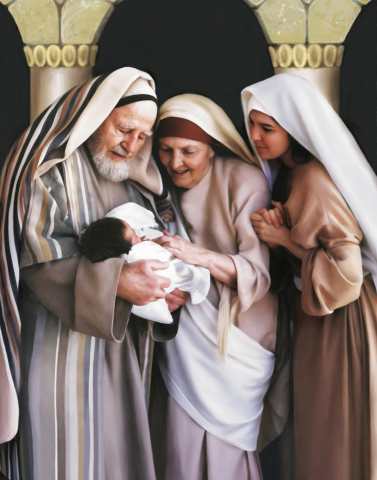
This weeks gospel is taken from the beginning of St Luke's gospel and recounts the events surrounding the birth of St John the Baptist. John will be the voice in the wilderness proclaiming the way of the Messiah but today we celebrate a very human event, the birth and naming of a baby boy. It is a celebration of great joy; something which many of us can empathise with. But also asks the questions to us, have we "celebrated" the many gifts that God has given to us? John was a gift to his parents in their old age; we have received many gifts and blessings in our lives and one of the questions posed to us by today's gospel is whether we have reflected and given thanks and celebrated the gifts we have received.

The other thought that strikes us in this weeks gospel is the naming of John by his mother which is echoed by his father. Each of us is called and named; at baptism we are called into the family of God; we are named for God and reminded that we are loved by God!

From the Limerick Diocesan Weekly Newsletter:

This Sunday we celebrate the birth of John the Baptist, of whom the people said 'Who then will this child be?' This is one of the oldest feasts in the church and surely one we can all associate with.  
A much longed for child is born, family & friends descend to celebrate the happy event, a name is discussed & decided upon (by the parents!), and the child is placed under Gods protection. Like us, Elizabeth and Zechariah had deep love and high hopes for their child. Like us, they did not know what the future might hold, so they could not promise John a perfect life. Thus they brought John to God for Gods blessing - as we bring our children to God in the Sacrament of Baptism.  
Speaking to parents of infants for Baptism in 2006, Pope Benedict said: "What do we hope for from Baptism? ... We hope for eternal life for our children. ...In simpler words, ... we hope for a good life, the true life, for these children of ours; and also for happiness in a future that is still unknown. We are unable to guarantee this gift for the entire span of the unknown future, so we turn to the Lord to obtain this gift from him. ... No one of us knows what will happen on our planet, on our European Continent, in the next 50, 60 or 70 years. But we can be sure of one thing: God's family will always be present and those who belong to this family will never be alone. They will always be able to fall back on the steadfast friendship of the One who is life." (Jan 9th 2006, Rome)  
Todays we pray for all parents & guardians & those who care for our children. May God, who is the giver of all life, human and divine, bless them. May each of us be also the best of teachers to these children, bearing witness to the faith by what we say and what we do, in Christ Jesus our Lord.
Amen
Other reflections on this weeks gospel:

Word on Fire
English Dominicans
Centre for Liturgy
Sunday Reflection
The Carmelites
Humblepiety
Dominican Nuns of Summit, NJ

Saints of the Week

June 25th - Saint Domingo Henares de Zafra Cubero
June 26th - Saint Josemaria Escriva
June 27th - Saint Cyril of Alexandria
June 28th - Saint Irenaeus of Lyons
June 29th - Feast of Ss Peter and Paul
June 30th - First Martyrs of Rome