Showing posts with label Uganda. Show all posts

4 Jun 2016

Uganda celebrates colourful Martyrs Day - June 3rd

(For your blog editor Uganda Martyrs day has a very special place in his heart as he lived for nearly three years in Uganda. Also, this years celebration is special as my old home, Diocese of Kiyinda-Mityana and my old boss, Bishop Joseph Antony Zziwa were the leaders of the national celebrations at Namugongo).

Vatican Radio:

One million people from Uganda and beyond gathered on Friday 3 June to celebrate Martyrs Day at the Namugongo Shrine in Uganda.

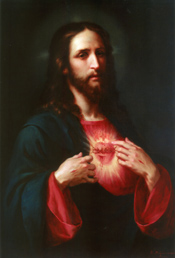
Given the immense importance that the celebration of the Solemnity of the Uganda Martyrs holds for the people of Uganda and beyond, the Congregation for Divine Worship and Discipline of Sacraments, in the Vatican, gave the Ugandan Church approval to transfer the Solemnity of the Sacred Heart of Jesus from Friday 3 June 2016 to Friday 10 June 2016.

Uganda’s New Vision daily newspaper reports that the main celebrant, Bishop Joseph Anthony Ziwa of Kiyinda Mityana Diocese called upon the Faithful to emulate the Uganda Martyrs by sticking to the truth. He said only the truth would save society from evils witnessed today. He made the appeal during the homily to pilgrims at the Namugongo shrine.

"We know that the absence of the truth leads man to commit social evils in society, but we cannot be witnesses of Christ in the world when our speech is packed with lies," Bishop Zziwa told pilgrims. He also warned Christians against living a ‘double life.’

“Some people are Christians during the day and at night behave like pagans. Let us be truthful, and the truth shall make us free, Let us be renewed by this pilgrimage to Namugongo and resolve to witness to the truth," added Bishop Ziwa.

Quoting Pope Francis, Bishop Zziwa said that the strength of the Christian community of Uganda depends on the Martyrs who testified that the truth shall set humankind free.

In light of that message and in the spirit of the Jubilee Year of Mercy, the theme of this year's Uganda Martyrs Day celebration was, "Truth shall set you Free." Bishop Zziwa explained that Jesus used this message while preaching to the disciples who were facing opposition from the Pharisees and the scribes.

According to Bishop Zziwa, Christians should be identified by their witness to the truth just as the Martyrs did many years ago, reports the New Vision of Uganda.

Uganda’s Martyrs Day, which falls on 3 June, every year commemorates the heroic faith of the 45 Martyrs, both Catholic and Anglican, who were burnt to death on the orders of Kabaka Mwanga II, the then King of Buganda between 1885 and 1887. Twenty-two Catholic Martyrs were beatified on 6 June 1920, by Pope Benedict XV, and on 18 October 1964, Pope Paul VI canonised them as Saints.


**********

Previous posts about the Ugandan Martyrs here

3 Jun 2013

June 3rd - Feast day of St Charles Lwanga and Companions - The Ugandan Martyrs (Repost)


June 3rd is the liturgical commemoration of St Charles Lwanga and Companions known as the Ugandan Martyrs. It is also a public holiday in Uganda. While the RCC celebrates the 22 canonised martyrs killed between 1885-87, the Anglicans also commemorate their martyrs, all of whom were martyrs for the faith mainly by being burnt alive although some were dismembered and/or mutilated in defense of the faith 

The story of their martyrdom is told here and here but what makes it stand out was the fact that Christianity had only recently arrived in Uganda and the relative youth of the martyrs which can be seen from this photo taken a number of years before (to get a closer look, double click on the photo).


Celebrations begin on May 30th at Butega in the Diocese of Kiyinda-Mityana with the commemoration of the martyrdom of St Matia Mulumba followed on May 31st with the commemoration of the martyrdom of St Noa Mawaggali at Kiyinda (which is the site of the cathedral of the diocese) followed by the national celebration at Nammugono outside Kampala on June 3rd which was the main site of the martyrdom.

At Kiyinda, the cathedral of the Diocese of Kiyinda-Mityana is under the patronage of St Noa Mawaggali, St Luka Baanabakintu and St Matia Mulumba, who are part of the group of the Ugandan Martyrs killed in 1886. The cathedral is one of the two national shrines to the martyrs (although much les well known than the main site of the martyrdoms in Namugongo). 


Source - Uganda Catholic Secretariat
The cathedral built in 1965/66 is on the site of the tree (a part of which is still preserved) where St Noa was tied to, speared and then left for the wild dogs to finish off with a small chapel on the cathedral compound marking his family home. St Matia Mulumba was dismembered, castrated and while still alive, dumped into a swamp. St Lukka was amongst those burnt alive at Namagongo. St Luka and St Matia were born within the confines of the diocese of Kiyinda-Mityana, hence their commemoration at this shrine.


Hundreds of thousands from all over Uganda and even as far a field as Nigeria will gather for the main annual commemerations on June 3rd at Namagongo.  The Uganda Martyrs Shrine Namugongo stands at the exact spot where the gallant leader of the Uganda Martyrs; St. Charles Lwanga was burnt alive from head to toe.

RCC National Shrine at Namugongo

Fr Robert Barron was in Uganda a couple of years ago for the feast day and gives a reflection on the feast and a small video taken during the national celebration at Namugongo.

2 Jun 2012

3rd June 2012 - Trinity Sunday

On this weeks programme we are joined by Fr Michael Liston to discuss and reflect on the Solemnity of the Holy Trinity, our regular reflection on the Sunday gospel, some local notices, saints of the week and other liturgical odds and ends.

This weeks programme podcast is available here.

Trinity Sunday

<><><><>
Rublev's Icon of the Trinity

I bind unto myself today
The strong Name of the Trinity,
By invocation of the same,
The Three in One and One in Three.

I bind unto myself the Name,
The strong Name of the Trinity;
By invocation of the same.
The Three in One, and One in Three,
Of Whom all nature hath creation,
Eternal Father, Spirit, Word:
Praise to the Lord of my salvation,
Salvation is of Christ the Lord

Trinity Sunday, officially "The Solemnity of the Most Holy Trinity," is one of the few feasts of the Christian Year that celebrates a reality and doctrine rather than an event or person. On Trinity Sunday we remember and honor the eternal God: the Father, the Son, and the Holy Spirit. Trinity Sunday is celebrated the Sunday after Pentecost, and lasts only one day, which is symbolic of the unity of the Trinity. The Eastern Churches have no tradition of Trinity Sunday, arguing that they celebrate the Trinity every Sunday. Westerners do as well, although they set aside a special feast day for the purpose.

The feast day of the Blessed Trinity is a summary of all the feast days we have had since Christmas up to and including Lent, Easter and the Pentecost. In some ways it is all summarised in the feast day of the Blessed Trinity. Fr Micháel takes us through a wonderful reflection on the meaning of our relationship with the Trinity and how we are welcomed into the love of the Trinity which is open to each one of us. Each of us are called into their family; not forced but invited in with an extraordinary freedom to say no but also to be able to say yes joyfully.

Fr Michael's reflection is extracted from the rest of the programme and is available here.

Other information on Trinity Sunday available HERE. AN explanation of the Rublev Icon is available HERE.

  
Gospel - Matthew 28: 16-20 

This week we return to the synoptic gospels after a couple of weeks of John throughout Eastertide. We are presented with Matthews account of the last appearance of Jesus to the disciples after the Resurrection which takes place in Galilee. The disciples have (finally) listened to the message of the women from Easter Sunday and gone back to where it all began. Circles within circles. They have returned to the beginning and Jesus sends them out again, telling them to baptise all nations in the name of the Trinity. He presents them with an extraordinary commission given to battered, weak human beings who had revealed all their weaknesses publicly to themselves and to each other. We are called to baptise the world, to plunge  the world into the intensity of the love of the Holy Trinity.

It is a gospel which can give us hope in the times where we can be conflicted about issues with faith and our church. In this weeks gospel, we see the hesitancy of the apostles - the very men who Jesus was choosing to be his witnesses throughout the world and yet some still hesitated! At the same time he tells us and them that they will not be alone, that we are not alone, that he will remain with us until the end of time.

The gospel also reminds us of the need to be learned in the ways of our faith. A disciple is a learner, we need to be learners ourselves, after all we cannot carry the message of Jesus to "all nations"if we are ignorant of the message. It is not sufficient to learn your basic faith story until you are eleven or twelve in school and then assume that that amount of knowledge will carry you through an adult life. We must allow our hearts to be stretched to be able to share in the love of God.


Other reflections on this weeks gospel:
Liturgical Odds and Ends

Psalter - Week 1, week 9 of Ordinary time

Saints of the Week

June 4th - per the Irish calendar - St Charles Lwanga and Companions (The Ugandan Martyrs).
June 5th - St Boniface
June 6th - St Jarleth of Tuam
June 7th - St Colman
June 8th - St William of York
June 9th - St Colmcille (Abbot, missionary, secondary patron of Ireland)

Novena to the Sacred Heart

Nightly at 8pm, 7th to 15th June 2012, Robertstown Church. Quiet time before the Blessed Sacrament each night 9.00pm - 10pm. The Novena will include Corpus Christi Procession (Saturday 9th June); Mass in Robertstown Cemetery (Sunday 10th June 10.30am); Blessing of the Sick (Tuesday 12th June 2012).
Speakers during the Novena:

Fr Fonsie Cullinan PP Rathkeale
Sr Clare Slattery Mercy sister, DBI team Limerick
Fr Terry Loughran PP Cappagh
Fr Denis Mullane PP Coolcappa/Kilcolman
Fr Noel Kirwin - Director Limerick Diocesan Pastoral Centre
Fr Frank O'Connor - Chaplain to Secondary Schools in the Diocese
Ms Noreen Lynch - Pastoral Co-ordinator, Limerick Diocesan Pastoral Centre
Fr John Guiney SJ.

3 Jun 2011

Called to Mission – A personal reflection on the experience of mission and missionary priests

This piece was originally written in 2009 as a guest post on a Facebook page set up to mark the Year of the Priest by the Pious Disciples of the Divine Master. It is a reflection on the role and place of Irish missionaries and missionary priests in particular as well as being a reflection on mission in the lives of all Christians

Called to Mission – A Personal Reflection on the experience of mission
 

When a person says missionary priest to you what comes to mind in this modern age? Tasteless wafers, bitter sweet red wine, soutanes, clerical collars, funerals, newspaper headlines? For me such word association conjures up – billowing incense and the morning cool of a chapel in the Ugandan sun with earthen floor and tin roof and the primordial surge of African drums reverberating through my body at a community celebration. A strange kaleidoscope of images and scents you would think to associate with such a loaded and historical term as missionary! But to me what it invokes before the sacramental is the human, each image or scent represents a priest – a friend - in a human situation who has invoked the sacramental nature of our faith and the ultimate sacrament associated with priesthood – Eucharist in and within community.

Writing about such an experience is unusual as it forces one to consider seriously what it means to my understanding in a faith context of the role of a priest especially in these dark times for the Irish people. My experience has been unusual in some respect because I have an uncle who is a priest.

Fr John has been a Mill Hill Missionary for 47 years of which he has spent 46 serving the people of the Philippines in Antique province. Even now, after 46 years, or more especially because it has been 46 years, his parishioners are his people and we his family have to share him with them. Each time he gets back on the plane to go home, we wonder if it will be the last time we see him in Ireland. But it is this very human man, who to me has witnessed as to what it means to be a priest. But then again, it is not just him.

In our home parish many of us know the names of our missionaries – Fr John Ambrose (MHM), Fr John Cribben (Oblates), Fr John Guiney (SJ), Fr Dan O'Malley (Columban Fathers), Fr Jim Noonan (Kiltegan Fathers), all over seas and remembered with our missionary sisters, who on their infrequent visits home celebrated Mass and helped out in the parish when they, like the swallows, returned to Ireland for the summer to rest and recuperate and with the changing of the leaves in the autumn, just like the swallows, returned to their homes in Brazil, Kenya, Philippines and other diverse and far flung places – almost with relief.

Even now, when I myself am overseas as a Volunteer Missionary with the Volunteer Missionary Movement (VMM – www.vmm.ie ) I still am in awe of these men and women and the sacrifices they have made over many years, more so as I realise that being honest, I don't think I could do it – being there for such a long period, fulfilling a "mission" to a community far from that community which brought me forth into the world. Such stability, such faithfulness is humbling and so counter cultural to the modern world and to my own generation.

"A generational trend among some young college-educated men and women who are free to choose is the choice made for flux over such stability. Some social scientists have dubbed these post-college years the "odyssey years" -- a nomadic period when young adults move from one job to another, from one city to the next, delaying marriage, children and permanent career tracks longer than previous generations. Spiritually, they tend to be seekers, a characteristic that applies even to many with deep roots in a traditional religion such as Catholicism and no great desire to venture too far from the fold".

"Their stories reinforce the view expressed by New York Times columnist David Brooks….who wrote that today's children "graduate into a world characterized by uncertainty, diversity, searching and tinkering. Old success recipes don't apply, new norms have not been established and everything seems to give way to a less permanent version of itself. Dating gives way to Facebook and hooking up. Marriage gives way to cohabitation. Church attendance gives way to spiritual longing. Newspaper reading gives way to blogging.""

In this modern unstable life there is almost a hesitation or even a lack of understanding of how a person could decide to voluntarily give their word for life to such a venture as "the missions" overseas. Despite an over abundance of words in the modern communication age, there seems to be an inability to communicate, to relate, to understand as the very nature of words seems to be slipping from the knowledge of society. It is almost like "the paradox affecting so many Millennials: the simultaneous pull towards isolation and interconnectedness. Young adults have grown up in the impersonal individualism of the information age, and in many ways embrace it. They feel at home with enormously popular Web sites like Facebook and MySpace, where they maintain non-commital "loose affiliations" with a variety of acquaintances and issues."


1 Jun 2011

June 3rd - Feast of St Charles Lwanga and Companions - the Ugandan Martyrs


June 3rd is the liturgical commemoration of St Charles Lwanga and Companions known as the Ugandan Martyrs. It is also a public holiday in Uganda. While the RCC celebrates the 22 canonised martyrs killed between 1885-87, the Anglicans also commemorate their martyrs, all of whom were martyrs for the faith mainly by being burnt alive although some were dismembered and/or mutilated in defense of the faith 

The story of their martyrdom is told here and here but what makes it stand out was the fact that Christianity had only recently arrived in Uganda and the relative youth of the martyrs which can be seen from this photo taken a number of years before (to get a closer look, double click on the photo).


Celebrations begin on May 30th at Butega in the Diocese of Kiyinda-Mityana with the commemoration of the martyrdom of St Matia Mulumba followed on May 31st with the commemoration of the martyrdom of St Noa Mawaggali at Kiyinda (which is the site of the cathedral of the diocese) followed by the national celebration at Nammugono outside Kampala on June 3rd which was the main site of the martyrdom.

At Kiyinda, the cathedral of the Diocese of Kiyinda-Mityana is under the patronage of St Noa Mawaggali, St Luka Baanabakintu and St Matia Mulumba, who are part of the group of the Ugandan Martyrs killed in 1886. The cathedral is one of the two national shrines to the martyrs (although much les well known than the main site of the martyrdoms in Namugongo). 
Cathedral of diocese of Kiyinda-Mityana
The cathedral built in 1965/66 is on the site of the tree (a part of which is still preserved) where St Noa was tied to, speared and then left for the wild dogs to finish off with a small chapel on the cathedral compound marking his family home. St Matia Mulumba was dismembered, castrated and while still alive, dumped into a swamp. St Lukka was amongst those burnt alive at Namagongo. St Luka and St Matia were born within the confines of the diocese of Kiyinda-Mityana, hence their commemoration at this shrine.
Basilica at Namugongo


Hundreds of thousands from all over Uganda and even as far a field as Nigeria will gather for the main annual commemerations on June 3rd at Namagongo.  The Uganda Martyrs Shrine Namugongo stands at the exact spot where the gallant leader of the Uganda Martyrs; St. Charles Lwanga was burnt alive from toes to head.

Fr Robert Barron was in Uganda a couple of years ago for the feast day and gives a reflection on the feast and a small video taken during the national celebration at Namugongo.

1 Oct 2010

3rd October 2010 - 27th Sunday in Ordinary Time Year C

This weeks show begins Sacred Space 102fm's short series during the month of October focusing on the missions. The show has an interview with our own Shane Ambrose who speaks about his time volunteering in Uganda, our regular gospel reflection and a quick run though the saints for the week.


You can listen to this weeks programme HERE.


From Knockpatrick to Kiyinda - A VM's reflections on some time in Africa

Regular readers of the blog will have seen a series of recent posts in the last week from our regular panelist Shane Ambrose where he has written and reflected about his time in Uganda with a particular focus on presence, suffering, solidarity and friendship. Shane was a volunteer for 30 months in Uganda with the Volunteer Missionary Movement and speaks on this weeks show under a gentle "interrogation" from Lorraine and John about his experiences there. Some other VM's online are here.

Gospel Reflection

This weeks gospel of many parts talks to us about how the apostles pray for Jesus to increase their faith and the role of Christians to be willing to do what has to be done and not expect major kudos for it. It raises the questions do we try to manipulate our relationship with God seeking so that He "owes" us a favour? In the modern world we are all very aware of our rights, but do we place as much emphasis on our responsibilities? Do we have a proper attitude as servants of God where our relationship with Jesus is leading to greater trust in God as a response to the love of God.

Some more thoughts about this weeks gospel can be found here, here, here, here and here.

Saints of the Week

We just got a chance to run through our saints of the week this week to let you know whose liturgical commemoration is coming up:

3rd Oct - Blessed Columba Marmion OSB - obviously given that the 3rd falls on a Sunday this year, the memorial wont be observed, but Blessed Columba is one of Ireland's official Blessed's!
4th October - St Francis of Assisi and here
5th October - St Faustina (Apostle of the Divine Mercy)
6th October - St Bruno (Founder of the Carthusians)
7th October - Our Lady of the Rosary

Other News

We have been talking and talking about the podcasts since the blog started back at the beginning of September and we hope to have the podcasts up and running in about 3-4 weeks. We had a little technical difficulties but we hope to get them sorted soon. When we do get up and running,  the plan is to have podcasts going back to the start of July of the show online for you to listen back to and to let all your friends know about us.

Again, thanks for listening!

God bless

John, Lorraine and Shane

From Kiyinda to Knockpatrick - Part 5 - Friendships & Goodbyes

Friendships and Goodbyes

“I call you friends” (Jn 15:15)
“Parting is such sweet sorrow” - (Romeo and Juliet, Act 2 Scene II, 185)

I found this online not long after I came to Uganda but have never been able to find the blog I got it from again. Anyway as part of the tidy up I found it again amongst my own files so I said I would share it again:
"Before I came to Uganda
…I did not know earth. Earth so dry and red, baked hard by the heat of the day. Earth that holds that heat like kiln-burnt clay, warming weary feet as they journey home from a long day's work.
...I did not know the sun. Had never met this sun, whose rays could scald bare skin on a clear day, yet the tiniest cloud between it and you can bring much needed relief from it's scorching heat. Whose light is as important as air, everyone depending on it to see and work and play, to dispel the darkness and allow for life to unfold.
...I did not know rain. Rain that falls in torrents and buckets and waterfalls from the sky. Rain that means LIFE to plants, animals, and people alike. Rain that is caught in barrels and buckets, basins, bowls and open hands. Rain that is swallowed up by the parched earth so quickly that there is scarcely a puddle or spot of muck to prove it fell. Rain that throws all the vegetation into a kaleidoscope of sparkling green and raises every hand to heaven in thanksgiving praise.

30 Sept 2010

From Knockpatrick to Kiyinda - Part 4 - Solidarity


Solidarity

“Africa wants a hand up, not a hand out”.

Brother Roger of Taize said in one of his talks to pilgrims, “Today more than ever before, a call is arising to open paths of trust even in humanity’s darkest hours…More and more people throughout the world are becoming aware of how urgent it is to come to the aid of the victims of poverty, a poverty that is constantly on the rise. This is a basic necessity to make peace on earth possible”.

Letting ourselves be penetrated by the thirst for God does not detach us from the concerns of the world....St Ambrose said, "It is not your property that you distribute to the poor, you are simply giving back to them what is theirs" .

A consistent theme in Catholic Social Teaching is option or love of preference for the poor. Today this preference has to be expressed in worldwide dimensions, embracing the immense numbers of the hungry, the needy, the homeless, those without medical care, and those without hope . Solidarity is not a feeling of vague compassion or shallow distress at the misfortunes of so many people, both near and far. On the contrary, it is a firm and persevering determination to commit oneself to the common good; that is to say to the good of all and of each individual, because we are all really responsible for all .
 
The promotion of justice is at the heart of a true culture of solidarity. It is not just a question of “giving one’s surplus” to those in need but of helping entire people presently excluded and marginalised to enter the sphere of economic and human development. For this to happen, it is not enough to draw on the surplus goods which in fact our world abundantly produces; it requires above all a change of lifestyles, of models of production and consumption, and of the established structures of power which govern societies. The development we speak of here cannot be restricted to economic growth alone. To be authentic, it must be well rounded; it must foster the development of each man and of the whole man. As an eminent specialist on this question has rightly said: "We cannot allow economics to be separated from human realities, nor development from the civilization in which it takes place. What counts for us is man—each individual man, each human group, and humanity as a whole.'' Each man is also a member of society; hence he belongs to the community of man. It is not just certain individuals but all men who are called to further the development of human society as a whole. Civilizations spring up, flourish and die. As the waves of the sea gradually creep farther and farther in along the shoreline, so the human race inches its way forward through history. We are the heirs of earlier generations, and we reap benefits from the efforts of our contemporaries; we are under obligation to all men. Therefore we cannot disregard the welfare of those who will come after us to increase the human family. The reality of human solidarity brings us not only benefits but also obligations . Now in this matter one standard should hold true for all. What applies to national economies and to highly developed nations must also apply to trade relations between rich and poor nations. Indeed, competition should not be eliminated from trade transactions; but it must be kept within limits so that it operates justly and fairly, and thus becomes a truly human endeavour.

Solicitudo Rei Socialis §42
Solicitudo Rei Socialis §38

Centesimus Annus §58
Populorum Progressio §14
Populorum Progressio §17


Part 1 - Introduction
Part 2 - Presence
Part 3 - Suffering
Part 5 - Friendships and Goodbye

29 Sept 2010

From Knockpatrick to Kiyinda - Part 3 - Suffering

Suffering
“The choice is between the mystery and the absurd. To embrace the mystery is to discover the real.” (Basil Hume, The Mystery of the Cross)
“The joys and the hopes, the grief’s and the anxieties of the men of this age, especially those who are poor or in any way afflicted, these are the joys and hopes, the grief’s and anxieties of the followers of Christ.” (Gaudiem et spes,).

The sounds of daily life in Kiyinda begin each morning around 5.30am with the Muslim call to pray ringing out from the minarets of the local mosques (provided that there is power),

Allahu Akbar. Allahu Akbar.
Ash-hadu an la ilaha ill-Allah.
Ash-hadu anna Muhammad-ar-Rasoolullah.
Hayya 'alas-Salah. Hayya 'alas-Salah.
Hayya 'alal-falah. Hayya 'alal-falah.
Allahu Akbar. Allahu Akbar.
La ilaha ill-Allah.

And almost like a plug has been removed or someone has un-muted the mute button, everything seems to burst into life, because almost as soon as the prayer has finished you start hearing life beginning to stir in Mityana.

Voices of excited children going for water, the clang of the school tyre (bell!) waking up the sleepy heads in the boarding sections, their shouts and laughter ringing through the duskiness of the Ugandan dawn, the horns of the first Kampala-Fort Portal express buses of the day blare out warning people to get off the road or else, the bleats of the goats waiting to be released from their pens and the squeals of pigs waiting to be fed join in the cacophony set off by our troop of cockerels who seem to take delight in announcing the arrival of a new day outside my bedroom window.

Into that orchestra of life steps the bird calls of the various inhabitants of the trees overshadowing my house, some of them as sweet and gentle upon the ear, others that only their Creator could love as they call seems to go through you no matter the time of the day.

28 Sept 2010

From Knockpatrick to Kiyinda - Part 2 - Presence


Presence
“Listen, O daughter, give ear to my words; forget your own people and your father’s house......” (Psalm 44(45): 10)

Over the last thirty months, I have heard this psalm again and again recited in choir by my neighbours the Carmelite Sisters of Kiyinda and gradually, like the drip of water on a stone, the psalmist’s advice has come to sums up some aspects of my life as a VM.

Like all missionaries, you are reminded to forget your own people as you “work and live side by side with the people sharing our talents, friendship and love. This pre-supposes an openness to the needs of others and the humility to meet them wherever they are at. It calls for a spirit of confidence and poverty which is ever ready to listen and respond to others” (VMM Spirit & Lifestyle). It could almost be a motto for a VM as you head overseas. It means being a listener, “being a witness where it can easily be seen that God's Spirit is so strong within us that it is visible in our lives and actions. Christ was available to all, and reached out to the poor, the sick and the rejected. His mission is now ours. It is a call to be wherever there is injustice of any kind.
"Wherever there are people in need of food and drink, clothing, housing, medicine, employment, education; wherever people lack the facilities necessary for living a truly human life, are afflicted with serious distress or illness, or suffer exile or imprisonment, there Christian love should seek them out and find them." (Apostolate of the Laity, para 8.4)
The majority of our world lives in hunger and want deprived of the most basic necessities to live a decent human life. Impelled and driven by the Spirit of Christ, we should not stand by unresponsive to the needs of our brother and sisters. They must have the tools to enable them to develop and be free. They need the skills and the expertise to bring out their own resources and gifts. It is not simply a matter of handing out money, food or equipment. It calls for more than that. Our response is to share who we are as well as what we have” (VMM Spirit & Lifestyle).


But we can only be credible bearers of the good news if we are fundamentally, if not always, joyful. And joy has been one thing that the people of Uganda have taught me, the simple joys of life and a rediscovery of the joys of faith and celebration. Radcliffe described the joy as being, “a deep joy that…… is deeply linked with sorrow and even with anger. Our vocation summons us to share not just the passion of Christ, but also his passions, his joy and sorrow and anger. These are the passions of those who are alive with the gospel.”

Like the parable of the man who finds the treasure of great worth and sells all he has to possess it, it is almost like that for the missionaries that I have met. They have given their all for the people that they serve and seemed to have discovered a treasure of great worth in those viewed as the outcasts of the world.

From Knockpatrick to Kiyinda - A VM's reflections on sometime in Africa - PART 1 - Introduction

“The most terrible of crimes is to collaborate in the uprooting of others in an already alienated world, but the greatest of virtues is to up root oneself for the sake of ones neighbours and of God. “It is necessary to uproot oneself. Cut down the tree and make a cross and carry it forever after.” - Simone Weil, "Waiting for God"


Beara Penninsula Co Cork - Nessa Quille
 Life can often be viewed as a journey with many stops and stages, sometimes with the journey itself being more important as a transforming process then the final destination –often unknown - aimed at. It is hard to believe how fast the thirty months went after I touched down in Entebbe airport in September 2007, where after working for four years with KPMG Ireland, my journey involved leaving Ireland and travelled to Uganda to work as a volunteer through the Volunteer Missionary Movement (VMM) as the Chief Accountant for the diocese of Kiyinda Mityana (KMD). Well, whatever about the work side of things, I brought home some fond memories of some great times, some wonderful people and a small town called Mityana in a beautiful place called the Pearl of Africa - Uganda.


"But memory is shady, an aspect that only increases with time. At a distance, what we would hold onto, what we would pull into the light, slips from us like smoke through the fingers. In the end, we’re left with shuttering pictures rather than fluid narratives, a stutter-and-stop nickelodeon rather than an arch of seamless progression, five acts and a clear denouement. So we have to make the best of these rough shards, pronounce what seems true of them and move on, accepting what we vaguely see now as the best catalogue of what we truly saw then".


But occasionally, when things settle down there’s the luxury of greater reflection. It may come on long car trips, or plane rides, or waits at the dentist’s office. At such times, we struggle against the truncated, long-seen pictures that our memory trots out for us, like a bad school yearbook; instead, we demand to see something more substantial . And we try to make sense of what has happened.


The following series of short posts are taken from a last letter/email that I sent from Uganda as I approached the end of my time as a VM. Hopefully they will give you some idea about life in Uganda as a visitor, VM, lay missionary and ultimately as a person who feel in love with the country and the wonderful people there.

Part 2 - Presence
Part 3 - Suffering
Part 4 - Solidarity
Part 5 - Friendships and Goodbye