Showing posts with label Ecumenical Patriarch. Show all posts

3 May 2019

Ecumenical Patriarch Message for Easter 2019

✠ B A R T H O L O M E W
By God’s Mercy
Archbishop of Constantinople-New Rome and Ecumenical Patriarch
To the Plenitude of the Church: May the Grace, Peace and Mercy
of Christ Risen in Glory be with you All
Venerable brothers and beloved children in the Lord,
Having run the course of the race of Holy and Great Lent in prayer and fasting, and having reached the salvific passion of Christ God, today we are rendered participants in the joy of His splendid Resurrection.
The experience of Resurrection belongs to the core of Orthodox identity. We celebrate the Lord’s Resurrection not only during the feast of Holy Pascha and the ensuing paschal period, but on each Sunday and at each Divine Liturgy, which is always a luminous festivity. The Christian life in all its dimensions – in divine worship as well as in our life and witness in the world – bears a resurrectional spirit and is shaken by the victory of the risen Christ over death and by the expectation of His eternal kingdom.
Man is unable of itself to handle fear and the inevitability of death, which it confronts throughout and not merely at the conclusion of life. The sense that life is “a journey toward death” – without any hope of escape – does not lead to any humanization of life or enhancement of responsibility and concern for the present and future. On the contrary, humanity recoils and disengages from the essential elements of life, ending up in cynicism, nihilism and despair, in a fabrication of uninhibited self-realization and in the graceless eudemonism of “let us eat and drink, for tomorrow we shall die.” Science, social and political activism, economic progress and prosperity cannot provide a way out of this impasse. Whatever is created by humanity bears the stigma of death, and it does not lead to salvation, because it is itself in need of salvation. The desire for eternity cannot be concealed by worldly goods and cannot be satisfied by the extension of life or the promise of false paradise.

16 Apr 2017

Patriarchal Encyclical For Holy Pascha 2017 - Bartholomew I Archbishop of Constantinople-New Rome and Ecumenical Patriarch


+ B A R T H O L O M E W

By God’s Mercy
Archbishop of Constantinople-New Rome and Ecumenical Patriarch
To the Plenitude of the Church: May the Grace, Peace and Mercy
of the Christ Risen in Glory be with you All


Beloved brothers and sisters, children in the risen Lord,

"In the world you shall have tribulation; but be of good cheer, I have overcome the world" (John 16.33) is the reassurance of the Lord, who alone trampled upon death by death, to generations of men and women. "Christ is Risen!" is the cry that we, too, pronounce to all people far and wide from this Sacred See, which has experienced worldly crucifixion and tribulation; but it is also the See of resurrection inasmuch as it is from this corner of the planet, the City of Constantine, that we proclaim "the victory of life" that dispels every form of corruption and death itself.

During his earthly presence, the Lord frequently warned His disciples about the tribulation that would result from his sacrifice on the cross at Golgotha but also because of their ministry and life in this world – both their own as well as all those who believe in Christ. However, he also added a very significant detail: "You will weep and lament, but the world will rejoice; you will be sorrowful, but your sorrow will turn into joy . . . So you have sorrow now, but I will see you again and your hearts will rejoice, and no one will take your joy from you." (John 16.20-22)

This paschal and spiritual joy was first experienced by the Myrrh-bearing women, who came to the tomb of the life-giving Christ, with the Lord’s greeting in a single word: "Rejoice!" (Matt. 28.9) The same paschal joy is emphatically professed by the Mother Church of Constantinople today: "This is the day of the Lord; let us rejoice and be glad in it." (Psalm 117.24) The final enemy, death, sorrow, our problems, corruption, tribulation, and trials: all of these are crushed and abolished by the victorious divine-human Lord.


However, we live in a world where the mass media of communication constantly transmit misfortunate news about terrorist attacks, local wars, destructive natural phenomena, problems of religious fanaticism, hunger, the refugee crisis, incurable diseases, poverty, psychological pressure, feelings of insecurity and other similarly undesirable conditions.

20 Jun 2016

Pan-Orthodox Holy & Great Council -Opening Divine Liturgy for Pentecost and Day 1

Vatican Radio:

Pope Francis on Sunday urged Catholics to pray for the Orthodox leaders from around the world who are holding their ‘Holy and Great Council of the Orthodox Church’ on the Greek island of Crete.

As chairman of the Council, Ecumenical Patriarch Bartholomew on Sunday presided at a Divine Liturgy in the Metropolitan Church of St Minas in the capital Heraklion, to officially open the week long meeting. Observers from other Christian Churches, including a Vatican delegation headed by Cardinal Kurt Koch of the Pontifical Council for Promoting Christian Unity, are also in Crete and are due to attend the first session of the Council on Monday.

Speaking after the Angelus prayer to thousands of pilgrims and visitors gathered in St Peter’s Square, Pope Francis noted that the Orthodox Church this Sunday marks the solemnity of Pentecost. "Let us unite ourselves in prayer with our Orthodox brothers", the Pope said, calling on the Holy Spirit to send "his gifts on the patriarchs, archbishops and bishops gathered at the Council".
Pope Francis then led the crowd in the recitation of the Ave Maria, praying for all Orthodox Christians as their leaders meet to discuss some of the most pressing issues facing the world community today.

Pentecost Sunday in Crete:


Homily by His All-Holiness Ecumenical Patriarch Bartholomew Chairman of the Holy and Great Council of the Orthodox Church at the Concelebration of the Divine Liturgy in the Metropolitan Church of St. Minas in Heraklion, Crete With Their Beatitudes ​the Primates of the Holy Orthodox Churches


Photos of the opening Divine Liturgy

Video Report on Day 1:


13 Jun 2016

Some web browsing......the Pan Orthodox Holy & Great Council - UPDATED

Logo of the Holy & Great Council
Eastern Orthodox Primates gathered in Crete to prepare for the pan-Orthodox Council, June 17, 2016. Credit: GOA/DIMITRIOS PANAGOS. Photo courtesy of the Ecumenical Patriarchate of Constantinople
The Pan-Orthodox Holy & Great Council begins this weekend in Crete after many difficulties but with the absence of the Russian Orthodox Church.
 
What is it and why should it be important to Catholics? Series of articles below including number of updates.


The omens aren't looking too positive for the success of the Pan-Orthodox Holy & Great Council scheduled to be held in Crete from June 19th. What is it and why should it be important to Catholics? Series of articles and coverage below:

NCR- Pan-Orthodox Meltdown Ahead of Great Council?  
Crux - Leading cleric says Orthodox Church’s ‘Vatican II’ is a go
Crux - Russians want to postpone historic Orthodox summit
Russian statement on their participation
Crux - Gut-check time in June for both Orthodox and Catholics 
Russian Orthodox Church pulls out of Crete council

Got news? Will anyone cover that historic, and now shaky, Orthodox council in Crete?

Background:

Vatican Radio - Countdown to opening of Pan-Orthodox Council in Crete
America - Will Pan-Orthodox Council Be Held for First Time in over a Thousand Years?
It’s Everyone Or No One. The Synodality That Is Sinking the Council
Catholic Herald - Orthodox scholars urge leaders to go ahead with council 
Catholic Herald - Orthodox leaders split over whether Council can go ahead
Catholic Herald - Pope sends top Vatican officials to Pan-Orthodox Council
Troubles facing the Pan-Orthodox Council confirm the need for the Petrine office 

UPDATE:
Crux- Moscow wants delay, Constantinople moves ahead on Orthodox summit

UPDATE 2:
Update: Arrival of His All-Holiness Ecumenical Patriarch Bartholomew  (including video)
Crux- With or without Russia, spokesman says Orthodox council is ‘binding’
Vatican Radio - Patriarch Bartholomew arrives in Crete ahead of pan-Orthodox Council (including radio report)
La Stampa - “Here is why the Russian Church is not attending the Council in Crete”
CNEWA- “What If They Gave a Synod and Nobody Came?” 

UPDATE 3:
First Things - The Pan-Orthodox Council Must and Will Proceed
First Things - The Pan-Orthodox Council: Where Things Stand
CNA - Pan-Orthodox Council still a go – spokesman for Ecumenical Patriarch
Russian Patriarch sends greetings to council in Crete, calls for unity
‘Other’ Orthodox have low expectations for ‘Great Council’


Keep an eye on the YouTube channel of the Ecumenical Patriarchate for video updates on the Council.

Official website of the Holy & Great Council

30 Apr 2016

Alleluia, Alleluia, Christ is Risen, Alleluia Alleluia - Easter Sunday again as the Orthodox Communities mark the Great Pascha


ALLELUIA, ALLELUIA !!!!
CHRISTUS RESURREXIT,
RESURREXIT VERES  
ALLELUIA, ALLELUIA!!!
ALLELUIA, ALLELUIA!!!!
CHRIST IS RISEN,
HE IS RISEN INDEED, 
ALLELUIA, ALLELUIA!!!

 Let everyone share this feast of faith; let everyone enjoy the riches of goodness. Let none lament their poverty; for the universal kingdom has been revealed. Let none mourn their sins; for forgiveness has dawned from the grave. Let none fear death; for the Savior's death has set us free

- St John Chrysostom

This weekend our sister churches in the Orthodox and Coptic traditions celebrate their Easter ceremonies this weekend with the marking of Pascha when "entire congregations previously waiting in darkness and filled with anticipation will light up, their faces shining with joy and hope. Together they will all chant in numerous languages, depending on geography and culture, the triumphant hymn familiar to young and old: "Christ is risen from the dead, trampling death by death, and granting life to those in the tombs."

Patriarch Bartholomew


Read the reflection of His All-Holiness Ecumenical Patriarch Bartholomew I, Archbishop of Constantinople and New Rome and spiritual leader for the world's 300 million Orthodox Christians on this great Christian festival HERE.


Patriarch Kirill


You can read the Paschal Message of His Holiness, Kirill, Patriarch of Moscow and all the Rus, Primate of the Russian Orthodox Church HERE


5 Jan 2016

Happy Christmas to our Orthodox Brethern! Christmas Message from Patriarch Bartholemew


Orthodox Christians are beginning their Christmas celebrations Tuesday. Members of the Greek Orthodox clergy are pictured here outside the Church of the Nativity in the West Bank town of Bethlehem January 6, 2015.
Orthodox Christian communities around the world began their Christmas celebrations on Tuesday, with Jan. 6 marking the start of Christmas Eve for much of the Eastern Christian world. From Bethlehem to Moscow to Athens, different sects of Orthodox Christianity have maintained the traditional Christmas date from the old Julian Calendar, resulting in the difference in Christmas dates between Eastern and Western Christian traditions.

Most Orthodox traditions, including the Russian and Greek Orthodox and Ethiopian and Egyptian Coptic churches, celebrate the Christmas holiday on Jan. 6 and 7. These dates are known as “Old Christmas Day” because of its original designation as the day of Jesus’ birth by the first Christian Roman emperor, Constantine in 325 A.D., according to the Jerusalem Post. After Pope Gregory XIII switched the earlier Julian Calendar to the new date system in 1582, which became known as the Gregorian Calendar, the Catholic church moved its Christmas celebrations 13 days ahead to Dec. 25, a shift that was not adopted by much of the Eastern Church, which never recognized the primacy of the pope.
Continue reading about the celebrations here.

******************
 
 
CHRISTMAS ENCYCLICAL

BARTHOLOMEW
By God’s Mercy
Archbishop of Constantinople-New Rome and Ecumenical Patriarch
To the plenitude of the Church
Grace, mercy and peace from the newborn Savior Christ in Bethlehem


 Beloved brothers and sisters in the Lord,

The sweetness of the holy night of Christmas once again embraces the world. In the midst of human toil and suffering, crisis and challenge, greed and hatred, anxiety and despair, the mystery of the divine incarnation presents the same charm as a truly tangible and ever contemporary reality, urging “the inhabitants of the world to learn righteousness” (cf. Is. 26:9), for “today our Saviour is born” (Luke 2:11).

Unfortunately, however, in our age, many people think like Herod, that illicit and utter slayer of children, annihilating their fellow human beings in manifold ways. When Herod’s self-centeredness distorted his mind as an earthly leader, he was paradoxically threatened by the birth of an innocent Child. Therefore, Herod chose the annihilation of the Child as the most appropriate way of protecting his earthly power.

To escape his murderous intentions, the Infant Jesus, about whom the angels spoke, was forced to flee to Egypt, becoming (as we might say in today’s terminology) a “political refugee,” together with Mary, his most-holy mother and Theotokos, as well as the righteous Joseph.

In our time, which is considered a time of progress, many children are forced to flee as refugees with their parents in order to save their lives, which are undermined by diverse enemies. This is truly a disgrace for the entire human race.

For this reason, on the occasion of the nativity of the Child Jesus, our genuine Redeemer and Saviour, we proclaim from the most-holy Apostolic, Patriarchal and Ecumenical Throne that every society must guarantee the safe development of children and respect their right to life, education and normal upbringing, which may be secured by their nurture and formation within the context of the traditional family, based on the principles of love, compassion, peace and solidarity, which are gifts offered to us today by the incarnate Lord.

The new born Saviour invites everyone to receive this message of salvation for all people. It is true that, in the long course of human history, people experienced many migrations and settlements. Yet we would have hoped that, after two world wars as well as numerous proclamations for peace by church and political leaders and institutions, modern societies would be able to secure the peaceful coexistence of people in their own lands. Unfortunately events have shown otherwise and shattered our hopes, because huge masses are today obliged to set out on a bitter road as refugees in the face of annihilation.

This ever-escalating situation, with the constantly swelling wave of refugees, increases the responsibility of those of us who are still blessed to live in peace and some comfort, in order not to remain insensitive to the daily drama of thousands of our fellow human beings. Instead, we are called to express our practical solidarity and love, knowing that every gesture of love toward them is ultimately attributed to the new born and incarnate Son of God, who came to the world neither as king and ruler, nor as tyrant or aristocrat, but rather as a naked and defenceless Infant in a tiny manger, homeless like many thousands of people at this very moment, and forced from his earliest years to migrate to a distant land in order to survive the hatred of Herod. The innocent blood of today’s refugee infants spills onto the earth and into the sea, while Herod’s insecure soul “bears the guilt.”

This divine Infant, born in Bethlehem and headed to Egypt, is the authentic guardian of today’s refugees, who are persecuted by modern-day Herods. This Child Jesus, our God, “became weak to the weak” (cf. 1 Cor. 9:22), in every way becoming like us who are weak, wearied, at risk, as refugees. Our support and assistance to the persecuted and displaced, irrespective of race, ethnicity and religion, resembles the most precious gifts of the wise men to the new born Lord, like the invaluable treasures of “gold and frankincense and myrrh” (cf. Matt. 2:11), an inviolable and permanent spiritual wealth that remains incorrupt to the ages and awaits us in the heavenly kingdom.

Let each of us offer whatever we can to our refugee brothers and sisters, in whom we see the person of Jesus Christ. Let us offer the precious gifts of love, sacrifice and compassion to the small Child Christ born in Bethlehem, imitating his tender mercy. And let us worship him with the angels, the wise men and the simple shepherds, as we cry out “glory to God in the highest and on earth peace, goodwill to all people” (Luke 2:14), together with all the saints.

May the grace and abundant mercy of the refugee Infant Jesus be with you all!
Christmas 2015

Your Fervent Supplicant before God

23 Dec 2015

Some web browsing.....


Pope Francis: let's feel the wonder of meeting Jesus Christ, 'the great gift of God'

Messages of the Irish Bishops for Christmas
 
The Hidden Man of Christmas - Putting St. Joseph back in the picture.
Christmas Eve 1968: How Apollo 8 Made History By Reading the Bible

WP - Mother Teresa, about to be named a saint, felt terrible pain ‘of God not wanting me’

3 Ways Evangelical Protestants Curiously Turn Catholic Every Christmas

Muslims protect Christians on Kenyan bus during Islamist militia attack
 
The Disease of Being Busy
 
Spirituality of Imagination - Actor Martin Sheen as you've never heard him before. He has appeared in over 100 films, including Apocalypse Now. He’s best known on television as President Bartlet in seven seasons of The West Wing. But Martin Sheen, born and still legally named RamĂłn EstĂ©vez, has had another lesser-known life as a spiritual seeker and activist. He returned to a deep and joyful Catholic faith after a crisis at the height of his fame in in mid-life. He’s been arrested over 60 times in vigils and protests. "Piety is something you do alone," he says. "True freedom, spirituality, can only be achieved in community."

When Cupid Is a Prying Journalist

Ecumenical Community of Bosé -Christmas message 2015 - Fifty Years

During November, Patriarch Bartholomew I was in the UK and addressed the Oxford Union on Creation Care and Ecological Justice

Interview with Patriarch Bartholomew with La Civilta Cattolica

30 Nov 2015

Pope Francis congratulates Patriarch Bartholomew on Saint Andrew's Feast Day


Advent has barely begun yet today the Church asks us to reflect on the call of Andrew. Matthew’s account is laconic (Matthew 4. 18-22). Jesus walks by the Sea of Galilee, sees two brothers casting their nets and calls them; he goes on a little further, sees two more brothers mending their nets together with their father, calls them, too; and in a twinkling of an eye, Peter, Andrew, James and John are no longer fishermen but fishers of men. We are so used to the story that it no longer shocks, but we should be shocked. Who is this Jesus whose call is so irresistible; who are these men who are ready to drop everything in order to answer? Why does it matter? 
The call of Andrew, like that of the other disciples, is both individual and communal, with consequences that stretch far beyond the time and place of first-century Roman Palestine, but without Andrew’s personal response, his own commitment, it would be meaningless — a call unanswered, a path not taken. Advent is rather like that. The Church sets before us the rich treasures of the Old Testament and the Messianic hope of the Jewish people, but unless we are prepared to respond personally, to welcome Jesus as Lord and Saviour, what does it profit us? According to Matthew, Andrew wasn’t doing anything particularly ‘religious’ when Jesus’ call came but his mind and heart were open to the invitation the Word would speak. May our hearts and minds be open also.

Peter's brother - Dominica
 Scripture doesn’t shine the spotlight on him like the three that have all the fun. Peter, James, and John are invited into houses when the Lord heals the sick or raises the dead; they get to go up to the mountain to witness the Transfiguration; they’re closer to him during the agony in the garden, and later it’s especially their acts that are recorded and their letters included in the canonical Scriptures. 
Andrew gets his fifteen minutes at the beginning of John’s Gospel. Upon meeting Jesus, he immediately goes to his brother Simon Peter to tell him the Messiah has been found. After introducing the future first Pope to his savior, he sinks into the background. Even the few mentions Andrew gets afterward are almost always in reference to his brother. But instead of going on an emotive rant about his superior sibling, Andrew simply takes his place among the other Apostles, following Jesus and spreading the Gospel until his martyrdom some years later. Indeed, if Andrew had constantly compared himself with Peter, he might have become unthankful for his own gifts and ended up looking on his brother with envy or disdain.
Continue reading here

****


AsiaNews - Pope tells Bartholomew I that the necessary conditions for the restoration of unity between Catholics and Orthodox existFrancis issues a message for the feast day of Saint Andrew, patron of the Ecumenical Patriarchate. Although not all the differences have been overcome, "there is no longer any impediment to Eucharistic communion" between Catholics and Orthodox, “which cannot be overcome through prayer, the purification of hearts, dialogue and the affirmation of truth."

11 Apr 2015

Christ is Risen - Easter message of Patriarch Bartholomew


+ B A R T H O L O M E W
By God’s Mercy Archbishop of Constantinople-New Rome
and Ecumenical Patriarch
To the Plenitude of the Church
Grace, Peace and Mercy from Christ, who has Risen in Glory

Brother concelebrants and beloved children in the Lord,
Christ is Risen!
All Orthodox Christians once again this year joyously celebrate The Resurrection of our Lord Jesus Christ and chant: “We celebrate the death of death, the destruction of Hades, and the beginning of another, eternal way of living. And so we jubilantly praise the Cause.” (Troparion from the Paschal Canon).
Yet, while we gladly celebrate the Lord’s Resurrection as the reality of life and hope, all around us in the world, we can hear the cries and threats of death launched in many parts of the planet by those who believe that they can resolve human conflicts by destroying their enemies, which in itself constitutes the greatest proof of their weakness. For, by causing the death of another, by taking revenge on our neighbor, on whosoever differs from us, neither is the world improved nor are our problems solved. After all, as everyone – especially the intellectual people of all periods – admits and recognizes, evil is never overcome by evil, but always by good.
Problems are genuinely resolved when we acknowledge and acclaim the value of every human person and when we respect their rights. By contrast, all kinds of problems are created and exacerbated when we despise human beings and violate their rights, especially when it comes to the vulnerable, who must feel secure, while the powerful must be just in order for peace to exist.
Therefore, Christ arose from the dead and demonstrated in this way as well the inability of death to prevail and bring about any stable change in the world. The various situations caused by death can be reversed because, despite how things appear, they are always temporary, having no root or vitality, whereas Christ, who has forever conquered death, is invisibly always present.
We, who have our hope in Him, believe that the right of life belongs to all people. Life and Resurrection are only offered by Jesus Christ, who has trodden on death and on its power over people; this is why we should only hope in Him and His teaching. Faith in Christ leads to Resurrection, to the Resurrection of all of us, while our faith and application of His teaching lead to the salvation of all, as well as to the confrontation of every challenge in our world.
Beloved brothers and children, the message of the Resurrection, this transcendence of human weakness, is the message of life over the world’s corruption and humanity’s adventure. It is to this message that we invite all people – from the Ecumenical Patriarchate, where by God’s mercy we serve as Primate of Orthodox love in truth – so that they may come to knowledge and experience, convinced that only in this way will they also rediscover our true hope, and the hope of the whole world, which was stolen from us in the turmoil of confusion.
May the light of the Resurrection illumine the hearts of all of you so that you may rejoice with all people in love, peace and concord through the Son and Word of God, who is the Light of the world, the Truth and the Life.
To Him alone, who arose from the dead, the Lord of glory, “who lords over life and rules over death,” who lives to the ages and “grants life to those in the tombs,” belong glory, honor and thanksgiving. Amen.
Phanar, Holy Pascha 2015

+Bartholomew of Constantinople
Your fervent supplicant
Before the Risen Christ

25 Feb 2015

Bartholomew I’s Lenten message

From Asianews.it:


Today Lent begins according to Orthodox tradition, a period when, according to the mind of the great Fathers of the universal Church, man is called to ponder his future and reconfirm the eschatological sense of his life.

The fasting that begins today and ends on the day of Our Lord's Resurection, does not mean a rejection of material life, but the submission of material needs in the process that leads the human existence to participate in the holiness of the Lord, as the message that the Ecumenical Patriarch Bartholomew addressed the faithful suggests.

"This season - says Bartholomew - commences as a salvific preparation for the "great and most sacred Pascha of Christ." We are referring to Holy and Great Lent, which we must live "by offering prayer and seeking forgiveness," in order truly to taste Pascha "with all the saints," by becoming "saints," by confessing before God and people that we are "clay vessels" that are shattered on a daily basis by the evil one, always "falling and rising." That is to say, we must admit our human imperfection and failure, as well as our insignificance before God, by repenting and repeating day-in and day-out, at all times and in all places - even as we are made "holy" through baptism - that "one is holy, one is Lord, Jesus Christ, to the glory of God the Father".

"Our Creator wants us to be in communion with Him - continues Bartholomew - in order to taste His grace, which is to participate in His sanctity. Communion with God is a life of repentance and holiness; whereas estrangement from God, or sin, is identified by the Church Fathers with "evil of the heart." Sin is not natural, but derives from evil choice".

Holiness, the Ecumenical Patriarch adds," is a quality that belongs to the Lord as "the one, who offers and is offered, who receives and is distributed." The celebrant of the Sacrament of the Divine Eucharist".

"Our Church which aspires exclusively and solely to our salvation, "rightfully proclaimed" one season as a period of special prayer and supplication in order to calm the passions of our soul and body ".

"Lent is a period of preparation and repentance as the voice of our conscience, which is internal and inexpressible, our personal judgment. When it finds us doing wrong, it protests vehemently inasmuch as "nothing in the world is more violent than our conscience".

"Thus - continues Bartholomew - each of us must be at peace with our conscience in order that "we may offer a mystical sacrifice in the fire of our conscience," surrendering our passions and offering them as an oblation of love toward our fellow human beings, just as the Lord gave Himself up "for the life and salvation of the world." Only then will forgiveness rise from the tomb for us as well; and only then shall we live in mutual respect and love, far from the horrific crimes that we witness plaguing the entire world today".

Finally, the Ecumenical Patriarch concludes his message with an appeal as the spiritual father of all our Orthodox faithful throughout the world, "Let us rather walk with God's grace in order to cleanse our conscience "with the good option" of repentance in the conviction that heaven and earth, as well as all "things visible and invisible" will ultimately emanate the light of our Lord's resurrection".

30 Nov 2014

Pope Francis and Patriarch Bartholomew I

The successor of the Apostle Peter and the successor of the Apostle Andrew, together in prayer. Pope Francis and the Ecumenical Patriarch Bartholomew I prayed for the unity of the Churches at the Patriarchal Church of St. George in Istanbul.nPope Francis and Ecumenical Patriarch Bartholomew attended a celebration of the Divine Liturgy on the Feast of St. Andrew at the Church of St. George at the Ecumenical Patriarchate of Constantinople. Sunday is the third and last day of Pope Francis’ apostolic visit to Turkey.

The most powerful moment came when Pope Francis made this request to the Patriarch - "I ask you a favor, to bless me and the Church of Rome."


After such a symbolic gesture, they prayed together the Lord's Prayer in Latin.

During the gathering both religious leaders addressed each other. The Patriarch said he welcomed Pope Francis with joy, honor and recognition. He added that he hopes his visit will help both the Catholic and Orthodox Churches come closer.

Pope Francis answered to the Patriarch's address explaining that they are "brothers in hope."

"Andrew and Peter heard this promise; they received this gift. They were blood brothers, yet their encounter with Christ transformed them into brothers in faith and charity. In this joyful evening, at this prayer vigil, I want to emphasize this; they became brothers in hope. What a grace, Your Holiness, to be brothers in the hope of the Risen Lord! What a grace, and what a responsibility, to walk together in this hope, sustained by the intercession of the holy Apostles and brothers, Andrew and Peter!”

After the prayer vigil, they had a brief meeting in private, that was followed by a gift exchange. Pope Francis also signed the book of honor of the Ecumenical Patriarchate. The Ecumenical Patriarch Bartholomew I is the spiritual leader of roughly 300 million Orthodox Christians worldwide .

Text of Address by Pope Francis HERE.

Text of Address by Patriarch Bartholomew I HERE.


Vatican Radio - Pope Francis’s gift to the Ecumenical Patriarch, Bartholomew I, during their meeting in Istanbul, was a mosaic reproduction of the image of Christ depicted in the confession of St. Peter inside the Vatican basilica. The mosaic is taken from the image of Christ depicted in the Confession of St. Peter, that is of his tomb, where the Sacred Pallia are kept, under the papal altar of St. Peter’s Basilica.

The mosaic is originally attributed to the Ninth Century and some parts of it are retraceable to this period, for example the face, while other parts prove to have been successively altered. This image is certainly a representative element of the Constantinian Basilica, which has since remained in its original place. It is the Christ, blessing and Teacher, while holding out the Book of the Gospel open at the words: “EGO SUM VIA VERITAS ET VITA QUI CREDIT IN ME VIVET”


28 Nov 2014

Pope Francis heads to Turkey

Haighia Sophia in Istanbul
(Vatican Radio) What is the main significance and chief highlights of Pope Francis’s three day pastoral visit to Turkey this week? And what message is he likely to bring to the Christian and Muslim communities during his time in Ankara and Istanbul? These were some of the questions Susy Hodges put to Vatican Radio’s correspondent Philippa Hitchen who is travelling with the Pope during his trip.

Listen to the full interview with Philippa Hitchen just before her departure for Turkey
HERE. 
 ************

Catholic-Orthodox relations and dialogue with the Muslim world are the two main issues under the spotlight as Pope Francis travels to the Turkish capital of Ankara on Friday for his 6th international journey. The Pope will then spend Saturday and Sunday in Istanbul where he was invited by the Orthodox leader, Ecumenical Patriarch, Bartholomew 1st  to celebrate the feast of St Andrew on November 30th.

Just six months ago, the two leaders met in Jerusalem and signed a joint declaration marking half a century since the lifting of mutual excommunications and the beginning of a new era of improved relations between the Catholic and Orthodox Churches. So what are the expectations ahead of this latest encounter in the Patriarch’s headquarters at the Phanar in Istanbul? And how can the tiny Christian minority in Turkey help to promote better relations with the wider Muslim world?

To find answers to those questions, Philippa Hitchen spoke with Dominican Father Claudio Monge, director of a Centre for Cultural and Interreligious Dialogue in Istanbul and you can listen to the interview HERE.

*******

Crux - Orthodox leader to Turkey: Re-open our seminary
Al Jazeera coverage
The Irish Times
NPR - In A Land Of Few Christians, Pope Will Reach Out To Muslims In Turkey
Catholic Herald - Pope Francis’s visit to Turkey puts spotlight on besieged Christians

24 May 2014

Pope Francis apostolic visit to the Holy Land 2014 - "Ut unum sint"


Pope Francis is enroute to Jordan and the beginning of a very busy three day visit to the Holy Land, in a visit that will focus on Christian unity. As Catholic News Service put it recently:
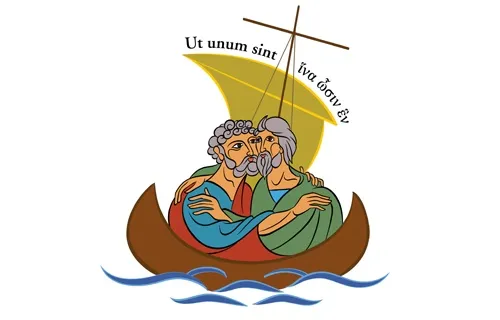
The Vatican has emphasized that the pope’s main purpose on the trip is to meet in Jerusalem with Ecumenical Patriarch Bartholomew of Constantinople, considered first among equals by Orthodox bishops. The official logo for the papal visit is an icon of the Apostles Peter and Andrew, patron saints of the churches of Rome and Constantinople, joined in a fraternal embrace.
The pope will be visiting Jordan, Palestine and Israel and celebrate Mass in all three countries. He will meet a wide range of people, from heads of state and royalty to religious and refugees. It promises to be an extraordinary visit — in every sense of the term, a pilgrimage.
The Assembly of Catholic Ordinaries of the Holy Land (AOCTS) decided on the motto and logo for the Pope’s upcoming pilgrimage to the Holy Land at the meeting of the Assembly on March 11 and 12, 2014 in Tiberias. The motto for the pilgrimage is “So that they may be one”. The Holy Father has insisted that at the center of his pilgrimage will be the meeting with Greek Orthodox Patriarch Bartholomew of Constantinople and the heads of the Churches in Jerusalem. This is to commemorate and renew the commitment to unity expressed by Pope Paul VI and Patriarch Athenagoras of Constantinople 50 years ago in Jerusalem.
 
This gives expression to the desire of the Lord at the Last Supper: “I ask not only on behalf of these, but also on behalf of those who will believe in me through their word, that they may all be one. As you, Father, are in me and I am in you, may they also be in us, so that the world may believe that you have sent me. The glory that you have given me I have given them, so that they may be one, as we are one, I in them and you in me, that they may become completely one, so that the world may know that you have sent me and have loved them even as you have loved me.” (John 17:20-23).
 
The logo also expresses this desire for unity, representing the embrace of Saint Peter and Saint Andrew, the first two disciples called by Jesus in Galilee. Saint Peter is the patron of the Church in Rome and Saint Andrew is the patron of the Church in Constantinople. In Jerusalem, in the Mother Church, they embrace. The two apostles are in a boat that represents the Church, whose mast is the Cross of the Lord. The sails of the boat are full of wind, the Holy Spirit, which directs the boat as it sails across the waters of this world.
 
The unity of Christians is a message of unity for all humanity, called to overcome the divisions of the past and march forward together towards a future of justice, peace, reconciliation, pardon and fraternal love.


Pope Francis (in what is becoming a personal tradition of this pontificate) made a private visit to the Roman Basilica of St. Mary Major on Friday morning to pray and entrust his Holy Land pilgrimage to Our Lady. After praying for 15 minutes before the image of the Madonna Salus Populi Romani, the Pope left a bouquet of roses in her honour.
 
Perhaps it would be helpful to join in prayer for the successful and safe conclusion of this pilgrimage:
 
Prayer for the pilgrimage of Pope Francis to the Holy Land
 
Heavenly Father, you never tire of being compassionate and loving. The successor of St. Peter plans to visit the Holy Land sanctified by your Son’s birth, baptism, teaching, death and resurrection. Be with him, sanctify him, and bless him. Spread the mantle of your kindness over every stage of his pilgrimage among us, that one may see in him a believing pilgrim, a wise teacher, and a humble leader.
 
Lord Jesus Christ, who prayed for the unity of your Church, saying: “May they all be one”, make the meeting in Jerusalem between the Holy Father and the Ecumenical Patriarch an incentive to increase our efforts for the unity of your children.
 
Make the encounter of the Pope with the political authorities fruitful for justice and peace. Protect all the residents of this land and the adherents of the religions of the Middle East that they may be in accord, dialogue and cooperation for the achievement of full citizenship.
 
Good Shepherd, whose image Pope Francis carries on his pectoral cross, walking in the spirit of humility with which you have graced him deepen within us the awareness of our Christian identity, that as true disciples, we may bear witness to your Good News and your resurrection in our churches, our society, and all the world, especially by serving the sick, the poor, and the refugees.
 
Bless, Lord Most Holy, this fourth papal visit to our Holy Land, through the intercession of the Blessed Virgin Mary, St. Joseph, all the saints of the Holy Land, and the two new saints, John Paul II and John XXIII. Amen.


 You can follow the Pope's visit on the following sites:
 
Official website of the visit from the Assembly of the Catholic Ordinaries (Bishops) of the Holy Land - good site with a lot of information and background about the situation of Christians in the Holy Land
 
Official website of the visit by Patriarch Bartholomew

CNEWA (Catholic Near East Welfare Association) - Apostles of Unity in the Holy Land
 
Vatican News
 
Vatican Radio Facebook page
 
Rome Reports
 
Franciscan Media Centre and Terra Sancta News
 
Whispers in the Loggia
 
Catholic News Agency

The Anchoress