Vatican Radio - Pope in Assisi: forgiveness can truly renew Church and world
Showing posts with label Reconciliation. Show all posts
Showing posts with label Reconciliation. Show all posts
6 Aug 2016

29 Feb 2016
24 Hours for the Lord

In the Diocese of Limerick the 24 hours for the Lord initiative will take place in Saint Augustine’s Church, O’Connell Street, Limerick beginning with Mass at 4pm on Friday 4 March and concluding with Mass for the sick at 3pm on Saturday 5 March.
There will be opportunities for the Sacrament of Reconciliation during the 24 hours and in keeping with the theme for the time of prayer, people are encouraged to make a special effort in the season of Lent, to celebrate the love and mercy of God.
All are welcome to participate in this initiative.
9 Feb 2016
1 Mar 2015
1st March 2015 - Reflection on Reconciliation - 2nd Sunday of Lent (Year B)
This weeks programme is a little busy with John joined in studio by Lorraine Buckley giving a reflection on the sacrament of reconciliation. Sally Penngelly and Christina Dundon from St Senan's PPC tell us about the upcoming parish mission in Shanagolden-Foynes-Robertstown. We have our regular reflection on the Sunday gospel as well as some other liturgical odds and ends.
You can listen to the podcast of this weeks full programme HERE.
Shanagolden-Foynes-Robertstown Parish Mission
 The parish of St Senan are holding a parish mission from March 8th to 13th 2015. The mission begins on the feast day of St Senan on the 8th of March. It is being facilitated by Fr Derek Messcil and Fr John Hanna from the Redemptorists in Limerick. The theme of the mission is "A New Beginning" which links to the Limerick Diocesan Synod and of course to Lent with the general call to renewal at this time of the year.
Daily Mass Timetable
Robertstown - 7am
Foynes - 9.30pm
Shanagolden - 10.30pm
Evening Sessions - Foynes - 7.30pm
Sunday 8th - Community Night followed by a cup of tea and a chat
Monday 9th - Hope & Healing
Tuesday 10th - Family Night
Evening Sessions - Shanagolden - 7.30pm
Wednesday 11th - Prayer and the Word of God; all night Adoration Vigil from 9pm to 6.45am
Thursday 12th - Reconciliation
Friday 13th - Remembering Our Dead followed by a cup of tea and a chat
Interfaith Gathering - community centre in Foynes Monday 9th March 2.30pm
Senior Citizens Gathering - Foynes - Tuesday at 2.30pm in the community centre
Senior Citizens Gathering - Shanagolden - Thursday at 2.30pm in Dane St Centre
You can listen to the details of the mission excerpted from the main programme HERE.
Reflection on Reconciliation - "Every saint has a past; every saint has a future"
 Lorraine leads us in a reflection on the sacrament of reconciliation this week reminding us how the sacrament of reconciliation is an opportunity for us to experience the love of God. It is an opportunity for us to acknowledge the times when we have turned away from God's gratuitous love and enables to say sorry and to be embraced in the ocean of that love that seeks to hold us.
You can listen to the reflection on the sacrament excerpted from the main programme HERE.
Previous programmes with reflections on the sacrament of reconciliation HERE and HERE.
American Catholic.org resource page on reconciliation.
Gospel - Mark 9:2-10

Six days later, Jesus took with him Peter and James and John, and led them up a high mountain apart, by themselves. And he was transfigured before them, and his clothes became dazzling white, such as no one on earth could bleach them. And there appeared to them Elijah with Moses, who were talking with Jesus. Then Peter said to Jesus, “Rabbi, it is good for us to be here; let us make three dwellings, one for you, one for Moses, and one for Elijah.” He did not know what to say, for they were terrified. Then a cloud overshadowed them, and from the cloud there came a voice, “This is my Son, the Beloved; listen to him!”Suddenly when they looked around, they saw no one with them any more, but only Jesus.
As they were coming down the mountain, he ordered them to tell no one about what they had seen, until after the Son of Man had risen from the dead. So they kept the matter to themselves, questioning what this rising from the dead could mean
Reflections on this weeks gospel:
English Dominicans
Word on Fire
Sunday Reflections
Centre for Liturgy
Liturgical Odds and Ends
Liturgy of the Hour - psalter week 2; 2nd week of Lent
Pope Francis Intentions for March 2015
Join us in prayer for the intentions entrusted to us by Pope Francis. For March 2015, we join the Holy Father in praying for:
God, our Father, I offer You my day. I offer You my prayers, thoughts, words, actions, joys, and sufferings in union with the Heart of Jesus, who continues to offer Himself in the Eucharist for the salvation of the world. May the Holy Spirit, Who guided Jesus, be my guide and my strength today so that I may witness to your love. With Mary, the mother of our Lord and the Church, I pray for all Apostles of Prayer and for the prayer intentions proposed by the Holy Father this month. Amen.
Traditional Daily Offering of the Apostleship of Prayer
O Jesus, through the Immaculate Heart of Mary, I offer You my prayers, works, joys, and sufferings of this day in union with the Holy Sacrifice of the Mass throughout the world. I offer them for all the intentions of Your Sacred Heart: the salvation of souls, reparation for sin, and the reunion of all Christians. I offer them for the intentions of our bishops and of all Apostles of Prayer, and in particular for those recommended by our Holy Father this month. The Apostles of Prayer offer themselves to God each day for the good of the world, the Church, one another, and the Holy Father’s intentions.
You can listen to the podcast of this weeks full programme HERE.
Shanagolden-Foynes-Robertstown Parish Mission
Daily Mass Timetable
Robertstown - 7am
Foynes - 9.30pm
Shanagolden - 10.30pm
Evening Sessions - Foynes - 7.30pm
Sunday 8th - Community Night followed by a cup of tea and a chat
Monday 9th - Hope & Healing
Tuesday 10th - Family Night
Evening Sessions - Shanagolden - 7.30pm
Wednesday 11th - Prayer and the Word of God; all night Adoration Vigil from 9pm to 6.45am
Thursday 12th - Reconciliation
Friday 13th - Remembering Our Dead followed by a cup of tea and a chat
Interfaith Gathering - community centre in Foynes Monday 9th March 2.30pm
Senior Citizens Gathering - Foynes - Tuesday at 2.30pm in the community centre
Senior Citizens Gathering - Shanagolden - Thursday at 2.30pm in Dane St Centre
You can listen to the details of the mission excerpted from the main programme HERE.
Reflection on Reconciliation - "Every saint has a past; every saint has a future"
You can listen to the reflection on the sacrament excerpted from the main programme HERE.
Previous programmes with reflections on the sacrament of reconciliation HERE and HERE.
American Catholic.org resource page on reconciliation.
Gospel - Mark 9:2-10
Six days later, Jesus took with him Peter and James and John, and led them up a high mountain apart, by themselves. And he was transfigured before them, and his clothes became dazzling white, such as no one on earth could bleach them. And there appeared to them Elijah with Moses, who were talking with Jesus. Then Peter said to Jesus, “Rabbi, it is good for us to be here; let us make three dwellings, one for you, one for Moses, and one for Elijah.” He did not know what to say, for they were terrified. Then a cloud overshadowed them, and from the cloud there came a voice, “This is my Son, the Beloved; listen to him!”Suddenly when they looked around, they saw no one with them any more, but only Jesus.
As they were coming down the mountain, he ordered them to tell no one about what they had seen, until after the Son of Man had risen from the dead. So they kept the matter to themselves, questioning what this rising from the dead could mean
Reflections on this weeks gospel:
English Dominicans
Word on Fire
Sunday Reflections
Centre for Liturgy
Liturgical Odds and Ends
Liturgy of the Hour - psalter week 2; 2nd week of Lent
Pope Francis Intentions for March 2015
Join us in prayer for the intentions entrusted to us by Pope Francis. For March 2015, we join the Holy Father in praying for:
- Scientists. That those involved in scientific research may serve the well-being of the whole human person.
- Contribution of Women. That the unique contribution of women to the life of the Church may be recognized always.
God, our Father, I offer You my day. I offer You my prayers, thoughts, words, actions, joys, and sufferings in union with the Heart of Jesus, who continues to offer Himself in the Eucharist for the salvation of the world. May the Holy Spirit, Who guided Jesus, be my guide and my strength today so that I may witness to your love. With Mary, the mother of our Lord and the Church, I pray for all Apostles of Prayer and for the prayer intentions proposed by the Holy Father this month. Amen.
Traditional Daily Offering of the Apostleship of Prayer
O Jesus, through the Immaculate Heart of Mary, I offer You my prayers, works, joys, and sufferings of this day in union with the Holy Sacrifice of the Mass throughout the world. I offer them for all the intentions of Your Sacred Heart: the salvation of souls, reparation for sin, and the reunion of all Christians. I offer them for the intentions of our bishops and of all Apostles of Prayer, and in particular for those recommended by our Holy Father this month. The Apostles of Prayer offer themselves to God each day for the good of the world, the Church, one another, and the Holy Father’s intentions.
17 Dec 2014
The Sacrament of Reconciliation - Dates and Times for the Diocese of Limerick
Christmas is a time when we prepare our homes to welcome family members, friends and acquaintances. We usually spend quite a lot of time tidying and cleaning, putting up the Christmas tree and crib, Christmas cards and the many decorations that make our homes a welcoming place for those who might call to us this Christmas.
During Advent we are invited to do something similar spiritually. At Christmas we celebrate three comings of Christ: we commemorate and celebrate the first coming of Christ at Bethlehem and we look forward to the second coming of Christ, Universal King, at the end of time, but there is a third coming of Christ and that is the coming of Christ into our hearts every day. If we were to look at our hearts today, what would we need to change? Would we like to do a little spiritual Christmas clean to welcome Jesus with joy?
The Sacrament of Reconciliation, along with the Sacrament of the Sick, are the Sacraments of Healing. They are beautiful Sacraments given by Christ to His Church because He knew that we would get hurt and bruised along the way. He knew we would need His grace and love and mercy to start again. If you haven't been to this sacrament in a while, here is a really simple video on why it is important and what happens during the sacrament:

During Advent we are invited to do something similar spiritually. At Christmas we celebrate three comings of Christ: we commemorate and celebrate the first coming of Christ at Bethlehem and we look forward to the second coming of Christ, Universal King, at the end of time, but there is a third coming of Christ and that is the coming of Christ into our hearts every day. If we were to look at our hearts today, what would we need to change? Would we like to do a little spiritual Christmas clean to welcome Jesus with joy?
The Sacrament of Reconciliation, along with the Sacrament of the Sick, are the Sacraments of Healing. They are beautiful Sacraments given by Christ to His Church because He knew that we would get hurt and bruised along the way. He knew we would need His grace and love and mercy to start again. If you haven't been to this sacrament in a while, here is a really simple video on why it is important and what happens during the sacrament:
Pope Francis has been encouraging us right from the beginning of his pontificate to come back to the Sacrament of Reconciliation.
 |
| Pope Francis attending the Sacrament of Reconciliation before leading a penitential liturgy (March 28 2014) |
In The Joy of the Gospel Pope Francis says:
"The Lord does not disappoint those who take this risk; whenever we take a step towards Jesus, we come to realize that he is already there, waiting for us with open arms. Now is the time to say to Jesus: “Lord, I have let myself be deceived; in a thousand ways I have shunned your love, yet here I am once more, to renew my covenant with you. I need you. Save me once again, Lord, take me once more into your redeeming embrace”. How good it feels to come back to him whenever we are lost! Let me say this once more: God never tires of forgiving us; we are the ones who tire of seeking his mercy. Christ, who told us to forgive one another “seventy times seven” (Mt 18:22) has given us his example: he has forgiven us seventy times seven. Time and time again he bears us on his shoulders. No one can strip us of the dignity bestowed upon us by this boundless and unfailing love. With a tenderness which never disappoints, but is always capable of restoring our joy, he makes it possible for us to lift up our heads and to start anew." (The Joy of the Gospel, paragraph 3)
God never tires of forgiving us. Let us run to Him with open arms this Advent. Let us prepare our hearts to celebrate Christmas joyfully!
Throughout the Diocese of Limerick, we will be given the opportunity to prepare spiritually for Christmas by frequenting this sacrament. Each parish will have particular times for the Sacrament of Reconciliation so please check with your local parish if you wish to avail of the sacrament at home. The Sacrament of Reconciliation will be also available at the following dates, times and venues throughout the diocese:
Saturday, December 20th
10.00am to 4.00pm - Kilmallock Church
10.00am to 4.00pm - Augustinians Church, O'Connell St.
10.30am to 4.30pm - Newcastle West Church
Monday, December 22nd
10.00am to 4.00pm - Augustinians Church, O'Connell St.
11.00am to 12.30pm - Redemptorists, Mount St. Alphonsus (Monastery)
3.00pm to 5.00pm - Redemptorists, Mount St. Alphonsus (Monastery)
Tuesday, December 23rd
10.00am to 4.00pm - Augustinians Church, O'Connell St.
After 10.00am Mass to 7.15pm - Redemptorists, Mount St. Alphonsus (Church)
Wednesday, December 24th
10.00am to 4.00pm - Augustinians Church, O'Connell St.
10.30am to 1.00pm - St. John's Cathedral
After 10.00am Mass to 8.00pm - Redemptorists, Mount St. Alphonsus (Church)
30 Mar 2014
Pope Francis and the Sacrament of Confession
On a day (March 28th) focused on the Sacrament of Reconciliation (Confession) Pope Francis led the way by publicly going to confession in St Peter's Basilica.
Pope Francis surprised his aides by making his own confession.Over at Whispers, Rocco makes the point
As he was being escorted toward the confessional that had been reserved for him in the Vatican basilica, the Pope broke away from his aides and headed for an open confessional, where he knelt as a penitent. After a few minutes he then rejoined his aides, took his assigned seat in the confessional, and heard confessions of others.
Vatican journalists could not recall any previous occasion when a Roman Pontiff had made his confession in public view.
The Pope was participating in a a "festival of forgiveness" in the Rome diocese, during which priests were available for confessions all day in several churches
- Catholic Culture
The footage is indeed unprecedented – while John Paul II routinely heard the confessions of 12 laymen every Good Friday in St Peter's and B16 spent some time administering the sacrament in a Madrid park at World Youth Day 2011, no Pope has ever been seen as a penitent.
After his turn on the other side of the sacrament, Francis spent another 40 minutes hearing confessions.
The exercise wasn't just one for the Vatican – the penance service doubled as the global kickoff of "24 Hours for the Lord," an initiative of the Pontifical Council for Promoting the New Evangelization that asked the dioceses of the world to provide round-the-clock opportunity for confession in at least one church at some point over this fourth weekend of Lent.
At Mass that morning in the Chapel of the Casa Sancta Martha, Pope Francis reminded the congregation that "God always forgives and does not know how to do otherwise......The Lord always waits for us and forgives us, he said. He is “the God of forgiveness” and he celebrates every person’s return to him". (Vatican Radio)
The Pope went on to say that God longs for us when we distance ourselves from him. Drawing on the day’s first reading from Hosea, he observed that the Lord speaks to his people with tenderness.
Even when God invites us to conversion and uses stern words, God’s words always include “this loving longing” and the exhortation of the Father who says to the son: “Come back. It is time to come back home.”
“This is the heart of our Father,” he said. “God is like that: he does not tire, he does not tire. And God did this for many centuries, with so much apostasy… among the people. And he always returns because our God is a God who waits.
“Adam left paradise with a punishment but also with a promise. And … the Lord is faithful to his promise because he cannot deny himself. He is faithful. And, in this way, he waited for all of us, throughout all of history. He is the God who waits for us always,” the Pope added.
Francis then turned his thoughts to the Parable of the Prodigal Son. The Gospel of Luke, he said, tells us that the father saw the son from afar because he was waiting for him. The father, he said, “went onto the terrace every day to see if his son would return. He waited. And when he saw him, he went out in haste and ‘threw himself on his neck’. The son had prepared some words to say but the father did not let him speak; his embrace covered his mouth.”
“This is our Father, the God that waits for us. Always,” he said.
“‘But father, I have so many sins, I do not know if he will be happy’,” the Pope said, suggesting a conversation between a priest and a person fallen from God. “‘But try! If you want to know the tenderness of this Father, go to him and try. Then come and tell me.’”
The Pope insisted on the loving welcome of God: “The God who waits for us. God who waits and also God who forgives. He is the God of mercy; he does not tire of forgiving. We are the ones who tire in asking for forgiveness, but he does not tire.”
“Seventy times seven, always. Let us go forward with forgiveness. And from a business point of view, the balance is negative. He always loses: he loses in the balance of things but he wins in love,” he said.
God “is the first to fulfill the commandment of love,” he continued. “He loves and does not know how to do otherwise.”
“The miracles that Jesus did with many sick people were also a sign of the great miracle that every day the Lord does with us when we have the courage to get up and go to him,” he added. When people return to God, God celebrates “not like the banquet of the rich man, who had the poor Lazarus at his door,” he said. “He holds banquet, like the father of the prodigal son.”
Every person who has the courage to approach God “will find the joy of the feast of God,” he said. “May this word help us to think of our Father, who waits for us always and who always forgives us and celebrates our return.”
Pope Francis presided over the penitential service where he went to confession as well as heard confessions. Pope Francis delivered the homily at a penitential service over which he was presiding in St. Peter’s Basilica on Friday afternoon. The order of the celebration included Psalms, readings from Sacred Scripture, and hymns, all focused on the theme of repentance and God’s boundless mercy.
Text of the homily HERE.
22 Nov 2013
24th November 2013 - Solemnity of Christ the Universal King - Reflection on Penance/Reconciliation
On this weeks programme, John and Lorraine are joined by Fr Phonsie Cullinan to reflect on the sacrament of reconciliation. We have our regular reflection on this weeks gospel as well as some liturgical odds and ends.
You can listen to this weeks programme podcast HERE.
Sacrament of Reconciliation

Fr Phonsie Cullinan joins Lorraine and John on the programme this week to reflect on the sacrament of reconciliation. He reminds us how the sacrament is one of healing and love; calling us back to a more complete and loving life; "a pit-stop for the soul".
You can listen to Fr Phonsie's reflection excerpted from the main programme HERE.
Last year we did another programme on the Sacrament of Reconiliation and you can find it HERE.
 During the last few weeks Pope Francis has reflected on the Sacrament of Penance in his weekly general audiences which you can read at the links:
A quick video on the sacrament from BustedHalo:
Gospel - Luke 23:35-43

This weeks feast celebrates the Kingship of Christ, the feast was erected at the end of the 1925 Holy Year by Pope Pius XI in his encyclical Quas Primas where he sought to give due honour to the Divine Kingship of Christ.
Bishop Malcolm McMahon OP noted,
But for many people, the idea of Kingship of Jesus is somewhat alien. Jesus was of the royal house of David born in the royal city but he was born in a stable and laid in a manager. He was a King who entered into the Holy City - Jerusalem - through the royal gate to the acclamations of the people not in a military procession or from the back of a state coach but on the back of a humble donkey.

He was enthroned not on some fancy cathedra but rather on a gibbet outside the city walls in the midst of the city dump, proclaimed mockingly as King as he died opening his arms on the cross to embrace the world and all of humanity.
 In our lives today, do we make the effort to feed the hungry, cloth the naked, visit the sick and imprisoned? Be it those who are in physical need but what about those hungry for a consoling word of recognition of their humanity and dignity as people; those whose very souls and minds are ripped naked and torn from the insults and humiliation they experience, the sick of mind and spirit, those imprisoned in the expectations of society as well as those incarcerated by mental illness and stigma? Have we not only assisted them, have we gone past our comfort zone to really be present to those in need, really aware of them as the face of Christ for us in this world?
Yours are the eyes with which he looks
Compassion on this world,
Reflections can be read here, here, here and here.
Reflections on this weeks gospel:
Word on Fire
English Dominicans
Sunday Reflections
Centre for Liturgy
Blue Eyed Ennis
Liturgical odds and ends
Liturgy of the Hours - Psalter week 2; 34th week in ordinary time
Saints of the Week
November 25th - St Colman of Cloyne also St Catherine of Alexandria
November 26th - St John Berchmans
November 27th - St Fergal
November 28th - St Catherine Laboure - Seer of the Miraculous Medal
November 29th - Saint Hierotheos of Tiberiopolis
November 30th - St Andrew (apostle)
You can listen to this weeks programme podcast HERE.
Sacrament of Reconciliation

Fr Phonsie Cullinan joins Lorraine and John on the programme this week to reflect on the sacrament of reconciliation. He reminds us how the sacrament is one of healing and love; calling us back to a more complete and loving life; "a pit-stop for the soul".
You can listen to Fr Phonsie's reflection excerpted from the main programme HERE.
Last year we did another programme on the Sacrament of Reconiliation and you can find it HERE.
- Confession continues the cleansing act of Baptism, Pope tells audience
- Pope in General Audience: Every two weeks I go to Confession; Calls on priests to be servants of the Sacrament of Forgiveness.
A quick video on the sacrament from BustedHalo:
- A resource on the sacrament from bishops of Pennsylvania
- AmericanCatholic.org articles and reflections on the sacrament
Gospel - Luke 23:35-43
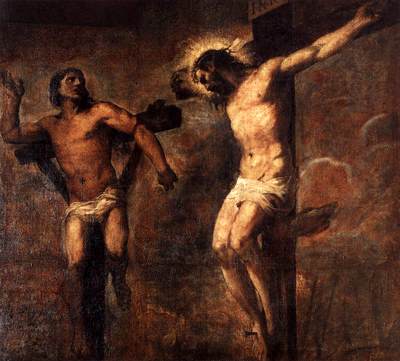
And the people stood by, watching; but the rulers scoffed at him, saying, "He saved others; let him save himself, if he is the Christ of God, his Chosen One!" The soldiers also mocked him, coming up and offering him vinegar, and saying, "If you are the King of the Jews, save yourself!" There was also an inscription over him, "This is the King of the Jews."
One of the criminals who were hanged railed at him, saying, "Are you not the Christ? Save yourself and us!" But the other rebuked him, saying, "Do you not fear God, since you are under the same sentence of condemnation? And we indeed justly; for we are receiving the due reward of our deeds; but this man has done nothing wrong." And he said, "Jesus, remember me when you come into your kingdom." And he said to him, "Truly, I say to you, today you will be with me in Paradise."
 |
| Book of Kells - Christ Enthroned |

This weeks feast celebrates the Kingship of Christ, the feast was erected at the end of the 1925 Holy Year by Pope Pius XI in his encyclical Quas Primas where he sought to give due honour to the Divine Kingship of Christ.
Bishop Malcolm McMahon OP noted,
"The Church's year ends with the Feast of Christ the King. Jesus is portrayed as a triumphant king reigning over all creation. This is the same Jesus, son of Mary and son of God, who has preached the Good News and declared the imminence of God's kingdom. The obedient Son suffered and died for us, rose from the dead, ascended into glory and sent his Spirit so that we may have another comforter and someone to speak for us. Creation has been restored, and we have been saved from our sins and foolishness. The cycle is now complete. Although the enormousness of God's saving work has yet to impress itself on most people, nevertheless we believe that there will be a moment at the end of time when the Son will come again in all his glory, and creation will reach fulfillment. That is why we celebrate the Feast of Christ the King, we rejoice in what Jesus has done for us, yet at the same time we look forward to its completion........".
But for many people, the idea of Kingship of Jesus is somewhat alien. Jesus was of the royal house of David born in the royal city but he was born in a stable and laid in a manager. He was a King who entered into the Holy City - Jerusalem - through the royal gate to the acclamations of the people not in a military procession or from the back of a state coach but on the back of a humble donkey.

He was enthroned not on some fancy cathedra but rather on a gibbet outside the city walls in the midst of the city dump, proclaimed mockingly as King as he died opening his arms on the cross to embrace the world and all of humanity.
He came as a Servant Leader as he explained to the disciples at the Last Supper when he washed their feet. We are all called to be servants to one another, assisting and helping in fraternal love and friendship. Where leaders lord it over us in civil or religious spheres truly then we have lost our allegiance to the true king.
He redefined what it means to be a leader amongst those that dare to call themselves his followers reminding us that the first will be last and the last first.
 In our lives today, do we make the effort to feed the hungry, cloth the naked, visit the sick and imprisoned? Be it those who are in physical need but what about those hungry for a consoling word of recognition of their humanity and dignity as people; those whose very souls and minds are ripped naked and torn from the insults and humiliation they experience, the sick of mind and spirit, those imprisoned in the expectations of society as well as those incarcerated by mental illness and stigma? Have we not only assisted them, have we gone past our comfort zone to really be present to those in need, really aware of them as the face of Christ for us in this world?
Christ has no body but yours,
No hands, no feet on earth but yours,Yours are the eyes with which he looks
Compassion on this world,
Yours are the feet with which he walks to do good,
Yours are the hands, with which he blesses all the world.
Yours are the hands, yours are the feet,
Yours are the eyes, you are his body.
Christ has no body now but yours,
No hands, no feet on earth but yours,
Yours are the eyes with which he looks
compassion on this world.
Christ has no body now on earth but yours.
Reflections can be read here, here, here and here.
Hallelujah! Hallelujah! Hallelujah! Hallelujah! Hallelujah!
For the Lord God Omnipotent reigneth.
Hallelujah! Hallelujah! Hallelujah! Hallelujah!
For the Lord God Omnipotent reigneth.
Hallelujah! Hallelujah! Hallelujah! Hallelujah! Hallelujah!
The kingdom of this world
is become the Kingdom of the Lord,
and of His Christ, and of His Christ;
and He shall reign for ever and ever,
for ever and ever, for ever and ever.
King of kings, and Lord of lords,
and Lord, of lords,
and He shall reign forever and ever!
Hallelujah! Hallelujah! Hallelujah! Hallelujah! Hallelujah!
Reflections on this weeks gospel:
Word on Fire
English Dominicans
Sunday Reflections
Centre for Liturgy
Blue Eyed Ennis
Liturgical odds and ends
Liturgy of the Hours - Psalter week 2; 34th week in ordinary time
Saints of the Week
November 25th - St Colman of Cloyne also St Catherine of Alexandria
November 26th - St John Berchmans
November 27th - St Fergal
November 28th - St Catherine Laboure - Seer of the Miraculous Medal
November 29th - Saint Hierotheos of Tiberiopolis
November 30th - St Andrew (apostle)
27 Jan 2012
International Day of Commemoration in Memory of the Victims of the Holocaust

"Denying historical facts, especially on such an important subject as the Holocaust, is just not acceptable. Nor is it acceptable to call for the elimination of any State or people. I would like to see this fundamental principle respected both in rhetoric and in practice by all the members of the international community".
UN Secretary-General Ban Ki-moon, 14 December 2006
On January 27 each year, the United Nations (UN) remembers the Holocaust that affected many people of Jewish origin during World War II. This day is called the International Day of Commemoration in Memory of the Victims of the Holocaust.
The day also commemorates when the Soviet troops liberated the Nazi concentration and death camp Auschwitz-Birkenau in Poland on January 27, 1945. It is hoped that through remembering these events, people will remember the Holocaust and prevent genocide. The importance of such days of remembrance grows each year as fewer and fewer survivors remain to tell us their story and witness to their suffering.
- Yad Vashem
- Statement of Eamon Gilmore TD, Minister for Foreign Affairs & Trade
- UN General Assembly Resolution
Pope Benedict XVI - Auschwitz Camp 28 May 2006
Whilst the impetuous behind the Day of Commemoration was the remembrance of the Shoah where millions of Jew's were murdered and exterminated in concentration camps across Nazi occupied Europe, it is also a day to recall the other genocides and murders which have occurred and the forgotten victims of such events in Armenia 1915, the Soviet Gulags, the Ukrainian famine (Holodomar) 1932-33, Cambodia's Killing Fields, the Congo, Rwanda's 1994 genocide and many more known only to God.
We pause to remember, for those that forget their history - and this is our history, the history of man's inhumanity towards man- will be condemned to repeat it again.
Further reflections and links here and here.
19 Nov 2011
20th November 2011 - Solemnity of Christ the Universal King (and Reflection on the Sacrament of Reconciliation)
On this weeks show we begin a new series on the Sacraments which we are going to be doing over the next few months beginning with Reconciliation which Lorraine gives us a few thoughts and reflections on. We also go through this weeks gospel which is the last reading from Matthew in this liturgical year as well as our celestial guides and some local notices for the week.
A reminder to all our listeners and readers that next week is the first Sunday of Advent, Year B in the lectionary cycle so we will be using the gospel of Mark for Sunday readings for the next twelve months.
Of course for English speaking Catholics, next Sunday sees the full introduction of the revised translation of the Roman Missal, the third since the second Vatican Council authorised that the liturgy could be in the vernacular. For those of you that may have missed our show on the revised translation, check out our Revised Translation Page where we have resources and links for you to read and listen to.
Sacrament of Reconciliation
Lorraine begins the series by reflecting on the Sacrament of Reconciliation (a.k.a. Confession and Penance). The following are some notes and thoughts for reflection on the sacrament but we would encourage you to listen to the podcast.
We would encourage people to go back to the Sacrament of Reconciliation especially as part of your Advent preparation for Christmas. It doesn't matter how long it has been or even if you forget how it is done. When you go in, tell the priest it has been a while and say you might need some guidance on how to do things. No one is going to pass judgement but rather it will be a case of "Welcome home again".
If it has been a while, you might these links to the examination of conscience may be helpful in your preparation for receiving the sacrament (we will be adding more over the next couple of days if you don't find any that appeal to you check back):
What is the Sacrament called?
Why do we confess our sins to a priest?
 “Only God forgives sins” (CCC 1441; Cf. Mk 2:7) – then why do we confess our sins to a priest?
Gospel - Matthew 25: 31-46

Hail Redeemer, King Divine,
 Bishop Malcolm McMahon OP noted,"The Church's year ends with the Feast of Christ the King. Jesus is portrayed as a triumphant king reigning over all creation. This is the same Jesus, son of Mary and son of God, who has preached the Good News and declared the imminence of God's kingdom. The obedient Son suffered and died for us, rose from the dead, ascended into glory and sent his Spirit so that we may have another comforter and someone to speak for us. Creation has been restored, and we have been saved from our sins and foolishness. The cycle is now complete. Although the enormousness of God's saving work has yet to impress itself on most people, nevertheless we believe that there will be a moment at the end of time when the Son will come again in all his glory, and creation will reach fulfillment. That is why we celebrate the Feast of Christ the King, we rejoice in what Jesus has done for us, yet at the same time we look forward to its completion........".
But for many people, the idea of Kingship of Jesus is somewhat alien. Jesus was of the royal house of David born in the royal city but he was born in a stable and laid in a manager. He was a King who entered into the Holy City - Jerusalem - through the royal gate to the acclamations of the people not in a military procession or from the back of a state coach but on the back of a humble donkey. He was enthroned not on some fancy cathedra but rather on a gibbet outside the city walls in the midst of the city dump, proclaimed mockingly as King as he died opening his arms on the cross to embrace the world and all of humanity.
He came as a Servant Leader as he explained to the disciples at the Last Supper when he washed their feet. We are all called to be servants to one another, assisting and helping in fraternal love and friendship. Where leaders lord it over us in civil or religious spheres truly then we have lost our allegiance to the true king.
He redefined what it means to be a leader amongst those that dare to call themselves his followers reminding us that the first will be last and the last first.
In our lives today, do we make the effort to feed the hungry, cloth the naked, visit the sick and imprisoned? Be it those who are in physical need but what about those hungry for a consoling word of recognition of their humanity and dignity as people; those whose very souls and minds are ripped naked and torn from the insults and humiliation they experience, the sick of mind and spirit, those imprisoned in the expectations of society as well as those incarcerated by mental illness and stigma? Have we not only assisted them, have we gone past our comfort zone to really be present to those in need, really aware of them as the face of Christ for us in this world?
Yours are the eyes with which he looks
Other reflections on this weeks gospel:
Saints of the Week
A reminder to all our listeners and readers that next week is the first Sunday of Advent, Year B in the lectionary cycle so we will be using the gospel of Mark for Sunday readings for the next twelve months.
Of course for English speaking Catholics, next Sunday sees the full introduction of the revised translation of the Roman Missal, the third since the second Vatican Council authorised that the liturgy could be in the vernacular. For those of you that may have missed our show on the revised translation, check out our Revised Translation Page where we have resources and links for you to read and listen to.
This weeks podcast is available HERE.
Sacrament of Reconciliation
 |
| Source: Return of the Prodigal Son - Rembrandt |

This week we begin a new series on the programme looking at the Sacraments as understood by the church, sources and moments of grace in our lives.
Lorraine begins the series by reflecting on the Sacrament of Reconciliation (a.k.a. Confession and Penance). The following are some notes and thoughts for reflection on the sacrament but we would encourage you to listen to the podcast.
We would encourage people to go back to the Sacrament of Reconciliation especially as part of your Advent preparation for Christmas. It doesn't matter how long it has been or even if you forget how it is done. When you go in, tell the priest it has been a while and say you might need some guidance on how to do things. No one is going to pass judgement but rather it will be a case of "Welcome home again".
If it has been a while, you might these links to the examination of conscience may be helpful in your preparation for receiving the sacrament (we will be adding more over the next couple of days if you don't find any that appeal to you check back):
What is the Sacrament called?
The Sacrament of...
- Conversion: it “makes sacramentally present Jesus' call to conversion, the first step in returning to the Father” (CCC 1423; cf. Mk 1:15; Lk 15:18)
- Penance: it “consecrates the Christian sinner's personal and ecclesial steps of conversion, penance, and satisfaction” (CCC 1423)
- Confession: we confess our sins to the priest and in doing so we are ‘confessing’ (acknowledging and praising) our trust in God’s mercy and holiness (cf. CCC 1424)
- Forgiveness: “since by the priest's sacramental absolution God grants the penitent ‘pardon and peace’" (CCC 1424; formula of absolution)
- Reconciliation: it reconciles the sinner with God because it imparts the merciful love of God to the sinner (cf. CCC 1424). “He who lives by God's merciful love is ready to respond to the Lord's call: ‘Go; first be reconciled to your brother.’ (Mt 5:24)” (CCC 1424)
Why do we need the Sacrament of Reconciliation?
The Church is “at once holy and in need of purification” (LG 8 § 3). Christ calls everyone to conversion (cf. Mk 1:15). Our first or initial conversion takes place through the Sacrament of Baptism, but often we sin and turn away from God. This is why we need constant conversion through the Sacrament of Reconciliation. The sacrament of reconciliation is for all those who have fallen into grave sin after baptism. When someone commits a mortal sin, it means they lose baptismal grace and their communion with the Church is wounded (cf. CCC 1446)
Why do we confess our sins to a priest?
Sin is primarily an “offense against God, a rupture of communion with him. At the same time it damages communion with the Church” (CCC 1440).
We confess our sins to a priest because he stands in persona Christi, in the Person of Christ. In other words, you are not confessing your sins to a mere man, but to Christ Himself.
The Priest is a servant of God’s forgiveness (cf. CCC 1466) and “is fulfilling the ministry of the Good Shepherd who seeks the lost sheep, of the Good Samaritan who binds up wounds, of the Father who awaits the prodigal son and welcomes him on his return, and of the just and impartial judge whose judgment is both just and merciful. The priest is the sign and the instrument of God's merciful love for the sinner” (CCC 1465).
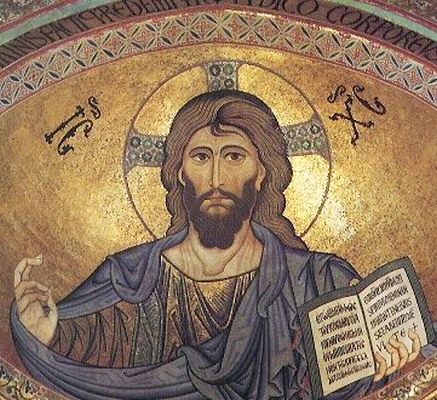
Hail Redeemer, King Divine,
Priest and Lamb the throne is thine,
King whose reign shall never cease,
Prince of ever lasting peace
Angels Saints and Nations sing
Praise be Jesus Christ our King
Lord of life, earth, sky and sea,
King of Love on Calvary.
This weeks feast celebrates the Kingship of Christ, the feast was erected at the end of the 1925 Holy Year by Pope Pius XI in his encyclical Quas Primas where he sought to give due honour to the Divine Kingship of Christ.
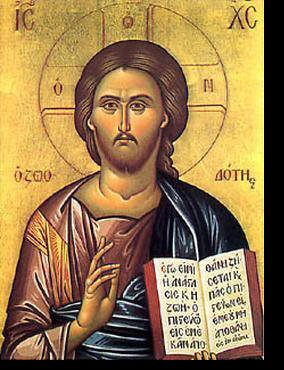 Bishop Malcolm McMahon OP noted,"The Church's year ends with the Feast of Christ the King. Jesus is portrayed as a triumphant king reigning over all creation. This is the same Jesus, son of Mary and son of God, who has preached the Good News and declared the imminence of God's kingdom. The obedient Son suffered and died for us, rose from the dead, ascended into glory and sent his Spirit so that we may have another comforter and someone to speak for us. Creation has been restored, and we have been saved from our sins and foolishness. The cycle is now complete. Although the enormousness of God's saving work has yet to impress itself on most people, nevertheless we believe that there will be a moment at the end of time when the Son will come again in all his glory, and creation will reach fulfillment. That is why we celebrate the Feast of Christ the King, we rejoice in what Jesus has done for us, yet at the same time we look forward to its completion........".
But for many people, the idea of Kingship of Jesus is somewhat alien. Jesus was of the royal house of David born in the royal city but he was born in a stable and laid in a manager. He was a King who entered into the Holy City - Jerusalem - through the royal gate to the acclamations of the people not in a military procession or from the back of a state coach but on the back of a humble donkey. He was enthroned not on some fancy cathedra but rather on a gibbet outside the city walls in the midst of the city dump, proclaimed mockingly as King as he died opening his arms on the cross to embrace the world and all of humanity.
He came as a Servant Leader as he explained to the disciples at the Last Supper when he washed their feet. We are all called to be servants to one another, assisting and helping in fraternal love and friendship. Where leaders lord it over us in civil or religious spheres truly then we have lost our allegiance to the true king.
He redefined what it means to be a leader amongst those that dare to call themselves his followers reminding us that the first will be last and the last first.
In our lives today, do we make the effort to feed the hungry, cloth the naked, visit the sick and imprisoned? Be it those who are in physical need but what about those hungry for a consoling word of recognition of their humanity and dignity as people; those whose very souls and minds are ripped naked and torn from the insults and humiliation they experience, the sick of mind and spirit, those imprisoned in the expectations of society as well as those incarcerated by mental illness and stigma? Have we not only assisted them, have we gone past our comfort zone to really be present to those in need, really aware of them as the face of Christ for us in this world?
Christ has no body but yours,
No hands, no feet on earth but yours,Yours are the eyes with which he looks
Compassion on this world,
Yours are the feet with which he walks to do good,
Yours are the hands, with which he blesses all the world.
Yours are the hands, yours are the feet,
Yours are the eyes, you are his body.
Christ has no body now but yours,
No hands, no feet on earth but yours,
Yours are the eyes with which he looks
compassion on this world.
Christ has no body now on earth but yours.
Other reflections on this weeks gospel:
- Blue Eyed Ennis has a thought provoking reflection on Christ the King.
Saints of the Week
Subscribe to:
Posts (Atom)