Showing posts with label Ascension. Show all posts

2 Jun 2019

2nd June 2019 - Fr. Eamonn Conway - Lough Derg: An Oasis of Peace for our Modern World

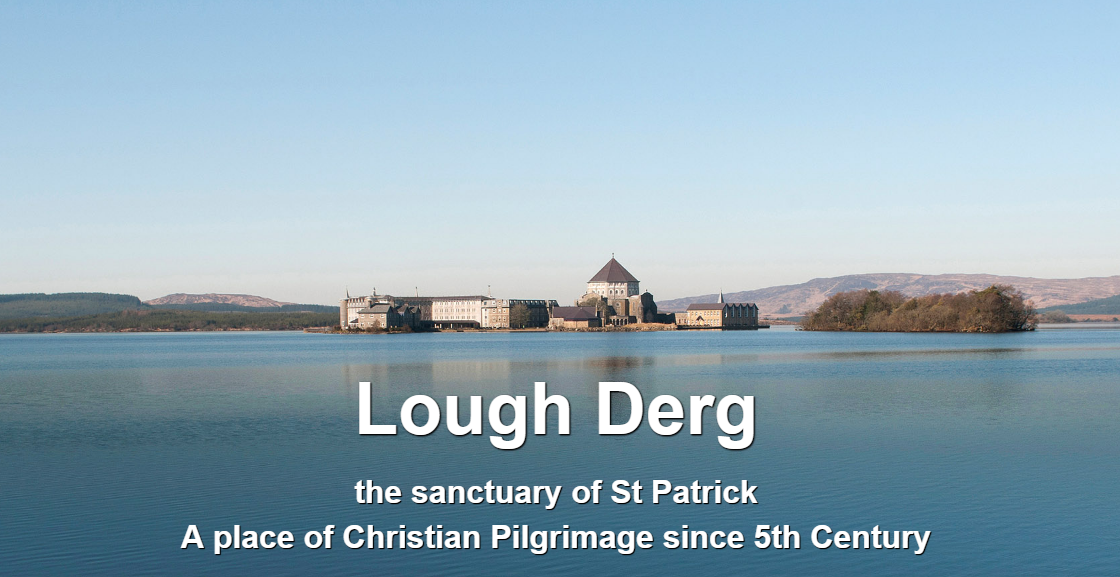
On this week's programme Fr. Eamonn Conway, Head of Department for Theology & Religious Studies at Mary Immaculate College and author of Lough Derg: Island of Quiet Miracles joins John to speak about the spirituality of Lough Derg and what it offers to us today. We also have our regular celestial guides and reflection on the Sunday Gospel.

You can listen to the podcast of this week's full programme HERE.

Lough Derg - An Oasis of Peace for our Modern World
Fr. Eamonn Conway speaks with John about the treasure that is Lough Derg and why it is so important for us today. Fr. Eamonn shares with us the spirituality of Lough Derg and what is involved in the three day pilgrimage. He outlines why it is necessary for us to make time for prayer and asceticism so that we can better hear God's voice and renew our souls. People of every age and background come to Lough Derg, take part in the prayers and penances and return to their daily lives joyful and renewed.


You can listen to a podcast of this reflection excerpted from the programme HERE.

You can find out more about Lough Derg on their website HERE and the 2019 Season Guide is available HERE.

Fr. Eamonn's book Lough Derg: Island of Quiet Miracles is available to buy HERE

Previous blog posts on Lough Derg are available as follows:

1st  July 2018 - Lough Derg: A sanctuary of extreme relevance in today's world
2nd July 2017 - Lough Derg: Reconnecting with our family history
5th June 2016 - Lough Derg: Island of Quiet Miracles

Gospel - Luke 24:46-53

Jesus said to his disciples:
‘You see how it is written that the Christ would suffer and on the third day rise from the dead, and that, in his name, repentance for the forgiveness of sins would be preached to all the nations, beginning from Jerusalem. You are witnesses to this.'
‘And now I am sending down to you what the Father has promised. Stay in the city then, until you are clothed with the power from on high.’
Then he took them out as far as the outskirts of Bethany, and lifting up his hands he blessed them. Now as he blessed them, he withdrew from them and was carried up to heaven. They worshipped him and then went back to Jerusalem full of joy; and they were continually in the Temple praising God.
Reflections on this week's gospel:

Word on Fire

English Dominicans
Centre for Liturgy
Sunday Reflections

Liturgical odds & ends

Liturgy of the Hours - Psalter Week 3

First Friday - June 7th 

Saints of the Week
June 3rd - St. Kevin
June 4th - St. Charles Lwanga and his Companions
June 5th - St. Boniface
June 6th - St. Jarlath
June 7th - St. Colman of Dromore
June 8th - St. William of York

12 May 2018

13th May 2018 - Exploring ecumenism - Solemnity of the Ascension of the Lord

The SS102fm team is joined this week by Fr Martin Browne OSB from Glenstal Abbey to introduce us to ecumenism and the role it plays between the Christian Churches. We have our regular run through the liturgical odds & ends of the week plus our (short) lectio on this weeks gospel which is for the Solemnity of the Ascension of the Lord. 

You can listen to the podcast of this weeks full programme HERE.

Exploring Ecumenism with Fr Martin Browne OSB

Fr Martin Browne OSB introduces our listeners this week to ecumenism. For Catholics, the word ecumenism refers to all of the activities and initiatives of the Church and her members to promote mutual understanding and, ultimately, unity among all Christians. Inter-religious dialogue is the dialogue between different faiths such as Christianity, Islam, Judaism, Buddhism etc.

Fr Martin takes us through the journey for the search for Christian unity in the 20th century and how christian's of all denominations have taken up the prayer of Jesus at the Last Supper that we " may all be one, just as you, Father, are in me, and I in you, that they also may be in us, so that the world may believe that you have sent me." and reminds us that unity has to start with each one of us genuinely seeking it in prayer before the Lord.

You can listen to Fr Martin's interview excerpted from the main programme HERE.

Information on ecumenism:
Gospel - Mark 16:15-20 - The Ascension of the Lord

And he said to them, ‘Go into all the world and proclaim the good news* to the whole creation. The one who believes and is baptized will be saved; but the one who does not believe will be condemned. And these signs will accompany those who believe: by using my name they will cast out demons; they will speak in new tongues; they will pick up snakes in their hands, and if they drink any deadly thing, it will not hurt them; they will lay their hands on the sick, and they will recover.’ 
 So then the Lord Jesus, after he had spoken to them, was taken up into heaven and sat down at the right hand of God. And they went out and proclaimed the good news everywhere, while the Lord worked with them and confirmed the message by the signs that accompanied it
Reflections on this weeks gospel:

Word on Fire - reflections on the Ascension from WoF

Sunday Reflections
English Dominicans
Centre for Liturgy


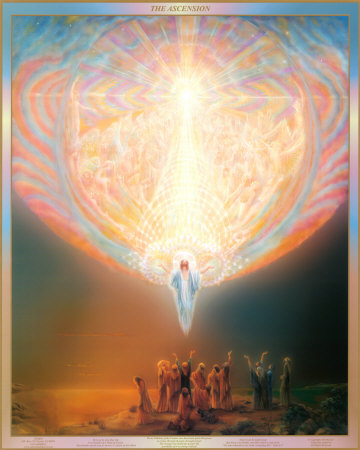
The Ascension of Jesus is the Christian teaching found in the New Testament when the resurrected Jesus was taken up to heaven in his resurrected body, in the presence of eleven of his apostles, occurring 40 days after the resurrection. An angel told the watching disciples that Jesus' second coming would take place in the same manner as his ascension. The Ascension of Jesus is professed in the Nicene Creed and in the Apostles' Creed. The Ascension implies Jesus' humanity being taken into heaven. The familiar account of Jesus ascending bodily into the clouds is given fully only in the Acts of the Apostles, but is briefly described also in the Gospel of Luke (often considered to be by the same author) at 24:50–53 and in the ending of Mark 16 at 16:19

In Eastern Orthodox and Oriental Orthodox theology, the Ascension is interpreted as the culmination of the Mystery of the Incarnation, in that it not only marked the completion of Jesus' physical presence among his apostles, but consummated the union of God and man when Jesus ascended in his glorified human body to sit at the right hand of God the Father. The Ascension and the Transfiguration both figure prominently in the Orthodox doctrine of theosis. The bodily Ascension into heaven is also understood as the final token of Christ's two natures: divine and human.

The Catholic Catechism summarizes three important theological aspects (with which most Christian churches agree) of the Ascension concisely:

  • Christ's Ascension marks the definitive entrance of Jesus' humanity into God's heavenly domain, whence he will come again (cf. Acts 1:11); this humanity in the meantime hides him from the eyes of men (cf. Col 3:3).
  • Jesus Christ, the head of the Church, precedes us into the Father's glorious kingdom so that we, the members of his Body, may live in the hope of one day being with him for ever.
  • Jesus Christ, having entered the sanctuary of heaven once and for all, intercedes constantly for us as the mediator who assures us of the permanent outpouring of the Holy Spirit (665-667).


Liturgical odds & ends

Liturgy of the Hours - Psalter week 3; 7th week of Easter

Saints of the Week

May 14th - St Matthias (Apostle)
May 15th - St Carthage
May 18th - St John I
May 19th - St Celestine V

27 May 2017

28th May 2017 - The Little Shepherds of Fatima: St Francisco & Jacinta Marto (Ascension Sunday)

On this weeks programme Michael Keating returns (at popular request 😃) to join with John and Shane to discuss the latest saints of the church - Francisco and Jacinta Marto - the little shepherds of Fatima. We have our regular reflection on this weeks Sunday gospel which is that of the Ascension as well as our regular round up of notices and saints of the week.

You can listen to the podcast of this weeks full programme HERE.

The Little Shepherds of Fatima


Michael Keating joins us again on this weeks programme and tell us the story of the two latest saints to the churches calendar - St Francisco and St Jacinta Marto - the little Shepheds of Fatima. Michael takes us through their short life story and their reactions to the events of Fatima and afterwards upto their young deaths during the Spanish Influenze epidemic. He also tells us about the story of Lucas Baptista, who was 5 years old in 2013, when he fell from a window and suffered traumatic brain injuries that doctors said would leave him severely mentally disabled or in a vegetative state, if he even survived. Lucas’ recovery, after his parents prayed to Jacinta and Francisco, was one of the miracles attributed to the children as part of the canonization process.

CNA - This is the miracle that led to the Fatima children's canonization

You can listen to this section of the programme excerpted from the main programme podcast HERE.

Gospel - Mathew 28:16-20

The eleven disciples went to Galilee,
to the mountain to which Jesus had ordered them.
When they saw him, they worshiped, but they doubted.
Then Jesus approached and said to them,
"All power in heaven and on earth has been given to me.
Go, therefore, and make disciples of all nations,
baptizing them in the name of the Father,
and of the Son, and of the Holy Spirit,
teaching them to observe all that I have commanded you.
And behold, I am with you always, until the end of the age."
Reflections on this weeks gospel:


Liturgical odds & ends

Liturgy of the Hours - Psalter week 3; 7th week of Easter

Saints of the Week

May 29th - St Raymond and Companions
May 30th - St Joan of Arc
May 31st - The Visitation of the Blessed Virgin Mary 
June 1st - St Justin Martyr
June 2nd - Ss Marcellinus and Peter (First Friday)
June 3rd - Irish Calendar - St Kevin (First Saturday)
June 3rd - Universal calendar - St Charles Lwanga & Companions, the Uganda Martyrs

7 May 2016

8th May 2016 - EWTN: Interview with - Solemnity of the Ascension of the Lord

On this weeks programme John is joined by Paul MacAree who is an associate producer with EWTN Ireland to tell us about the story of Mother Angelica and her creation of one of the largest religious radio and tv stations in the world.

On the blog we have our regular Sunday gospel reflections and links. In Ireland this Sunday is the Solemnity of the Lords Ascension.

You can listen to the podcast of this weeks programme HERE.

Eternal Word Television Network (EWTN)

Paul MacAree Associate Producer with EWTN Ireland tells us the story of Mother Angelica and her creation of the largest religious Radio & TV station in the world with a viewing of over 240 million worldwide 24/7.
 
When Eternal Word Television Network (EWTN) was launched on August 15, 1981, many felt there would be little demand for a Catholic network. Now, in its 33rd year, EWTN has become the largest religious media network in the world, transmitting programming 24 hours a day to more than 230 million homes in 144 countries and territories on more than 4,800 cable systems, wireless cable, Direct Broadcast Satellite (DBS), low power TV and individual satellite users.
 
EWTN Global Catholic Network airs family and religious programming from a Catholic point of view in English and Spanish. Providing more than 80% original programming, EWTN offers inspiring talk shows, entertaining children's animation, exclusive teaching series, live coverage of Church events, and thought-provoking documentaries.
 
Beyond the broadcast vision, however, first and foremost, the spiritual heart of the EWTN mission is to bring the Eternal Word, Jesus Christ, to all. The religious centers of the network are visited daily by pilgrims who travel to Irondale to worship in the chapel or visit the breathtakingly beautiful Shrine of the Most Blessed Sacrament in Hanceville, Alabama. Visitors of all faiths are invited to "come away by yourself to a quiet place, and rest awhile" (Mark 6:31) and to pray before the Most Blessed Sacrament, adored and loved perpetually by the cloistered nuns now living at Our Lady of Angels Monastery in Hanceville or by the faithful in Irondale.
 
Without making plans for the future, Mother Angelica, relying completely on Divine Providence, believes in going "where God opens the door." It is that deep and constant faith in the Lord, which has called Mother Angelica to act on God's invitation to do the impossible, through Him, who accomplishes the miraculous.

Interview with Paul MacAree excerpted from the main programme podcast HERE.
 
Links:
Gospel - Luke 24:46-53 - Ascension of the Lord


Jesus said to his disciples:
“Thus it is written that the Christ would suffer
and rise from the dead on the third day
and that repentance, for the forgiveness of sins,
would be preached in his name
to all the nations, beginning from Jerusalem.
You are witnesses of these things.
And behold I am sending the promise of my Father upon you;
but stay in the city
until you are clothed with power from on high.”
 
Then he led them out as far as Bethany,
raised his hands, and blessed them.
As he blessed them he parted from them
and was taken up to heaven.
They did him homage
and then returned to Jerusalem with great joy,

and they were continually in the temple praising God.
Reflections on this weeks gospel:

Word on Fire
English Dominicans
Centre for Liturgy
Sunday Reflections


Pope St. Leo the Great:
“Since the Ascension of Christ is our elevation, and since, where the glory of the Head has preceded its, there hope for the body is also invited, let us exult, dearly beloved, with worthy joy and be glad with a holy thanksgiving. Today we are estab­lished not only as possessors of Paradise, but we have even pen­etrated the heights of the heavens in Christ, prepared more fully for it through the indescribable grace of Christ which we had lost through the ill will of the devil.”
 
Liturgical odds & ends

Liturgy of the Hours - psalter week 3; 7th week of Easter

Saints of the Week
May 9th - Saint Sanctan of Kill-da-Les
May 10th - St Comgall
May 11th - Blessed John Rochester
May 12th - St Nerues and St Achilleus
May 13th - Our Lady of Fatima
May 14th - St Matthias
May 15th - Saint Isidore the Farmer

18 May 2015

Ascension of the Lord

 
Ascension Exapostilarion
James Michael Thompson
 
O Christ, you were raised up to heaven in the sight of your disciples
You again were up to share in your Father's throne.
The angels who came to greet you at the heavenly gate cried out:
"Open your gates and lift up your lintels, so the King of Glory may come in,
for our King comes again to the Source of Light"

16 May 2015

17th May 2015 - Bishop Donal Murray: What does it mean to have an informed conscience? - Solemnity of the Ascension of the Lord

On this weeks programme John and the SS102fm team are joined with Dr Donal Murray, bishop-emeritus of Limerick to explore the understanding of what it means to have an informed conscience. We have our regular reflection on the Sunday gospel as well as other liturgical odds and ends.

You can listen to the podcast of this weeks programme HERE.

You can listen to the discussion about informed conscience excerpted from the main programme podcast HERE.

What does it mean to have an informed conscience?


Dr Donal Murray joins the SS102fm team this week to explore and tease out what it means to have an informed conscience. "Freedom of conscience" is regarded as one the key human rights of the current age but what does it actually mean? What is conscience? Can a person be compelled to act against their conscience? How is a person to form his conscience so that it is not just their opinion but a considered and informed discernment?

You can listen to the discussion about informed conscience excerpted from the main programme podcast HERE.

Some links around the issue of conscience:

Catechism of the Catholic Church
Cardinal Newman and conscience - Birmingham Oratory
How Can We Hear the "Voice of God"? Blessed John Henry Newman and conscience Stephanie A. Mann The Catholic Answer 
EWTN - Catholic Conscience and Dissent

Gospel - Mark 16:15-20 - Ascension of the Lord

Ancient tradition held that Ascension fell 40 days after Easter but for various reasons, the Irish bishops moved the celebration of the Feast of the Ascension of the Lord to the Sunday following the traditional date which we celebrate this year on May 17th


"As he said this he was lifted up while they looked on, and a cloud took him from their sight. They were still staring into the sky when suddenly two men in white were standing near them and they said, ‘Why are you men from Galilee standing here looking into the sky? Jesus who has been taken up from you into heaven, this same Jesus will come back in the same way as you have seen him go there.’" (Acts 1: 1-11)


The Ascension of Jesus is the Christian teaching found in the New Testament when the resurrected Jesus was taken up to heaven in his resurrected body, in the presence of eleven of his apostles, occurring 40 days after the resurrection. An angel told the watching disciples that Jesus' second coming would take place in the same manner as his ascension. The Ascension of Jesus is professed in the Nicene Creed and in the Apostles' Creed. The Ascension implies Jesus' humanity being taken into heaven. The familiar account of Jesus ascending bodily into the clouds is given fully only in the Acts of the Apostles, but is briefly described also in the Gospel of Luke (often considered to be by the same author) at 24:50–53 and in the ending of Mark 16 at 16:19

In Eastern Orthodox and Oriental Orthodox theology, the Ascension is interpreted as the culmination of the Mystery of the Incarnation, in that it not only marked the completion of Jesus' physical presence among his apostles, but consummated the union of God and man when Jesus ascended in his glorified human body to sit at the right hand of God the Father. The Ascension and the Transfiguration both figure prominently in the Orthodox doctrine of theosis. The bodily Ascension into heaven is also understood as the final token of Christ's two natures: divine and human.

The Catholic Catechism summarizes three important theological aspects (with which most Christian churches agree) of the Ascension concisely:
Christ's Ascension marks the definitive entrance of Jesus' humanity into God's heavenly domain, whence he will come again (cf. Acts 1:11); this humanity in the meantime hides him from the eyes of men (cf. Col 3:3).

Jesus Christ, the head of the Church, precedes us into the Father's glorious kingdom so that we, the members of his Body, may live in the hope of one day being with him for ever.

Jesus Christ, having entered the sanctuary of heaven once and for all, intercedes constantly for us as the mediator who assures us of the permanent outpouring of the Holy Spirit (665-667).
Other thoughts and historical information and resources for the feast day available from Churchyear.net


Reflections on this weeks gospel:

Word on Fire
English Dominican
Centre for Liturgy
Sunday Reflections
Carmelites weekly lectio divina

Liturgical odds & ends

Liturgy of the Hours: psalter week 3; 7th week of Easter

Saints of the Week

May 18th - St John I 
May 19th - St. Theophilus of Corte
May 20th - St Bernardine of Siena
May 21st - Ss Christopher Magallánes & Companions
May 22nd - St Rita of Casica
May 23rd - Bl Oscar Arnulfo Romero

31 May 2014

1st June - Gifts - The Ascension of the Lord (Year A)

On this morning's programme we reflect on the many great gifts that God has blessed us with.  We have our usual Gospel reflection for the Solemnity of the Ascension of the Lord and we briefly mention our celestial guides and local notices.  The full programme is available HERE.

Gifts


We began by reflecting on the uniqueness of the human being as the only visible creature on earth able to know and love God (cf. Catechism of the Catholic Church 356; cf. Gaudium et Spes 12).  Human beings are not just some thing, but some one (cf. CCC 357), persons created out of love by God.   

As Pope Benedict XVI said during the homily of his inaugural Mass of his pontificate: "We are not some casual and meaningless product of evolution.  Each of us is the result of a thought of God. Each of us is willed, each of us is loved, each of us is necessary".


Sometimes, it can be hard to keep this in mind, but we each have an intrinsic dignity which comes not from what we have achieved or what we own or how we look, but because we are created in the image and likeness of God (cf. Gen 1:27).  As the psalmist prays to God in Psalm 139: "For you created my inmost being; you knit me together in my mother's womb. I praise you because I am fearfully and wonderfully made; your works are wonderful, I know that full well" (Ps 139:13-14).

God loves us so much that He would not turn His back on us. As soon as we had turned away from God, He put into place His plan to save us and would not refuse us His only Son: "For God so loved the world that he gave his only Son, that whoever believes in him should not perish but have eternal life" (Jn 3:16).  Not only does God restore us to His friendship, but He elevates us through Baptism to the status of children of God, where we become 'co-heirs with Christ' (CCC 1256; Rom 8:17).

We reflected on the many God-given gifts that God has given each one of us, the gifts of Baptism, the gifts of the Holy Spirit and the charisms that are given for the building up of the Body of Christ.  You can listen to our reflection on gifts HERE.


Gospel - Matthew 28:16-20


"The eleven disciples set out for Galilee, to the mountain where Jesus had arranged to meet them.  When they saw him they fell down before him, though some hesitated. Jesus came up and spoke to them.  He said, 'All authority in heaven and on earth has been given to me. Go, therefore, make disciples of all nations; baptised them in the name of the Father and of the Son and of the Holy Spirit, and teach them to observe all the commands I gave you. And know that I am with you always; yes, to the end of time.'"

On this beautiful solemnity of the Ascension of the Lord, we reflect on Jesus' commandment to make disciples of all nations, to baptise and to teach.  In particular, we reflected on two themes: (1) the call to be a disciple of the Lord and (2) how we can preach the Gospel.

The Carmelites have a great reflection on this week's Gospel HERE.  In particular, they distinguish the difference between a disciple and a student:

"To be a disciple is not the same as being a student. A disciple is in relation to the master. A student is in relation to the teacher. The disciple lives with the master 24 hours a day; the student receives lessons from the teacher for a few hours then goes back home. The disciple presupposes a community. The student presupposes being present in a classroom for lessons. The state of discipleship in those days was marked by the expression to follow the master."

We can each ask ourselves this morning, 'Am I a disciple of the Lord? Or do I minimalise my faith to going to Mass on Sunday and saying the odd prayer? Jesus wants to share His whole life with us... will we respond to His call to discipleship?

As baptised Christians, we are all called to evangelise, to spread the Good News, in whatever situation we find ourselves.  Pope Francis explains how each of us can respond to the baptismal call to preach the Gospel in Evangelii Gaudium:


127. Today, as the Church seeks to experience a profound missionary renewal, there is a kind of preaching which falls to each of us as a daily responsibility. It has to do with bringing the Gospel to the people we meet, whether they be our neighbours or complete strangers. This is the informal preaching which takes place in the middle of a conversation, something along the lines of what a missionary does when visiting a home. Being a disciple means being constantly ready to bring the love of Jesus to others, and this can happen unexpectedly and in any place: on the street, in a city square, during work, on a journey.

128. In this preaching, which is always respectful and gentle, the first step is personal dialogue, when the other person speaks and shares his or her joys, hopes and concerns for loved ones, or so many other heartfelt needs. Only afterwards is it possible to bring up God’s word, perhaps by reading a Bible verse or relating a story, but always keeping in mind the fundamental message: the personal love of God who became man, who gave himself up for us, who is living and who offers us his salvation and his friendship. This message has to be shared humbly as a testimony on the part of one who is always willing to learn, in the awareness that the message is so rich and so deep that it always exceeds our grasp. At times the message can be presented directly, at times by way of a personal witness or gesture, or in a way which the Holy Spirit may suggest in that particular situation. If it seems prudent and if the circumstances are right, this fraternal and missionary encounter could end with a brief prayer related to the concerns which the person may have expressed. In this way they will have an experience of being listened to and understood; they will know that their particular situation has been placed before God, and that God’s word really speaks to their lives.

Reflections on this week's Gospel:

Word on Fire
English Dominicans
Centre for Liturgy
Sunday Reflections

Liturgical odds and ends

Liturgy of the Hours - Psalter week 3; 7th week of Easter

Saints of the Week

June 2nd - St. Marcellinus and St. Peter, martyrs
June 3rd - St. Kevin
June 4th - St. Charles Lwanga and Companions, martyrs
June 5th - St. Boniface, bishop and martyr
June 6th - St. Jarlath, bishop
June 7th - St. Colman of Dromore, bishop

Notices

The Meaning of Religious Freedom
The Iona Institute and the Irish Catholic are co-hosting a talk on 'The Meaning of Religious Freedom' by Bishop Brendan Leahy (Chair: Professor Eamonn Conway) in The Strand Hotel, Limerick at 8.00pm on Tuesday, June 17th.  Admission is free.  If you would like to attend, please email bconroy@ionainstitute.ie or phone 01-6619204.

10 May 2013

12th May 2013 - Solemnity of the Ascension of the Lord - Interview with Bishop Brendán Leahy of Limerick

On this weeks programme, John and Lorraine are joined by a very special guest, Bishop Brendán Leahy, the newly ordained bishop of Limerick diocese. We have our reflection on the weekly gospel as well as some liturgical odds and ends and notices.

You can listen to the podcast of the full programme HERE.

Getting to know Bishop Brendán Leahy - An Interview 

SS102fm is delighted this week to welcome onto the programme the new bishop of Limerick, Bishop Brendán Leahy. Regular readers of the blog will know we did a lot of coverage of his election/selection and his ordination and installation which can be viewed here. It was a great pleasure to have Bishop Brendán on the programme to explore with him is own vocation journey which has brought him to the banks of the Shannon and his hopes and aspirations for the diocese as he takes the helm.

He reflects on what it means for people who may be hanging on to their faith by their finger tips with the word of hope that faith is sometimes like that and to keep clinging on in faith and love. And that together as people of faith we can be pro-active in building up the church in the diocese.
 
You listen to Bishop Brendán's interview excerpted from the programme HERE.

Gospel - Luke 24:46-53 - The Ascension of the Lord

In Ireland this weekend, we celebrate the Solemnity of the Lord's Ascension on the Sunday following a decision around the celebration of certain holy days a couple of years ago by the Irish bishops.

iBenedictines have a thoughtful reflection On Not Celebrating Ascension Thursday.


The Feast of the Ascension is the fortieth day after Easter Sunday, which commemorates the Ascension of Christ into heaven, according to Mark 16:19, Luke 24:51, and Acts 1:2. The Ascension of Jesus is mentioned in the Apostles’ Creed, a profession of faith used for baptism in the early church. The feast of the Ascension ranks with Christmas, Easter, and Pentecost in the universality of its observance among Christians. The feast has been celebrated 40 days after Easter in both Eastern and Western Christianity since the 4th century.

The ascension is an important Christian feast attesting and celebrating the reality of the God-Man Jesus Christ's returning to the Father, to return again in the future parousia. The Ascension is the final component of the paschal mystery, which consists also of Jesus' Passion, Crucifixion, Death, Burial, Descent Among the Dead, and Resurrection. Along with the resurrection, the ascension functioned as a proof of Jesus' claim that he was the Messiah. The Ascension is also the event whereby humanity was taken into heaven. Finally, the ascension was also the "final blow" so-to-speak against Satan's power, and thus the lion (Jesus) conquering the dragon (Satan) is a symbol of the ascension. Early Christian art and iconography portrayed the ascension frequently, showing its importance to the early Church.

The Catholic Catechism summarizes three important theological aspects (with which most Christian churches agree) of the Ascension concisely:
Christ's Ascension marks the definitive entrance of Jesus' humanity into God's heavenly domain, whence he will come again (cf. Acts 1:11); this humanity in the meantime hides him from the eyes of men (cf. Col 3:3).

Jesus Christ, the head of the Church, precedes us into the Father's glorious kingdom so that we, the members of his Body, may live in the hope of one day being with him for ever.

Jesus Christ, having entered the sanctuary of heaven once and for all, intercedes constantly for us as the mediator who assures us of the permanent outpouring of the Holy Spirit (665-667).
Other thoughts and historical information and resources for the feast day available from Churchyear.net


"46 And he said to them, ‘Thus it is written, that the Messiah is to suffer and to rise from the dead on the third day,and that repentance and forgiveness of sins is to be proclaimed in his name to all nations, beginning from Jerusalem.You are witnesses of these things.And see, I am sending upon you what my Father promised; so stay here in the city until you have been clothed with power from on high.’Then he led them out as far as Bethany, and, lifting up his hands, he blessed them.51While he was blessing them, he withdrew from them and was carried up into heaven.*52And they worshipped him, and* returned to Jerusalem with great joy;53and they were continually in the temple blessing God"


"The Ascension of our Lord Jesus Christ is very significant and very crucial in our salvation history. In the Apostle’s Creed, we profess our faith in these words: He ascended into heaven and is seated at the right hand of the Father. Do we truly grasp the meaning of these words in our hearts? What does Christ’s Ascension really mean to us as Christians? Do we think that Jesus has ascended to Heaven and left us orphans" - Continue reading HERE.

Reflections on the Ascension of the Lord are available:

Word on Fire
English Dominicans
Sunday Reflections
Centre for Liturgy
Blue Eyed Ennis
Whispers in the Loggia - including Pope Francis reflection on the feast

Liturgical odds and ends

Liturgy of the Hours - Week 3

Saints of the Week

13th May - Our Lady of Fatima
14th May - St Matthias (Apostle)
15th May - St Carthage (bishop)
16th May - St Brendan the Navigator (abbot)
17th May - St Paschal Babylon - Patron of Eucharistic congresses and Eucharistic associations
18th May - St John I (Pope, martyr)

Link to the Limerick Diocesan Newsletter with notices and resources.