Showing posts with label LDPC. Show all posts

2 Jan 2016

3rd January 2016 - Ernst Williams (Founder of Youth 2000) and "The Bible Exposed".

The SS102fm team continue their Christmas break at the minute so on this weeks programme we have two pre-recorded pieces. The first one is about Ernst William, his faith journey and his inspiration to found Youth 2000. In the second piece Lorraine interviewed Eilish Carter and Sharon Clohessy to find out more about their new course on the Bible. Sharon and Eilish met while studying for a diploma in Biblical Theology at the Dominican Biblical Institute in Limerick and their shared love for the Word of God has inspired them to lead a ten week course called ‘The Bible… Exposed’ in Limerick Diocesan Pastoral Centre, St. Michael’s Courtyard, Denmark St., Limerick.

You can listen to the podcast of this weeks full programme HERE.

Ernst William - Founder of Youth 2000

At World Youth Day in 1989 Pope John Paul II said to the 400,000 young people who had gathered from around the world “It is up to you young people that the task first falls of bearing witness to the faith and bringing into the Third Millennium the Gospel of Christ, who is the Way, the Truth and the Life”.

But to whom does the task fall to bring this message to those who are not at World Youth Day, who do not go to Mass on Sunday and who do not even know that God exists?

This question led Englishman Ernest Williams to respond to this need by forming Youth 2000. Youth 2000 was formed because a young English man responded to the greatest poverty of our times; a generation of young people living in the spiritual poverty of not knowing that they were created in the image and likeness of God.

Immediately after World Youth Day in 1989, Ernest made a pilgrimage to Fatima. It was there during a period of prayer and reflection in the presence of the Blessed Sacrament, the structure and format for what Youth 2000 was to do became clear. Through a rediscovery of Mass, Adoration of the Blessed Sacrament, the Scriptures, Sacrament of Reconciliation and Devotion to Mary the Mother of God, and the Church’s teaching, young people would discover the unique calling that they had to live as Christians.

Ernest began to gather young people together in prayer, and soon this initiative, known as Youth 2000, spread to more than 25 countries all over the world, changing the lives of thousands of young people. Youth 2000 commenced in Ireland in 1993.

You  can listen to the section of the programme about Ernst Williams excerpted from the main podcast here.

"The Bible....Exposed"

Lorraine interviews Eilish Carter and Sharon Clohessy to find out more about their new course on the Bible. Sharon and Eilish met while studying for a diploma in Biblical Theology at the Dominican Biblical Institute in Limerick and their shared love for the Word of God has inspired them to lead a ten week course called ‘The Bible… Exposed’ in Limerick Diocesan Pastoral Centre, St. Michael’s Courtyard, Denmark St., Limerick. This course is designed to answer questions like: Can ancient writings like the Old Testament help us in everyday life? Are the Sacraments in the Bible? Is Jesus really present in the Mass? Who is the Holy Spirit? Can Mass be meaningful? Why do we have readings from the Old Testament, New Testament and Psalms?

This great new course will incorporate a mixture of PowerPoint, DVD, music, prayer and reflection. All you need is a Bible and an open heart.

The course will begin on Monday, January 18th 2016 for ten consecutive weeks and will meet from 7.30pm to 9.00pm. Booking is essential as places are limited. Cost is 10 euro per night. Contact Sharon Clohessy (087-9027217) or Eilish Carter (087-8170420 after 6pm). Booking Deadline: Monday, January 11th 2016.

Sharon is also leading a six week course on ‘The Joy of the Gospel’ (Evangelii Gaudium) in Limerick Diocesan Pastoral Centre beginning at 7.30pm on Wednesday, January 20th 2016 for six consecutive Wednesdays. This offers a great opportunity to read, study and reflect on ‘The Joy of the Gospel’ and to look at how we can put it into action in our lives and faith communities. Cost is 10 euro per night and copies of ‘The Joy of the Gospel’ will be provided.

For further details, contact Sharon Clohessy (087-9027217). Booking Deadline: Monday, January 11th 2016 – Limited places.

You can listen to the interview with Lorraine excerpted from the main programme HERE.

Gospel - John 1:1-18


Liturgical Odds & Ends
 
Liturgy of the Hours - Psalter week 2
 
Saints of the Week
 
January 4th - Saint Aedh Dubh
January 6th - Solemnity of the Epiphany of the Lord
January 7th - St Raymond of Penafort
January 8th - Saint Albert of Cashel


The Bible...Exposed


24 Oct 2015

25th October - What is a parish pastoral council in the diocese of Limerick and how do we support each other on our faith journey?

On this weeks programme we are joined by Noirin Lynch Pastoral Development Coordinator from the Limerick Diocesan Pastoral Centre who shares with us how the roles of Parish Pastoral Councils and how we support each other in our faith journeys.We have some brief announcements and a reading of this weeks Sunday gospel. Our liturgical odds & ends are included on this weeks blog post.

You can listen to the podcast of this weeks programme HERE.


Parish Pastoral Councils and how we support each other in our faith journeys


Noirin Lynch is the Pastoral Development Coordinator for the diocese of Limerick and joins us on this weeks programme to speak about the role and support given to parish pastoral councils in the diocese of Limerick. It is now a requirement of local diocesan law that every parish has to have a properly established pastoral council along with a functioning finance committee and proper safe guarding procedures. Noirin shares with us on the supports that are there for the development of Parish Pastoral Councils which in turn means that PPCs can then support the many and varied ministries in the parishes. PPCs role can be summed up in the question asking are we supporting those who have taken on ministry roles in the parish. At the same time because a group has undertaken a particular role for the parish the PPC also tries to ensure that we as parishioners don't absolve ourselves of our duty to participate in that particular ministry as well as being welcoming open communities.

The interview is well worth listening to as Noirin and Lorraine discuss the challenges that are out there but more importantly the many varied and different ways that we in Limerick can support each other through the resource that is the LDPC.

You can listen to the interview with Noirin excerpted from the main programme HERE.

Gospel - Mark 10:46-52

As Jesus was leaving Jericho with his disciples and a sizable crowd, Bartimaeus, a blind man, the son of Timaeus,
sat by the roadside begging.
On hearing that it was Jesus of Nazareth,
he began to cry out and say,
"Jesus, son of David, have pity on me."
And many rebuked him, telling him to be silent.
But he kept calling out all the more,
"Son of David, have pity on me."
Jesus stopped and said, "Call him."
So they called the blind man, saying to him,
"Take courage; get up, Jesus is calling you."
He threw aside his cloak, sprang up, and came to Jesus.
Jesus said to him in reply, "What do you want me to do for you?"
The blind man replied to him, "Master, I want to see."
Jesus told him, "Go your way; your faith has saved you."
Immediately he received his sight
and followed him on the way.


Reflections on this weeks gospel:

Word of Fire
Sunday Reflections
English Dominicans
Centre for Liturgy


Liturgical odds & ends

Liturgy of the Hours - psalter week 2; 30th week in ordinary time

Saints of the Week

26th October - St Alfred the Great
27th October - St Otteran
28th October - Ss Simon & Jude
29th October - St Colman
30th October - Bl Terrence Albert O'Brien
31st October - Bl Dominic Collins

22 Mar 2014

23rd March 2014 - Trocaire 2014 Lenten Campaign - 3rd Sunday of Lent (Year A)

On this weeks programme John and Anne are joined by Noirin Lynch who tells us about this years Trocaire Lenten campaign which focuses on access to clean safe water. She tells us about her trip to Malawi which is the focus of the Trocaire campaign this year. We also have our regular reflection this week with Michael Keating on the Sunday gospel as well as other notices and liturgical odds and ends.

You can listen to a podcast of the full programme HERE.

Trocaire Lenten Campaign 2014

 
On this weeks programme we are joined by Noirin Lynch from LDPC who comes on to share with us about this years Trocaire Lenten Campaign. Noirin was lucky enough to be part of the Trocaire team which went to Malawi in January to see the reality behind this years campaign.

Trócaire works in over 20 countries across Africa, Asia, Latin America and the Middle East. In 2012-13 Trócaire’s programme work benefitted over 2.7 million people, working across areas like (i) Sustainable livelihoods, (ii) Human rights, (iii) Gender equality, (iv) HIV, (v) Climate change, amd (vi) Emergency relief.

Overseas Trócaire delivers support through local partner organisations and churches, helping communities and families to free themselves from the oppression of poverty. In Ireland, Trocaire raise awareness about the causes of poverty through outreach programmes in the education sector, through parish networks, and through public campaigns and advocacy work. 92% of all money received by Trocaire goes directly to the people that need it most. 

The Lent 2014 theme is Water, and the featured country is Malawi. As part of its preparations, Trocaire brings a number of diocesan reps each year to the featured country, so that they might speak from experience of the visiting these projects and people. Noirin Lynch, Pastoral Co-ordinator was invited to join Trocaire in Malawi for one week in January 2014
 
 
This year's Trócaire Lent Campaign is about the global water crisis. Drier climates across sub-Saharan Africa are leaving communities struggling without enough water for drinking, sanitation and growing food.

Enestina (9) is the girl on this year's Trócaire Box. She comes from a small community in rural Malawi that has relied on a polluted river for drinking and washing for many years. The community depends on the unpredictable rains to water their crops, meaning they never know what food they can produce. Trócaire is working to change this.

For children like Enestina, access to water means better health, more nutritious food and more time in school.


Your donation will help a community to install a water pump or a water irrigation system. This will free up children’s time from fetching water so they can attend school, and will help families to increase their crop harvest and grow more food to eat.
 
Where your money goes:
 
92% goes on direct charitable expenditure
7% is spent on fundraising and publicity activities
1% goes on governance costs
 
You can listen to Noirin's interview excerpted from the main programme HERE.

You can see photos of her trip to Malawi on the Limerick diocesan website HERE.
 
Trocaire's website with resources for schools and parishes and the links to donate is HERE.

Gospel - John 4:5-42


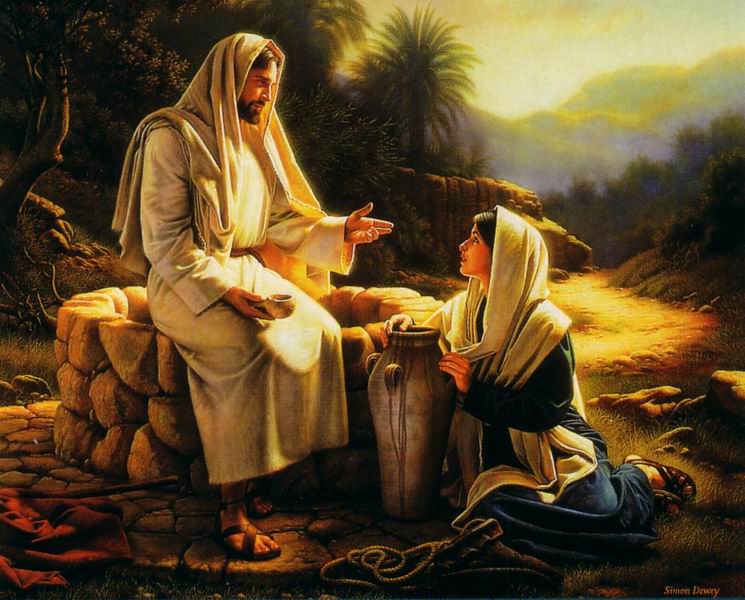
There came a woman of Samar'ia to draw water. Jesus said to her, "Give me a drink." For his disciples had gone away into the city to buy food. The Samaritan woman said to him, "How is it that you, a Jew, ask a drink of me, a woman of Samar'ia?" For Jews have no dealings with Samaritans. Jesus answered her, "If you knew the gift of God, and who it is that is saying to you, `Give me a drink,' you would have asked him, and he would have given you living water." The woman said to him, "Sir, you have nothing to draw with, and the well is deep; where do you get that living water? Are you greater than our father Jacob, who gave us the well, and drank from it himself, and his sons, and his cattle?" Jesus said to her, "Every one who drinks of this water will thirst again, but whoever drinks of the water that I shall give him will never thirst; the water that I shall give him will become in him a spring of water welling up to eternal life." The woman said to him, "Sir, give me this water, that I may not thirst, nor come here to draw."

Jesus said to her, "Go, call your husband, and come here." The woman answered him, "I have no husband." Jesus said to her, "You are right in saying, `I have no husband'; for you have had five husbands, and he whom you now have is not your husband; this you said truly." The woman said to him, "Sir, I perceive that you are a prophet. Our fathers worshiped on this mountain; and you say that in Jerusalem is the place where men ought to worship." Jesus said to her, "Woman, believe me, the hour is coming when neither on this mountain nor in Jerusalem will you worship the Father. You worship what you do not know; we worship what we know, for salvation is from the Jews. But the hour is coming, and now is, when the true worshipers will worship the Father in spirit and truth, for such the Father seeks to worship him. God is spirit, and those who worship him must worship in spirit and truth." The woman said to him, "I know that Messiah is coming (he who is called Christ); when he comes, he will show us all things." Jesus said to her, "I who speak to you am he." Just then his disciples came. They marveled that he was talking with a woman, but none said, "What do you wish?" or, "Why are you talking with her?" So the woman left her water jar, and went away into the city, and said to the people, "Come, see a man who told me all that I ever did. Can this be the Christ?" They went out of the city and were coming to him.
 
Reflections on this weeks gospel:

Word on Fire
Sunday Reflections
Centre for Liturgy
English Dominicans


To Be Loved, Is To Be Known


written by Chris kinsley and Drew Francis

I am a woman of no distinction. Of little importance, I'm a woman of no reputation to say which is bad.

You whisper as I pass by and cast judgment until glances. Though you don't really take the time to look at me, or even get to know me. 
For to be known is to be loved.

To be loved is to be known, otherwise what is the point of doing either one of them in the first place.

I want to be known.

I want someone to look at my face and not just see two eyes, a nose, a mouth and two ears

But to see all that I am and could be, all my hopes loves and fears. But that is too much to hope for, to wish for or pray for, so I don't, not anymore.

Now I keep to myself, by that I mean the pain. Pain that keeps me in my own private jail, the pain that's brought me here at midday to this well.

To ask for a drink is no bigger quest, but to ask it of me.

A man unclean, ashamed, used, abused,an outcast,a failure, a disappointment a sinner.

No drink passing from these hands to your lips could ever be refreshing, only condemning. As I'm sure you condemn me now, but you don't

You are a man of no distinguish to the outmost importance, a man with little reputation at least so far. You whisper and tell me to my face What all those glances have been about.

You take the time to really look at me, I don't need to get to know me. For to be known is to be loved, and to be loved is to be known.

You know me, you actually know me, all of me and everything about me.

Every thought inside and hair on top of my head, every hurt stored up, every hope, every dread.

From my past to my future, all I am and could be, you tell me everything, you tell me about me.

And that what would be spoken by an other would bring hate and condemnation.

Coming from you brings love, grace, mercy, hope and salvation.

I've heard of one to come who would save a wretch like me and here in my presence you say I am he. 
To be known is to be loved, and to be loved is to be known.

I just meet you, but I love you. I don't know you, but I want to get to know you.

Let me run back to town this is way too much for just me.

There are other brothers, sisters, lovers and haters. The good and the bad sinners and saints who should hear what you've told me, who should see what you showed me, who taste what you gave me, who should feel how you forgave me.

For to be known is to be loved, and to be loved is to be known, and they all need this too, we all do, need it for our own.

Liturgical odds and ends

Saints of the Week

24th March - St Maccartan
25th March - Solemnity of the Annunciation of the Lord
26th March - Saint Mochelloc of Kilmallock
27th March - Blessed Pellegrino of Falerone
28th March - St. Hesychius of Jerusalem
29th March - Blessed Bertold of Mount Carmel

4 Jun 2011

5th June 2011 Exploring the Mass (Part 2)

This weeks show is now available on podcast looking at the Liturgy of the Eucharist and the Concluding Rite.

Programme summary and text of reflection available here.

3 Jun 2011

Exploring the Mass (Part 2)

On this weeks show we continue exploring and for some rediscovering the Order of the Mass led in our reflection by Noirin Lynch from Limerick Diocesan Pastoral Centre where we reflect on the Liturgy of the Eucharist and the Concluding Rites. (Last weeks show on Exploring the Mass - Part 1 can be read here or listened to here).

Saints of the Week

June 6th - St Norbert
June 7th - St Coleman of Dromore
June 8th - St William of York
June 9th - St Columba (Colum cille) Co-patron of Ireland
June 10th - St Ephream of Syria
June 11th - St Barnabas - Apostle

Exploring the Mass (Part 2)

The Liturgy of the Eucharist

The Liturgy of the Eucharist is so rich that we could spend weeks taking it line by line. But for tody, I have three points to reflecton together. It's a beginning, no more. So lets consider: Preparation, Participation, Transformation.

We start the Liturgy of the Eucharist by preparing ourselves and the Table of the Lord.

What are we preparing for? If I invite 4 people for dinner in my home & I prepare the dining room for a buffet for 20, or only lay the table for 2 people … my guests might be confused. Does our preparation reflect what is about to happen?

So, what's the best way to prepare as we begin the Liturgy of the Eucharist?


  • "The Preparation of the Altar marks the fact that the altar now becomes the focus. It is appropriate that at this point items required for the celebration should be placed on the altar to signify that a new element of the celebration is beginning".
    Don't clutter the altar – the symbols and actions of the Rite are all well thought out and important - they should be seen by everyone from every part of the church at every Mass.
    "On particular occasions such as funerals, First Communions and Confirmations, symbols might be placed close to the altar, but not on it. This should be done at the beginning of Mass rather than at the preparation of the altar or of the gifts." Symbols of a group or a person help us to remember who we pray for – but they are not part of the offertory at the Lit of Eucharist
  • Personally – Am I totally present, prepared, or is my mind cluttered with things that may prevent me from seeing whats on offer? After the collection and offertory, can I take a moment to realise where we are now, and what we are being invited into?!

26 May 2011

29th May 2011 - Exploring the Mass (Part 1)

On this weeks show we were joined by Noirin Lynch from Limerick Diocesan Pastoral Centre who led us through the first part of a two part reflection on the Mass looking at the Introductory rites and the Liturgy of the Word. We also had our regular prayer space and a quick dash through the saints of the week.

Podcast of the programme is available HERE.


Saints of the Week


May 30th - St Joan of Arc
May 31st - The Visitation of the Blessed Virgin Mary
June 1st - St Justin (Martyr)
June 2nd - Ascension Thursday or Ss Macellinus and Peter
June 3rd - St Kevin (in Ireland) and St Charles Lwanga and Companions (Ugandan Martyrs) It is also the First Friday.
June 4th - St Cornelius McConchailleach


Exploring the Mass (Part 1)


Have you ever found yourself standing up for the Gospel and realising that you didn’t hear a word of the first readings? Ever sat down in church to realise that you can’t relax and pray today? The truth is that very few people arrive at Mass fully prepared to participate, so we need a time to become present to each other, and to the mystery of the Eucharist which we are about to celebrate together.
Mass has 2 essential parts – the Liturgy of the Word, and the Liturgy of the Eucharist. But because we are human, we need time around those to prepare and pray – or we might miss the grace on offer!! So: Who is gathered? Why are we here? What needs to happen so we can really be present here & now?
Recognise that we are welcome as full members of this community

As we enter the church, we bless ourselves in holy water from the font to remind ourselves of our welcome at Baptism. Teaching a child to bless themselves like this is a great gift. Welcome is experienced in the friendly faces, the warmth of the church, the helpful hints (leaflets, usher etc). When we know we are welcome, it’s easier to know we belong!

We begin our liturgy with the sign of the Cross – the same sign that marked us at Baptism. The Amen we say here and throughout the Mass is significant as it calls us to respond, to choose to participate, to full membership. At this point the role of the celebrant is to gather the congregation into a people united in the presence of God.

Recognise ourselves & that we need to prepare our hearts

The Penitential Rite has four possible options: each week the celebrant chooses the one most appropriate for this Sunday. The focus is not on our sinfulness but on our need of God and Gods great mercy.

“The first form, ‘I confess’, acknowledges our sinfulness and asks the support of the prayers of the whole congregation which has gathered to celebrate the Eucharist and of the Blessed Virgin and all the saints. ... That confession is made entrusting oneself to Almighty God in the context of the prayer of the whole Church, on earth and in heaven. The second form reflects the long tradition of repentant prayer found in the penitential psalms. We express our sorrow and our hope in God’s mercy in words that have been used by God’s People for millennia, in words inspired by God himself. …The third form offers a variety of triple invocations leading to the prayer, Lord have mercy, Christ have mercy, Lord have mercy – the traditional Kyrie Eleison. It is important to note that this form is not a confession of sins, “Lord for the times when we failed to…” It is a litany of praise. The praise is offered to Jesus Christ, to whom the Kyrie is addressed. … The Rite of Blessing and Sprinkling with Holy Water may take the place of the penitential rite, on Sundays, especially Sundays in the Easter Season because of its emphasis on Easter and on Baptism. It thanks God for saving us from sin through the waters of Baptism.”


Recognise God who is with us & give praise

“The Gloria is one of the Church’s most ancient hymns and it is sung or said during the introductory rites of more solemn Masses.”

Its long history (from scripture – Bethlehem – through centuries of prayer) means it should be sung where possible and not replaced by similar words. We should all stand as it is a song of praise! 


19 May 2011

Upcoming Shows - The Mass

On our show on May 29th and June 5th we are going to have a discussion/reflection about the Mass and the parts of the Mass when Noirin Lynch from Limerick Diocesan Pastoral Centre is going to be on with John, Lorraine and Shane.

If you have any questions about the Mass or were curious about something, drop us a line and we will endevour to find and answer and discuss it on air.

Just a note to our blog readers, it wont be a discussion about the new translation of the Missal which we are planning to cover on the show later in the year as we come closer to the implementation date in November.

7 Apr 2011

Lenten Reflections (No. 16) - Lord the one you love is sick

Picture the scene:  Lazarus, ill and fearful. His sisters desperately seeking to prolong his life and see him restored to good health. It’s late in the day and all their hope rests in Jesus, their friend Jesus who has healed and cured many others … So the sisters send word to Jesus, “Lord, the one you love is sick.” (Jn 11:3).

There is a painful honesty in the simple request – no word wasted, just a sense of two sisters who are being stretched, emptied & poured out in the face of their brothers pain. There is a loss of formality, of careful-ness, in the face of death or fear. There is no time now for carefully crafted requests or explanations. The bare facts say it all.
In Japan, in Haiti, in Darfur, or in our own home town; we recognise the plea of desperate relatives .... Lord, the one you love is sick ... Jesus, the man I love is leaving ... Father, the child I love is suffering ... Jesus, I can’t find her ...  The bare facts say it all.
What bare facts can I place before God this day? What is my reality this day? Without explanation, formality or carefulness, how do I complete the sentence ‘Lord, ... ’. We place our reality alongside Lazarus, Mary & Martha’s. And with them, we wait.
If you had been here
Let us return to the Gospel story - The sisters have sent word and they wait, but it seems that Jesus does not come in time and death proves victorious.  Lazarus’ eyes are closed and his sisters begin to grieve their loss, until four days after Lazarus’ burial, Jesus arrives.
Mary and Martha probably did not know of Jesus’ conversations with his apostles, and probably didn’t take into account the danger Jesus life was in. They were simply consumed by their grief, waiting for their last hope to come to them. How must they have felt when he didn’t come at the time they expected? In waiting those four days, Mary and Martha’s faith in Jesus must have been stretched further than anyone thought possible.
How often have we waited on God, thinking ‘where are you?’, ‘why are you not here now when I need you’. Our faith too has been stretched. Our faith in relationships, in healing, in God. Are there situations, relationships, events that we feel are damaged or dead so that no one, not even God, could bring resurrection there?
Where do we find ourselves saying ‘if you had been here, my brother would not have died’, ... ‘if you were good, we would not be suffering’, ... ‘if you loved me, you wouldn’t ask this of me’. Like Mary and Martha do we recognise Gods power, but sometimes feel Gods absence? Is God absent when we can’t feel Gods presence, or when events don’t unfold in a way we can understand? All the way from Galilee to Judea, Jesus was preparing himself for what he would do. Though we sometimes cannot feel Gods presence; God is with us. 
Take away the stone
And how was it then for Martha & Mary when word of his arrival finally came? Mary, the one who had sat at Jesus feet, stayed where she was. Martha, the busy worker, went out to meet him. It is given to Martha – the busy, argumentative one – to say first ‘Yes Lord, I believe’. 
How am I in times of despair and grief?  Can I hear Gods word spoken to me in my hour of need? No matter how we come to Jesus, he is here for us. If we listen, we too will hear the words of life.
For, in an exchange of searing depths, after all hope had vanished; Jesus cried out, “Lazarus, come forth”.  Jesus, the Resurrection and the Life, brought life and hope long after he was ‘supposed to’. Healing happens when we let Jesus into the dark tombs in our lives. When we weep with him and trust in him. When we take away the stone and allow Jesus to reveal the glory of God
What part of my life have I walled off? What memory, relationship, feeling is buried deep in stone with the sense that it is too late to heal it?
I bring it to God now and pray, ‘Father God, if you could raise Lazarus from the dead, then you can heal me. Bless me now that I might be open to your healing. Give me the courage to move away the stone, or to ask others for help to do that. Give me patience, as that which has been so hurtful emerges into the light of your love. Show me your will for my life and bless me and all with your hope, your grace and your mercy. For though I am hurt and scared, I know that nothing is impossible to God’.
Let us be brave like Lazarus, Mary & Martha. Let us allow God to breathe light into the dark spaces of our heart this Lent. So that when the stone is moved aside, we might answer this Easter with joy:  Lumen Christi – Deo gratius
‘Did I now tell you, if you believe, you will see the glory of God’ .... ‘Lazarus, come forth’
Noirin Lynch

29 Jan 2011

Limerick Diocesan Pastoral Centre Weekly Update Email

Each week, Noirin Lynch who has mades regular contributions to Sacred Space in her role as Pastoral Coordinator at Limierck Diocesan Pastoral Centre sends out a resource email highlighting up coming events at the LDPC as well as around Limerick Diocese as well as providing some resources for those involved in parish pastoral councils.

If you would like Noirin to add you to her distribution list, drop her an email to NLynch@ldpc.ie

 
This weeks email has the following reminders, suggestions and resources available:

 
"In this week’s email you’ll hear about training available, a new talks series and we’ll focus on resources for the end of January and for February - we hope this information is of help to you in your parish planning.

(i) Up coming Events in the Pastoral Centre: Rainbows, Faith formation, A new Spring talks series, and training for pastoral chairpersons. 
(ii) Other events of interest Doras Luimni are running intercultural awareness training in February (details below). This free course is of benefit to all who deal with migrants regularly.
(iii) Pastoral Resources
The last week of January and the first weeks of February are rich times for us – saints abound and spring beckons! Catholic Schools week ties in with the feast of St John Bosco, founder of the Salesians who have been a great blessing for us in Limerick. St Brigid, and St Blaise offer tradition, story and depth to our Spring rituals. The Feast of the Presentation beckons us out of Christmas childhood and into a re-consecration of our lives to God. The snowdrops are peeping out – God is at work in our midst!
(iv) Good News stories
25 people from 7 parishes gathered during the week in Limerick city and Newcastle west to consider liturgy resources for Lent 2011. Thanks to all who travelled, encouraged and came up with great ideas for us as we plan ahead. One strong theme for our Lenten desert garden was the knots we have been tied up in – personal, economic, as church, family and state - and how Lent is a time for recognising this knotted-ness in ourselves, time for unravelling what is restricting us, a time for asking God to set us free of all that which binds us up in dark knots of fear, hurt or judgement. The Sunday Gospels for this Lent have much hope to offer into this struggle.

7 Oct 2010

UPDATED 10th October 2010 - 28th Sunday in Ordinary Time Year C

This weeks show sees the return of our regular panelist Michael Keating telling us about the special relationship between the Rosary and the Shrine of Fatima, as well as our usual reflections on the weekly Sunday gospel, saints of the week and some local notices.


October - the month of the Rosary and Fatima

Michael leads us in a short reflection on the history of the Rosary as October is the month of the Rosary and the special connection between the apparitions at Fatima and the call to pray the Rosary. An ancient and ecumenical Christian devotion which has received the support of many Pope's down through the ages with the most recent being Pope Paul VI in Marialis Cultus, and Pope John Paul II in Rosarium Virginis Marie. 


For some more thoughts on the Rosary, here are some links from the premier Rosary troops,  the Dominicans here , here and here.

23 Sept 2010

UPDATED 26th September 2009 - 26th Sunday in Ordinary Time Year C

On this weeks show we are (re)introduced to Limerick Diocesan Pastoral Centre (LDPC) by Noirín Lynch and she highlights some of the up coming courses and events being organised in the diocese, our regular prayer space for your thoughts and intentions, our weekly reflection on this weeks Gospel, a quick highlight of this weeks Saints and of upcoming things on EWTN.

Limerick Diocesan Pastoral Centre

We have a brief discussion with Noirín Lynch from the Limerick Diocesan Pastoral Centre. Noirín is the Pastoral Coordinator from the centre and mainly works in supporting parishes. Her role involves being a resource person to the parishes of the diocese as they work. During her discussion she talks about the work and support offered by LDPC more information on which is available on the LDPC's website and also through its semi-annual programme magazine Eolas which can be got free of sharge from the Pastoral Centre at 061-400133 or downloaded from here. Some up coming things being organised by the Pastoral Centre which Noirín highlights in the next few weeks:
  • The launch of a new Prayerbook celebrating the faith of the people of the Diocese of Limerick.  The book entitled Diocese of Limerick - Prayers of Our People has been compiled as the result of a Diocesan Youth Ministry Project entitled “What’s Your Favourite Prayer?”  where young people were asked to collect the favourite prayers of their families, neighbours and friends. Over 850 young people from the Diocese of Limerick as well as 13 parishes from neighbouring Dioceses submitted prayers which we have put together in this unique collection. It is a strong possibility that a prayer chosen by you, or someone you know and love will feature in this book so it would be great to see you on the night. All proceeds from the sale of this book will go towards Youth Ministry in the Diocese of Limerick. The launch will be held at the Woodlands House Hotel Adare on Thursday October 14th at 7pm.
  • The annual Autumn conference organised by LDPC for members of parish pastoral councils and those in parish ministry with the theme this year of "We are gathered as a Eucharistic Community" which will be held at the Pastoral Centre on Saturday 23rd October 2010 from 10.30am to 4pm with various workshops and moments of reflection to support those in ministry in their various parishes through this difficult time.
At the sametime LDPC is looking at the work it has carried out over the last five years especially in the area's of support to parish councils and those in ministry and Noirin and Fr Noel Kirwin are looking for feedback from Pastoral Areas and individual Parish Pastoral Councils about the support and effectiveness of the effort being made by the teams working through LDPC. All feedback is gratefully received and the team at the centre can be contacted on 061-400133 or nlynch@ldpc.ie


Gospel Reflection

This weeks gospel from St Luke focus's on the parable of the Rich Man and Lazarus. It is a challenging gospel about our relationships with others and our awareness of them - who well do we "see and hear" our neighbours, how often do we really "notice" those in need around us? At the sametime, following on from last weeks gospel about the bad steward and the discussion about the role of money in life,  this week we are shown again how riches in themselves are not a bad thing, but rather what we do with them that sets us apart as being true "children of light". Further thoughts on this weeks gospel are available here, here, here and here.


 Saints of the Week

Mon 27th Sept - St Vincent de Paul (Priest)
Tue 28th Sept - St Wenceslaus (Martyr) or Saints Laurence Ruiz and his Companions, (Martyrs)
Wed 29th Sept - Feast of the Archangels - Sts Michael, Gabriel and Raphael
Thurs 30th Sept - St Jerome (Priest, Doctor of the Church)
Fri 1st Oct - St Therese of the Child Jesus (St Therese of Lisieux, the Little Flower) (Virgin, Doctor of the Church) - First Friday
Sat 2nd Oct - Feast of the Holy Guardian Angels

And as always, thanks for listening

John, Lorraine and Shane