4 Jul 2016

July 4th - Feast day of Blessed Pier Giorgio Frassati - Salt + Light TV


“Verso l’alto”
 
July 4 is the Memorial (Feast Day) of Blessed Pier Giorgio Frassati. The following is the homily of Fr. Thomas Rosica, CSB preached on Monday, July 14, 2008 during WYD Sydney at the Prayer Vigil and Eucharistic Adoration with the body of Blessed Pier Giorgio Frassati in St. Mary’s Cathedral, Sydney, Australia.

Dear Friends,
Dear Wanda, niece of Blessed Pier Giorgio Frassati,

What an honour and privilege it is to be here with you this evening in St. Mary’s Cathedral in Sydney, Australia! Led by the young adults of Canada’s Catholic Christian Outreach [CCO], one of our nation’s outstanding movements for Catholic university students, we have gathered together to adore Jesus, gift of God for the life of the world. And young people of the entire world have also come here, to pray around the mortal remains of Blessed Pier Giorgio Frassati during World Youth Day 2008.

We have just listened to the blueprint for Christianity in that magnificent text of the Beatitudes from Matthew’s Gospel [5:1-12]. The Beatitudes in Christ’s Sermon on the Mount are a recipe for extreme holiness. Every crisis that the Church faces, every crisis that the world faces, is a crisis of holiness and a crisis of saints.

If there was ever an age when young men and women needed authentic heroes, it is our age. The Church understands that the saints and blesseds, their prayers, their lives, are for people on earth; that sainthood, as an earthly honor, is not coveted by the saints or blesseds themselves.

3 Jul 2016

3rd July 2016 - The Dominican Friars Leave Limerick - 14th Sunday in Ordinary Time (Year C)

On this week's programme John has an interview with Fr. Frank Downes O.P., the Prior of St. Saviour's Dominican Priory in Limerick, about their sad withdrawal from their Limerick foundation. The full programme is available HERE.


The Dominican Friars


At the midterm assembly of their Province in September 2014 it was decided that the Dominican Friars would withdraw from their Limerick foundation in Glenworth Street where they have been ministering since July 1816.  Their presence in the diocese dates back to 1227.  Their departure is one of great sadness for the Dominicans and indeed for whole of Limerick who hold the Dominicans in fond esteem, yet Fr. Frank wished to express their immense gratitude to each and all who have supported them down through the years in so many kind and varied ways. 

The team here on Sacred Space would like to extend our gratitude to the Friars on our own behalf and on behalf of the good people of Limerick who will be sad to see them go. We wish God's blessing on them for their future and assure them of our prayers. Fr. Frank's interview excerpted from the main programme is available HERE.  

You can read more about the history of the Dominican Friars in Limerick HERE.

The church will remain open with daily Mass at 1pm (Monday to Saturday) beginning on Monday July 4th.  The Sunday Mass schedule has not been announced as yet.

Dominican Sisters of Saint Cecilia


Fr. Frank also expressed his gratitude that the Dominican presence remains with the arrival of the Dominican sisters of Saint Cecilia on Friday 19th August.  You can read more about their new foundation HERE.


Thanksgiving Mass
We invite you to join with us on Sunday July 3rd for a Mass of Thanksgiving and Farewell at 3pm followed by light refreshments in the Pery Hotel next door to us.


Gospel - Luke 10:1-12. 17-20


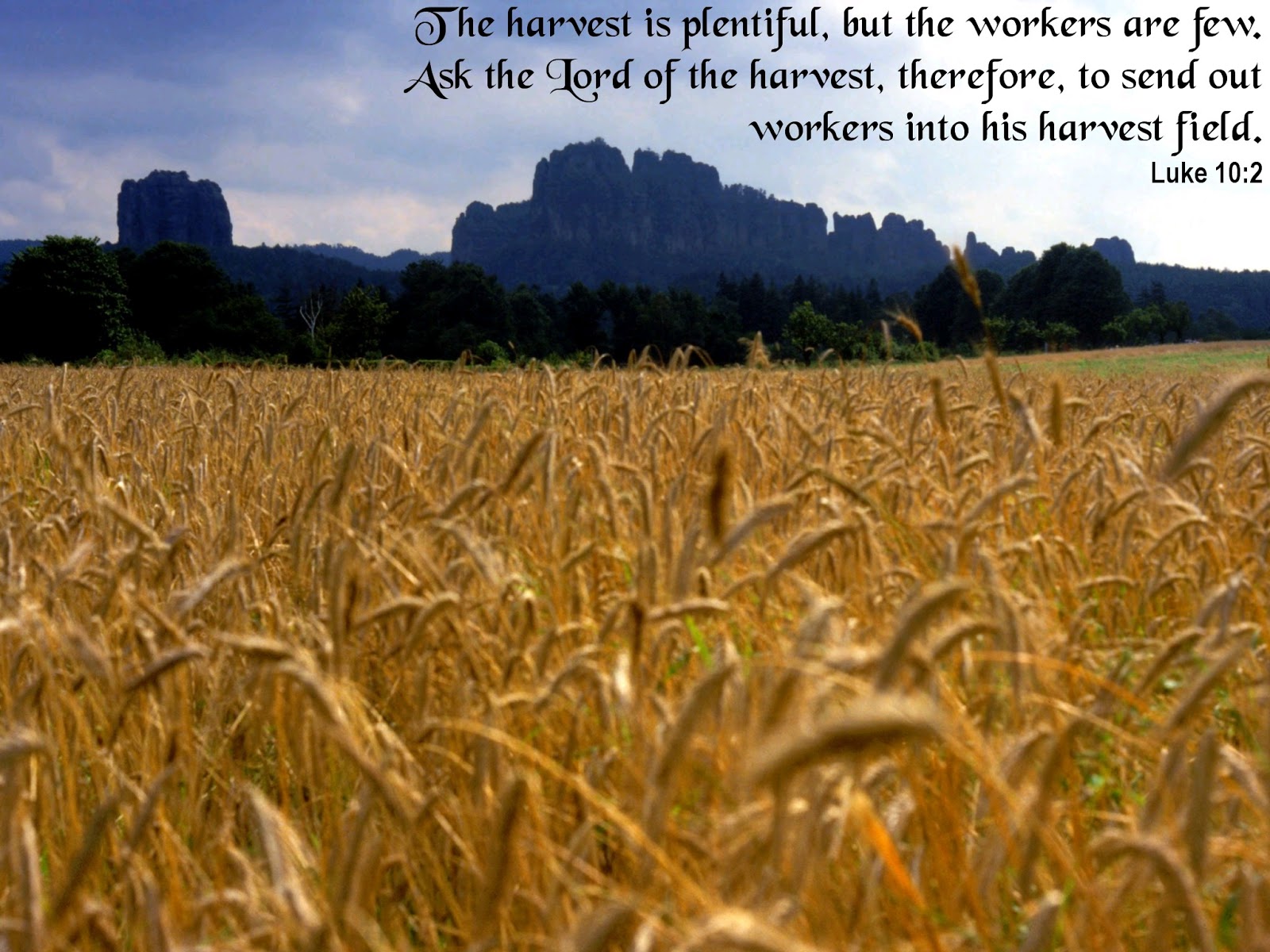
The Lord appointed seventy-two others and sent them out ahead of him, in pairs, to all the towns and places he himself was to visit. He said to them, ‘The harvest is rich but the labourers are few, so ask the Lord of the harvest to send labourers to his harvest. Start off now, but remember, I am sending you out like lambs among wolves. Carry no purse, no haversack, no sandals. Salute no one on the road. Whatever house you go into, let your first words be, “Peace to this house!” And if a man of peace lives there, your peace will go and rest on him; if not, it will come back to you. Stay in the same house, taking what food and drink they have to offer, for the labourer deserves his wages; do not move from house to house. Whenever you go into a town where they make you welcome, eat what is set before you. Cure those in it who are sick, and say, “The kingdom of God is very near to you”. But whenever you enter a town and they do not make you welcome, go out into its streets and say, . “We wipe off the very dust of your town that clings to our feet, and leave it with you. Yet be sure of this: the kingdom of God is very near.” I tell you, on that day it will not go as hard with Sodom as with that town.

The seventy-two came back rejoicing. ‘Lord,’ they said ‘even the devils submit to us when we use your name.’ He said to them, ‘I watched Satan fall like lightning from heaven. Yes, I have given you power to tread underfoot serpents and scorpions and the whole strength of the enemy; nothing shall ever hurt you. Yet do not rejoice that the spirits submit to you; rejoice rather that your names are written in heaven.’


*****

Reflections on this weeks gospel:


Liturgical odds & ends

Liturgy of the Hours - Psalter week 2; 14th week in ordinary time

Saints of the Week

4th July - St. Elizabeth of Portugal
5th July - St. Antony Mary Zaccaria
6th July - St. Maria Goretti
7th July - St. Maelruain
8th July - St. Kilian
9th July - St. Augustine Zhao Rong and Companion Martyrs

2 Jul 2016

Lest we forget - Remembering the Battle of the Somme - 141 Days of Bloodshed

Yesterday, former foes and allies gathered at the Thiepval Memorial to commemorate the beginnings of the Battle of the Somme on July 1st 1916. President Michael Higgins joined President Hollande of France, members of the British Royal Family and other  dignitaries to mark the beginning of the Battle of the Somme.

At 7.20am 1st July 1916, the Battle of the Somme began. It was to be 141 days of terror and bloodshed which resulted in the deaths or wounding of over one million men. On the first day alone over 3500 Irish men serving in the British  lay dead or injured, mowed down by German machine guns as they went over the top and the caught between the artillery rounds of both sides.


 The Somme offensive was urgently called for after the surprise German attack on French troops in Verdun on the 21st February. More French troops were sent from the Somme to Verdun for reinforcement, leaving the British troops to occupy most of the Somme front – 30kms. As the French losses mounted at Verdun, Haig was more and more pressed to launch the offensive of the Somme, the date of which had been fixed for the 29th June. Because of bad weather this date was then changed to the 1st July. The battle started with a six day, continual artillery bombardment, the aim of which was to destroy the German lines and cut the enemy wire.

On the 1st July 1916 at 7:20am the battle began: 100,000 inexperienced soldiers (Pals Battalions), carrying 30kg of supplies went over the top but were quickly hit by machine gun fire.
At the end of the day, 60,000 British soldiers had been made casualties, 40,000 of whom had been injured or taken prisoner. The German losses represent about 1/10 of this number.
The first day of the Battle of the Somme had been a failure, a disaster for the British army, and is known as “the bloodiest day of the British army”.

Thiepval was finally captured on the 27th September 1916 by British troops and the Battle of the Somme came to an end in November of the same year. The breakthrough had not been possible but the battle had enabled the French to keep a hold on Verdun. The German army, who had had to fight two battles – Verdun and the Somme – at the same time, were completely exhausted.

The British army suffered more than 420,000 casualties (killed, injured, missing, or taken prisoner) during the Battle of the Somme. In March 1918, as part of the German Spring Offensive, Thiepval was retaken by the Germans. It was finally recaptured in August 1918 by British troops.

The memorial was built between 1929 and 1932 and was designed by Sir Edwin Lutyens, the greatest and most prolific architect of his time in Great Britain. In 1919, the Imperial War Graves Commission entrusted him with the construction of the Cenotaph in London. He would also design many of the British War Cemeteries, the “Stone of Remembrance” which can be found in many of these cemeteries, and the Australian National Memorial at Villers-Bretonneux. The memorial commemorates more than 72205 men from the British and South African armies who were declared missing in the Somme between July 1915 and March 1918. Either the bodies of these men were never found or the body was found but couldn’t be identified. Nearly 90% of these men were killed during the Battle of the Somme with about 12,000 on the first day of the offensive.


The memorial, at 45 metres high, is the largest Commonwealth war memorial in the world. Its walls are clad in brick and its sixteen piers are faced with Portland stone on which the names of the “Missing” are engraved. The men commemorated here come from all social backgrounds and their ages range from 15 to 60 years old with an average age of 25.


The official website for the UK national commemorative event to mark the Centenary of the Battle of the Somme
Century Ireland 1913 - 1923 - Battle of the Somme


To my daughter Betty
Thomas Kettle
 
IN wiser days, my darling rosebud, blown 
To beauty proud as was your mother's prime, 
In that desired, delayed, incredible time, 
You'll ask why I abandoned you, my own, 
And the dear heart that was your baby throne,         
To dice with death. And oh! they'll give you rhyme 
And reason: some will call the thing sublime, 
And some decry it in a knowing tone. 
So here, while the mad guns curse overhead, 
And tired men sigh with mud for couch and floor,  
Know that we fools, now with the foolish dead, 
Died not for flag, nor King, nor Emperor,— 
But for a dream, born in a herdsman's shed, 
And for the secret Scripture of the poor.